Mark Waid: ‘Every superhero you love’ is a SJW

There was once a time when activist-writers tried to hide their attempts to hijack comic books and turn them into little more than social-justice propaganda. Writer Mark Waid has changed all that. This week he took to Twitter and told the world that “every superhero you love” marches (or flies or teleports) under a SJW banner.

Check out my latest YouTube video on Mr. Waid’s opinion that comic book writers should look to anti-free speech ideologues for inspiration.

Marvel’s zero-sum politics needlessly damage the comics industry

The partisan politics of modern Marvel Comics creators is a mainstay of this blog, but for the most part it is usually discussed within the context of whatever “red state vs. blue state” argument makes headlines each week. Today, however, I’d like to dig a little deeper into the zero-sum politics of these writers and artists. In short, they act as if any positive development for “Character A” means that “Character B” is negatively affected.

For instance, Tony Stark’s existence as Iron Man was problematic for writer Brian Michael Bendis’ to introduce Ironheart — Riri Williams. Normal people have no problem with a young girl named Riri flying around the Marvel Universe while Mr. Stark does his thing. That is not the case for Marvel writers these days. In the mind of the modern Marvel creator, Mr. Stark needed to be hurt or sidelined or have his reputation sullied in some way so that a minority female character could succeed.

This line of thinking has poisoned Marvel’s decision-making from the top down in recent years, and as long as it continues the industry as a whole will needlessly suffer. For more details on this, be sure to check out my latest YouTube video on the subject. Then, if you like what you’ve seen, be sure subscribe for regular updates.

As always, make sure to let me know what you think in the comments section below.

‘Tribe: On Homecoming and Belonging’: Junger’s must-read explains why America is tearing itself apart

tribe-cover

Roughly 17 years ago I exited the military after a stint as a mechanized infantryman in the U.S. Army. Even though the September 11, 2001, terror attacks and the nation’s “long war” had not yet begun, I found myself having a difficult time with the transition to civilian life. Understanding why I missed my old platoon — and why I felt a growing fear and sadness for the country I loved — took years (and a blog like this) to figure out, but author and former war reporter Sebastian Junger articulates it all in his must-read book Tribe: On Homecoming and Belonging.

Americans who have not lived under a rock for the past 20 years have witnessed the slow-motion implosion of our culture.

  • Cable news pundits obsessively talk of “red states” and “blue states.”
  • The politics of personal destruction reigns supreme.
  • Saying “all lives matter” is interpreted in a Twilight Zone-ish twist by millions of people as somehow racist.
  • Americans watch carefully constructed social-media feeds that tell them all Republicans are the equivalent of Darth Vader, or that all Democrats have shrines to Fidel Castro in their bedroom.

In short, the modern world is deficient in something that is causing tens-of-millions of people to feel isolated, alone, and empty. The void is filled with confusion, and that in turn fuels the kind of anger and hate that was the hallmark of the 2016 election cycle.

Why is it that many soldiers and civilians who have lived through war sometimes get nostalgic for it?

What are the consequences for society when a person “living in a modern city or suburb can, for the first time in history, go through an entire day — or an entire life — mostly encountering complete strangers”?

Why are we often surrounded by others, yet “feel deeply, dangerously alone”?

One of the answers can be found in tribal societies. And no, your friendly neighborhood blogger is not saying Native Americans should have won the clash of civilizations at our nation’s inception. I am merely saying, like Mr. Junger, that we can learn from their ability to provide “the three pillars of self-determination — autonomy, competence, and community.”

Mr. Junger writes:

“After World War II, many Londoners claimed to miss the exciting and perilous days of the Blitz. (“I wouldn’t mind having an evening like it, say, once a week — ordinarily there’s no excitement,” one man commented to Mass-Observation about the air raids), and the war that is missed doesn’t even have to be a shooting war: “I am a survivor of the AIDS epidemic,” an American man wrote in 2014 on the comment board of an online lecture about war. “Now that AIDS is no longer a death sentence, I must admit that I miss those days of extreme brotherhood…which led to deep emotions and understandings that are above anything I have felt since the plague years.”

What people miss presumably isn’t danger or loss but the unity that these things often engender. There are obvious stresses on a person in a group, but there may be even greater stresses on a person in isolation, so during disasters there is a net gain in well-being. Most primates, including humans, are intensely social, and there are very few instances of lone primates surviving in the wild. …

Whatever the technological advances of modern society — and they’re near miraculous — the individualized lifestyles that those technologies spawn seem to be deeply brutalizing to the human spirit.” — (Sebastian Junger, Tribe: On Homecoming and Belonging (New York: Hachette Book Group, Inc., 2016), 92-93.

Tribe covers issues like PTSD, depression, and anxiety among combat veterans, but it would be a big mistake to solely think of it as a book for the military community. It is much more than that, because it is a blueprint for getting the nation on a path to cultural healing.

The author continues:

“The eternal argument over so-called entitlement programs — and, more broadly, over liberal and conservative thought — will never be resolved because each side represents an ancient and absolutely essential component of our evolutionary past.

So how do you unify a secure, wealthy country that has sunk into a zero-sum political game with itself? How do you make veterans feel that they are returning to a cohesive society that was worth fighting for in the first place? […] I put the question to Rachel Yehuda of Mount Sinai Hospital in New York City. …

“if you want to make a society work, then you don’t keep underscoring the places where you’re different — you underscore your shared humanity,” she told me. “I’m appalled by how much people focus on differences. Why are you focusing on how different you are from one another, and not on the things that unite us?” […]

Reviling people you share a combat outpost with is an incredibly stupid thing to do, and public figures who imagine their nation isn’t, potentially, one huge combat outpost are deluding themselves. (127-128).

Tribe is by no means “the” answer to the nation’s deep-seated cultural problems, but it is a significant piece of the puzzle. To get a good look at the big picture, I suggest pairing Mr. Junger’s quick-read with George Weigel’s Letters to a Young Catholic. Each book provides a template for transcending dead-end partisan bickering, and in turn getting America efficiently focused on  becoming a more-perfect union.

Iron Man #2: Bendis makes Riri Williams perfect, but perfect is boring

Question: When is an Invincible Iron Man book not an Invincible Iron Man book?

Answer: When Brian Michael Bendis needs to buoy sales while his new — seemingly perfect — female character named Ironheart tries to gain traction with potential customers.

If you want to know how the progression of Riri Williams is going over at Marvel these days, all you need to know is that the editorial philosophy seems to be that all new female characters need to be perfect to avoid criticism from feminists on Tumblr. The problem for writers like Mr. Bendis, however, is that “perfect” tends to translate “boring” on the page.

Humans have flaws, which is one of the many reasons why Peter Parker and Tony Stark are so relatable. When a character is the most intelligent, funniest, superaweseomecoolest (on word) person in the room, then it’s just lame.

Anyway, if you want to hear the full rundown, then check out my latest YouTube review for IIM #2 and let me know what you think in the comments section below.

Rogue One: Gareth Edwards delivers solid film for fans with impossible demands

donnie-yen

It’s hard not to feel bad for Gareth Edwards, director of  Rogue One: A Star Wars Story. The guy was asked to direct a stand-alone Star Wars film that felt new and fresh while simultaneously resonating with fans who watched Star Wars: Episode IV – A New Hope. He also had to direct a film that would satisfy the moviegoers who grew up with Star Wars: Episode I – The Phantom Menace. The creative gaps he had to bridge with this project were near impossible to close, but yet he somehow managed to make it all work.

Is Rogue One a perfect movie? No. It certainly has its flaws. Most notably is the skimpy backstory for every major character, from Jyn Erso (Felicity Jones) and Cassian Andor (Diego Luna), to Saw Gerrera (Forest Whitaker) and Chirrut Îmwe (Donnie Yen). The Star Wars franchise is enough of a cultural juggernaut that millions of people are already emotionally invested in this story  (i.e., Who captured the Death Star plans from the Empire and how did they pull it off?), but the screenplay by Chris Weitz and Tony Gilroy was too lean. But I digress.

jyn-erso

Here is what you need to know for Rogue One:

  • Galen Erso (Mads Mikkelsen), and Imperial scientist, is forced at gunpoint to leave his family and work on the Death Star. His wife is killed, but his daughter escapes to a hideaway and is saved by Saw Gerrera.
  • The Rebellion has many factions, often working at odds with one another. Rebel Jyn Erso is captured early on in the movie but is rescued by Cassian and his repurposed Imperial droid K-2SO (Alan Tudyk).
  • Cassian has been a part of the Rebellion since he was six years old and has had to make some tough (deadly) decisions working in the world of espionage.
  • It is revealed in a smuggled hologram to Saw that Galen has secretly engineered a kill switch into the Death Star. If the Rebel Alliance can get the plans, then there is chance they can end the threat to the galaxy.
  • The Rebellion plans to use Jyn as a way of working with her old guardian, Saw, who is seen as an extremist. Elements of the Rebellion do not plan on working with Galen once he is found. Instead, they plan to kill him.
  • A series of events convinces Cassian that Galen truly was a good man trying to do his best in a horrible situation, and before long he, Jyn, and a motley crew go “rogue” to capture the plans to the Death Star. Initially reluctant bureaucrats within the Rebellion come to their aid when the crew of Rogue One put boots on the ground in enemy territory.
  • The movie ends right where Star Wars: Episode IV – A New Hope picks up.

In short, if you want to see a good Star Wars movie that emphasizes the “war” aspect of the franchise, then you should see Rogue One. It has a scene with Darth Vader that is worth the price of admission alone, solid space battles, and plenty of The Force courtesy of Donnie Yen’s character. If you don’t overthink the movie, then you should have a good time in the theater with friends and family.

darth-vader

Editor’s Note: Feel free to head on over to The Conservative Book Club to check out the review I did for them.

Amazing Spider-Man #22: Dan Slott’s Clone story tries to be ‘Lazarus Conspiracy,’ fails

Do humans have souls, or are we deluding ourselves into thinking free will exists thanks to a complex series of chemical reactions that take place in our body every moment of every day?

Are humans somewhat like a computer, where the “you” that defines your being can be boiled down to biological code that began running (how fortunate!) with the Big Bang?

These are questions you should ask yourself as you read Marvel’s latest event, The Clone Conspiracy, and its tie-ins to Dan Slott’s run on The Amazing Spider-Man. If you haven’t pondered these questions up until now, then take a few moments to watch my latest YouTube review of ASM #22.

As always, feel free to share your thoughts in the comments section below. I’d like to hear what you have to say.

Daredevil #14: Charles Soule’s inspired run continues

This blog has been a consistent supporter of Charles Soule’s work on Daredevil since the series started, and nothing changes in that respect with Dark Art Part V. Any comic book fan who has gotten to know and love Blindspot over the past year needs to prepare for some pain with DD #14, because the villain Muse changes the character’s life forever.

Check out my latest YouTube review on the series and then let me know what you think in the comments section below. And, as always, be sure to subscribe if you want to see new videos on a weekly basis.

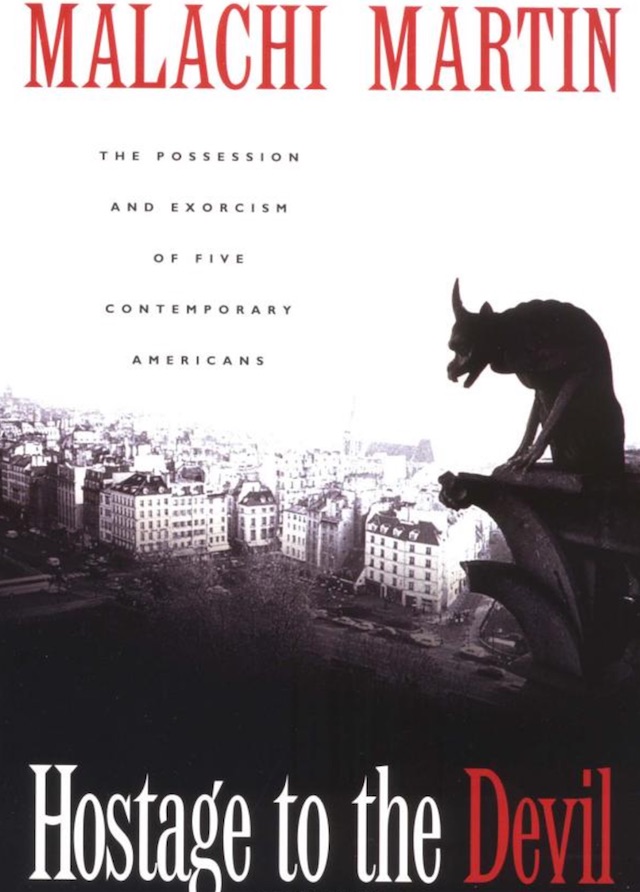
‘Hostage to the Devil’: Malachi Martin’s masterwork on possession, exorcism more than a must-read for Catholics

hostage

Former Jesuit priest Malachi Martin died in 1999, but he wrote one of the most comprehensive books on possession and exorcism in 1976 — Hostage To The Devil. Those who are unfamiliar with the man’s work may dismiss Hostage as fare for old school Catholics, but it is much more than that. Anyone who is interested in humanity’s struggle with morality, truth, free will, sex and gender, spirit and psyche would do themselves a favor by purchasing it soon.

Regular readers of this blog know that the intersection of politics and popular culture are covered on a regular basis. Movies, music and comic books are reviewed, but at the heart of it all is a fight against moral relativism.

The message is simple: Good and Evil exist. To deny that, or to pretend as though a man can go through life making morally neutral decisions, is to walk down a road of confusion. And, as Fr. Malachi notes, confusion seems to be a “prime weapon of evil.”

The author says:

“The surest effect of possession in an individual — the most obvious and striking effect common to all possessed persons, whether observed or apart from Exorcism — is the great loss in human quality, in humanness.

Curiously enough, the difficulty in talking nowadays about possession and describing its progress and effects in those attacked does not come from the weird, bizarre, or ‘unimaginable’ happens that may accompany possession.

The difficulty comes, instead, from the insistence of latter-day opinion makers that the religious view of good and evil is outdated; that the personality of each man, woman, and child exists only as a cross section of single traits and attributes best revealed in scores we achieve in psychological tests; that the truest and purest models for our behavior come from ‘lower animals’ and from ‘natural man,’ a mythical invention that has never existed and that we cannot imagine. …

Even though our coverage of these questions concerning Jesus and Lucifer must be brief due to limitations of space, we are not merely indulging in a comforting cliché when we make one observation: The best that latter-day prophets and modern doom sayers seem able to do with these matters is to ignore them and tell us to do the same. They cannot prove them false, but only increase their efforts to persuade us so. And for all their mighty efforts, they cannot repair the damage they do in this way to our humanness.,” Malachi Martin, Hostage to the Devil (San Francisco: Harper Collins, 1992), 409, 411-412.

In short, the bulk of Hostage deals with five cases:

  • Zio’s Friend and the Smiler — 29
  • Father Bones and Mister Natch — 83
  • The Virgin and the Girl-Fixer — 173
  • Uncle Ponto and the Mushroom-Souper — 249
  • The Rooster and the Tortoise — 321

As readers can see by the pagination, trying to respectfully break down any one of these cases in a book review would be difficult. Exhaustive interviews were conducted with all parties involved, written records were examined, and hours upon hours of audio recordings analyzed.

What is important to know before buying the book — particularly for skeptics — is that Fr. Martin is not an intellectual slouch. He is a very intelligent man. He is serious, and the content within Hostage is extremely disturbing.

The fact of the matter is that possession is nothing like Americans see in Hollywood movies. It is much more insidious than that because bodiless beings that can glean knowledge from eternity are not stupid. Possession is a process by which patient demons wait for an entry point, exploit confusion, and ultimately seize control when victims voluntarily present their souls on a silver platter.

Exacerbating this threat is a culture that grants Satan “the ultimate camouflage” — the belief that he does not exist.

“Raised more and more in an atmosphere where moral criticism is not merely out of fashion, but prohibited, [we] swim with little help in a veritable sea of pornography. Not merely sexual pornography, but the pornography of unmitigated self-interest. Whether spoken or acted out without explanation, the dominant question of the younger generations among us is, What can you do for me? What can my parents, my friends, my acquaintances, my enemies, my government, my country, do for me?

The difficulty is that as individuals and as a society, we are no longer willing — many of us are no longer able — to give an answer to that question that will satisfy anyone for long. …

Not to believe in evil is not be be armed against it. To disbelieve is to be disarmed. If your will does not accept the existence of evil, you are rendered incapable of resisting evil. Those with no capacity of resistance become prime targets for Possession,” (Preface, XIII, XIV, XV).

As Fr. Martin says, “no one wants to believe in evil, really, above all, not in an evil being, an evil spirit,” because acknowledging that places a perpetual responsibility on our shoulders.

“That [disbelief] is the opening through which [Satan] crawls, stilling all suspicions, making everything seem normal and natural. This is the ‘thought,’ the unwariness of the ordinary human being which amounts to a disinclination to believe in evil. And, if you do not believe in evil, how can you believe in or even know what good is?” (389)

Hostage is an amazing book. Anyone who is remotely spiritual should read it, but they must be forewarned that it will leave them shaken to the core.

If you have any questions about the cases covered by Fr. Martin, then feel free to ask in the comments section below.


‘Dead No More: The Clone Conspiracy’ #3 Review: ‘B-Ben? It can’t be you!’

Marvel’s fall Spider-Man event, Dead No More: The Clone Conspiracy, was such a sprawling story that it broke from the core book, The Amazing Spider-Man, and requires die-hard fans to also buy The Prowler. That isn’t necessarily a bad thing, but it should raise red flags among potential customers that some issues will likely be stuffed to the brim with information to make the tale work.

DNM #3 is a perfect example of the logistical obstacles writer Dan Slott created for himself as he began to weave this story together. There is a lot — I repeat, a lot — going on, not to mention the big reveal at the issue’s end. My quick take is that he and artist Jim Cheung did a decent job juggling important tasks, but that a key character’s history is at risk of being tarnished by the time all is said and done.

Check out my latest YouTube review for a run-down events and some brief commentary on the return of a character from Peter’s past. I will probably do a more comprehensive analysis of these ASM-related developments in the near future, but until then I’d still like to hear your thoughts on DNM #3’s surprise ending.

Mark Waid and Dan Slott: How hyper-partisan writers hurt Marvel

The modern American comic book industry is a shadow of its former self. There are numerous reasons for this, but one contributing factor is the emergence of activist-writers. Companies like Marvel claim to want to reach a “diverse” audience, but these days its employees spend an inordinate amount of time demonizing nearly half of its potential customers.

Two writers who perfectly encapsulate the “activist-writer” problem for the industry are Mark Waid and Dan Slott.

If you have been wondering why Marvel’s sales are lagging these days, then check out my newest YouTube video below. Then, let me know what you think in the comments section below.

Also, make sure to subscribe if YouTube videos on the comic industry are up your alley. I try to get out at least one per week.