A lot has happened in the years since your friendly neighborhood writer was regularly posting on WordPress. Elections were won and lost. Twitter became X. Most of the people who were laughed at as conspiracy theorists were vindicated, and a nation in debt got much, much, much deeper in the hole.
Today, however, I’d like to speak on the rise of paid “influencer” culture on social media — and the throngs of wannabes who take cues from “stars” without ever seeing fame and fortune (all while cultivating atrocious personality traits often correlated with success). More specifically, I’d like to talk about the realms of political and religious influencers.
What one tends to see across social media is that most popular influencers in these spheres are brimming with self-righteousness, shun nuance, and always on the hunt for more content to mine for attention, clicks, and the revenue that comes from manufacturing outrage.
All of this makes sense when it comes to politics because, on some level, we expect political junkies to behave that way. The bar, sadly, is quite low. What is fascinating, however, is the lack of self-awareness that various Christian “influencers” have as it pertains to their chosen path’s deleterious effect on the cultivation of virtue.
It does not take long peruse through Christian gathering places on X to see members of various denominations rhetorically tearing each other apart. Humility? Nowhere to be seen. Charity? Missing in action. Discernment? Not much.
Christian “influencers” often spend an inordinate amount of time getting into fights and then making everything about themselves (as opposed to, you know, Christ). They often act like the very same busybodies successfully mocked in the 1980s, which ushered in an era of Clintonian liberalism in the 90s.
On the political front, influencers who initially start out level-headed eventually become caricatures of themselves as they begin to believe their own hype. They start chasing algorithms, which reward those who strip commentary of all nuance. Truth becomes an afterthought because channels transmute into altars to ego and ideology.
It becomes increasingly difficult to root out what’s real and relevant in various news cycles because the individuals pushed into feeds by social media companies engage far more in a WWE-type ideological wrestling match than anything resembling a search for truth.
In short, it seems as though those who yearn for wisdom will have the best luck by looking for refuges of the influencer-fatigued because it is in the small, hidden corners of the internet where humility has an opportunity to thrive. Nuance, similarly, can be found in the crevices of the online world where individuals puffed up on their own egos would never deign to crawl.
While I do enjoy streaming to Soulfinder readers on YouTube and interacting on X, I find myself increasingly drawn back to WordPress as a safe haven from monetized rage and the money that flows from moral preening.
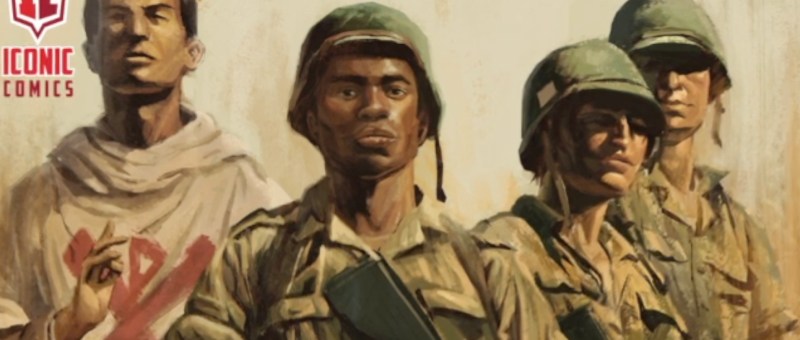
There seems to be something about releasing a new installment of the Soulfinder series that brings me back to this little old blog. My musings on politics and pop culture here opened up job opportunities, introduced me to solid dudes who I’m still in touch with today, and put me on the path that ultimately led to where we are now — the release ofSoulfinder: Tunnel Hounds at Iconic Comics.
If you’re a longtime reader who was shocked to receive an email notification today and wondering, “What on earth has that Doug dude been up to for so long? He disappeared from the blog!” the main answer is that Soulfinder and projects related to Iconic Comics takes up the bulk of my days. Time seems to go faster with each passing year, which forces the prioritization of books and merchandise over blogging.
Another reason I don’t blog as much anymore is it feels like everything I wanted to say about politics or the comics industry was said. I struggled for a long time between thinking I was bashing my head into a brick wall with many topics, and the belief that it was important to reach as many people as possible with a message about the importance of virtue.
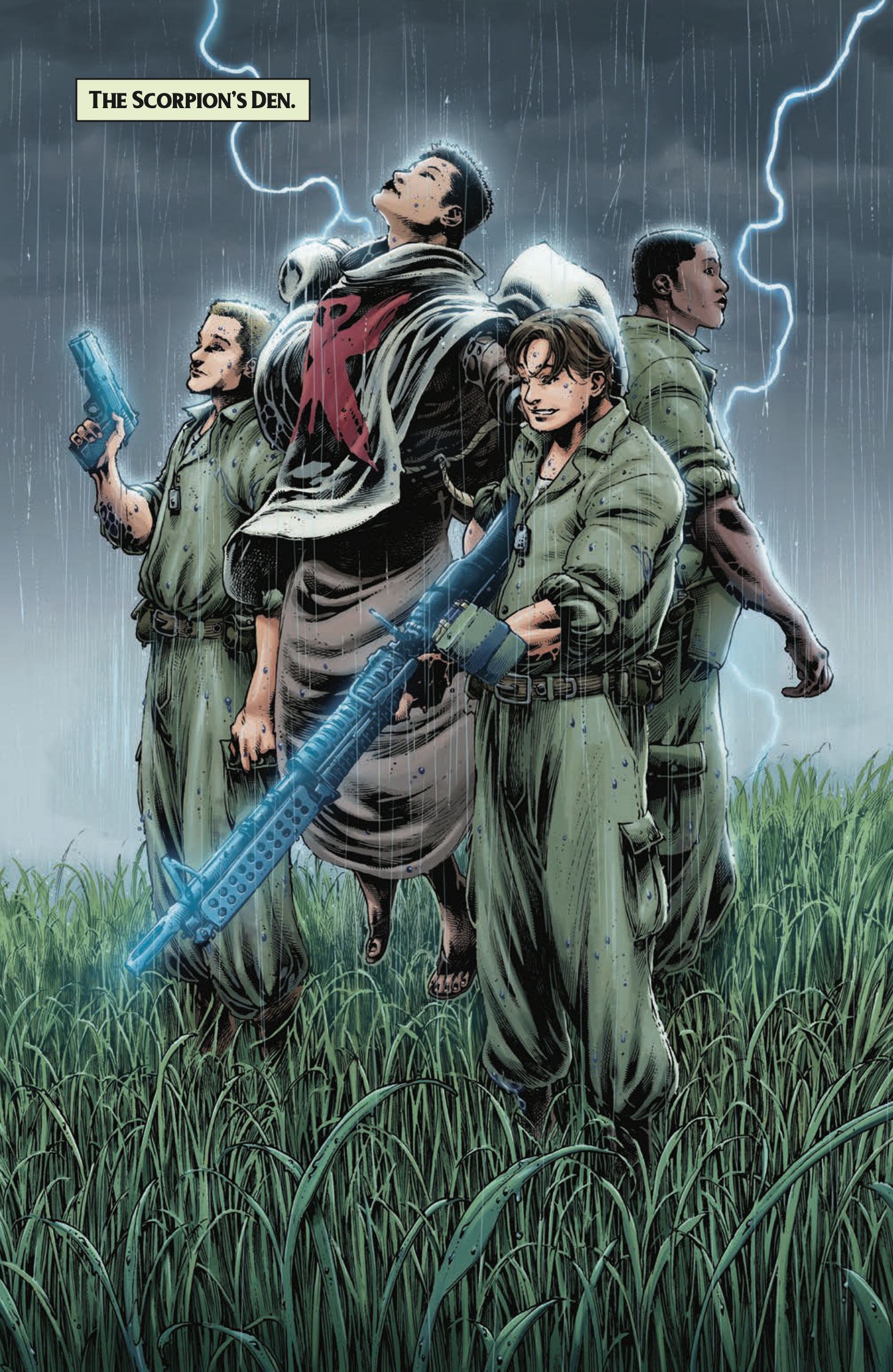
That leads me to new readers who arrived here because of my involvement with Iconic Comics. In short, my solution to the conundrum about a.) not beating my head against a wall while b.) reaching as many people as possible was to create a series about combat-veteran exorcists and their task of battling the demon Blackfire until the end of time.
Screenshot
One of my biggest regrets regarding this blog was not spending far more time years ago concentrating on spiritual warfare than the ideological, political, and cultural battles that made their way through the news cycles. The various wars we see around the globe are physical manifestations of our spiritual failures. The root of our problems is of a spiritual nature and your friendly neighborhood blogger spent way too much time over the years combating the symptoms rather than the disease. For that, I apologize.
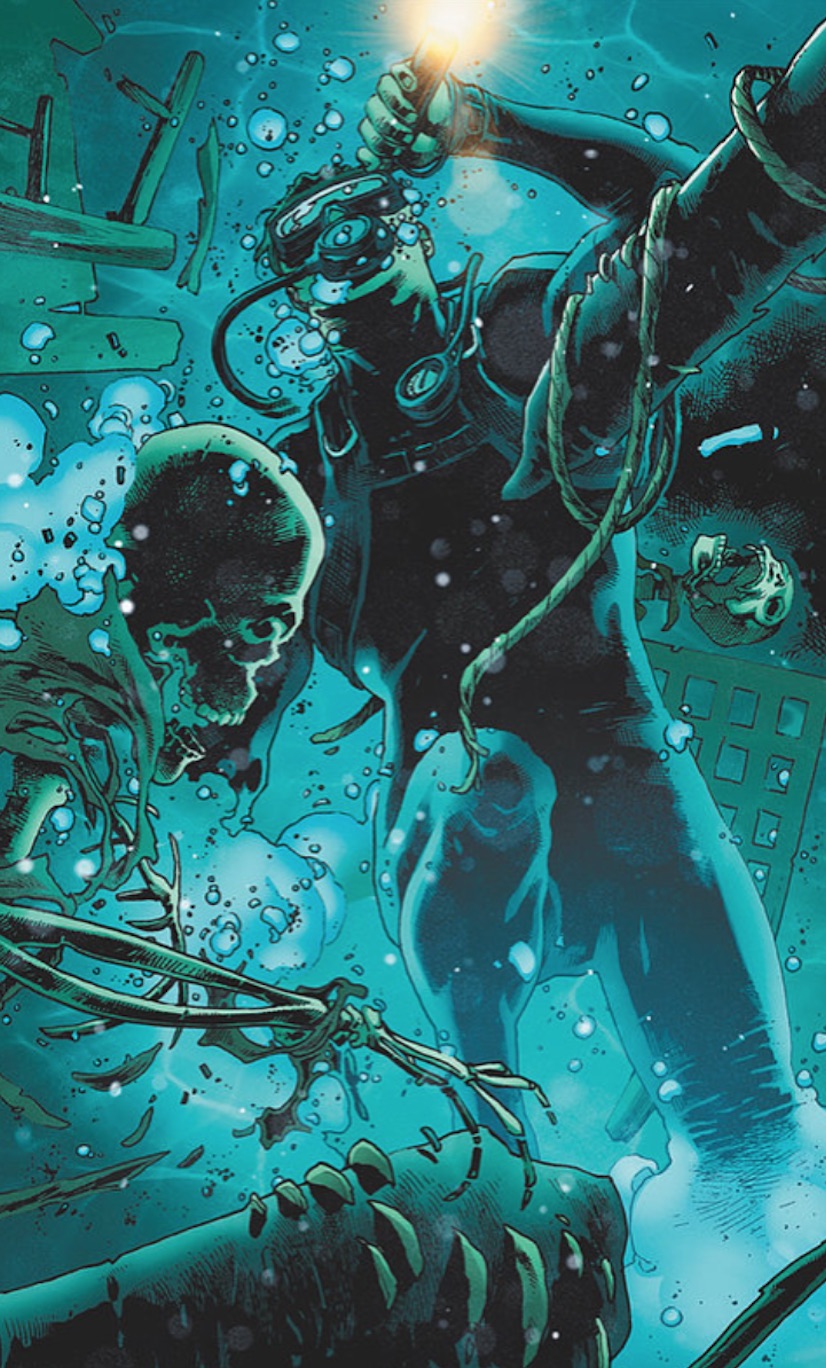
My attempt to make amends for lost time can be found in the pages of Soulfinder: Tunnel Hounds inspired by the famous “Tunnel Rats” of the Vietnam War. I wanted to explore the period in a young man’s life when he must leave home and, ideally, become a leader in his own right. Many ties are never broken with our parents, but connective tissues must be cut once a man has others under his command (particularly in war). As much as a man might love his mother and father, it is healthy to want to lay down his life for others in dangerous situations. Men who have opportunities to leave the battlefield routinely return to the front to be with their brothers and possibly give the ultimate sacrifice on their behalf.
Soulfinder: Tunnel Hounds — with beautiful art by Matt Weldon, covers by Rodrigo Avilés, and letters by Bill Williams — delves into the meaning of leadership, the excruciating moral dilemmas faced by young men deployed to warzones, and the myriad ways Satan exploits the highest echelons of society on all sides of war to create pain, chaos, hopelessness, and sorrow for everyone involved.
Whether you’re new to this blog or a veteran from its earliest days, I invite you to head over to Iconic Comics and check out the fourth installment of the series. Each book offers a standalone story but can be read in any order. Tunnel Hounds happens to take place before all the others in the Soulfinder timeline, so starting with Volume 4 is a great idea!
Also: If you believe in spiritual warfare, I highly suggest picking up one of the Memento Mori rosaries(courtesy of Rugged Rosaries), and praying with it as soon as possible. I’ve spoken about the Holy Rosary before on this blog, but we might be due to revisit the issue in the near future… Happy reading and thanks for your continued support over the years!
It was one year ago that your friendly neighborhood blogger-turned-YouTuber-turned-indie comics creator came out with Soulfinder: Black Tide. The May 2021 piece I penned upon its release talked about zigging while others zagged; the series about combat veteran exorcists skipped crowdfunding and went straight to the Iconic Comics website.
One reason for that decision: calculated risk. Hardcovers are trickier to print, and the theory was that getting the book out to as many people as possible at a great price would result in positive views prior to the hardcover’s availability. The key, of course, is that the book must be good. Everything hinges on the quality of the product meeting or exceeding readers’ expectations.
Did it work? Short answer: Yes.
Amazon Kindle feedback has been good. YouTubers have offered substantive (positive) reviews. The same goes for readers who prefer to voice their opinions on Twitter.
As it stands, any potential hardcover buyers who are on the fence once that version is released — complete with artist Matthew Weldon’s colors and inks — will have plenty of objective reviews to consider. Given that it is on the hardcover books where costs can quickly be recouped and profits made (and then those profits recycled into the next installment), the good word-of-mouth for less expensive saddle-stitch versions will be a huge asset for my sales pitch.
Given my approach to selling the series, dear reader, I now ask you to look across the social media landscape and consider the approaches used by other creators to sell books. It is my assertion that what you will see, for all intents and purposes, are a lot of professional victims across the ideological spectrum.
Creators on the left claim that their books should be supported because the evil boogeyman of conservativism threatens to destroy everything we hold dear. Similarly, a population on the right rants and raves about how left-wing boogeymen are out to destroy everything we hold dear. Each rage-fueled population offers a purely emotional appeal instead of talking about the merits of their writing, art, and overall packaging.
It is my stance that ideologues on both sides of the political spectrum are cancerous to creative endeavors and, ultimately, any cultural body they inhabit. Years ago I lamented left-wing ideologues within Marvel who used rage to market their books, so it stands to reason that I would reject right-wing ideologues who do the same thing while essentially saying, “Well, it’s different when we do it.”
Am I a conservative man? Yes. The key difference, however, is that I’m a writer who just so happens to be conservative; I’m not a conservative who happens to write.
If you’re looking for a series in which the creative team puts the characters and their motivations at the top of the priority list, then Soulfinder is for you. If you’re looking for a writer who does not want to shoehorn his beliefs into books and browbeat readers with personal politics, then you should check out my projects.
If, however, you want a conservative man to validate your worldview with painfully on-the-nose messaging, then I promise you those creators are only a few clicks away. They are on every social media platform and they’re begging to tell you that your wallet is the key to saving the world from a laundry list of super-scary men.
Thank you for reading and your willingness to give me your time after all these years on WordPress. I don’t post as much as I used to, but I’m going to try and get here on a more regular basis with thoughts on my time working in corporate media, living in Washington, D.C., and as a creator trying to publish quality independent comic books.
It was only a few years ago that your friendly neighborhood writer was regularly critiquing the comic book industry for its unprofessional creators and partisan politics shoehorned into stories. A lot has changed on this blog since then — namely the release of Soulfinder: Demon’s Match and Soulfinder: Black Tide.
Given that, I’d like to share some thoughts on creating comics for anyone who is thinking about taking the plunge.
The indie world is like other endeavors in many ways, in that there are always so-called “experts” who believe they have the definitive roadmap for success. Some creators come from the mainstream industry and charge big bucks for advice. Is it worth it? Overall, the answer appears to be “no.”
First, let us consider some of the advice, both explicit and implicit, floated this way over the years:
Avoid politics and religion at all costs.
Add “sex appeal.”
Creators must have a large YouTube channel or the support of a popular figure on the platform.
All roads to success go through Indiegogo and Kickstarter.
Now, let us consider the Soulfinder series of combat veterans-turned-exorcists:
Father Retter and Father Crane are Catholic priests; the books do not shy away from religious issues at all.
Soulfinder focuses almost exclusively on male characters and arguably has zero “sex appeal.”
My YouTube channel is not large by any means. The series has grown by positive word-of-mouth through the grassroots efforts of readers.
The Soulfinder: Black Tide launch went directly through ICONIC Comics — http://www.iconiccomics.com — instead of Indiegogo or Kickstarter, and is handily out-pacing the 2019 Soulfinder: Demon’s Match campaign ($33,000) on Indiegogo.
The key to success has far less to do with following a one-size-fits-all blueprint and far more to do with a.) having an objectively good product, b.) creating a clear, concise and personalized definition of success, c.) properly prioritizing important tasks, d.) possessing organizational skills, and e.) having a willingness to take calculated risks.
Readers generally don’t care if politics or religion works its way into stories — provided the author isn’t condescending, rude, or willing to sacrifice good storytelling for partisan (i.e., predictable) propaganda.
Similarly, the man who promotes heroism and virtue in a digital world of vacuous eye candy can do well for himself if he plays his cards right.
One way to stand out from a crowd is to zig while everyone else zags, but doing that requires a certain level of discernment. The more mastery a creator has over smaller and seemingly mundane tasks (e.g., budgeting), the more likely it is that he or she will have an accurate assessment of the “bigger picture” challenges that may be addressed through the aforementioned calculated risks.
If you’re looking to see evidence of this approach in action, then please head to ICONIC Comics and check out Soulfinder: Demon’s Match (2019) and Soulfinder: Black Tide (2021), along with the ongoing Kamen America and Black Hops series by Timothy Lim and Mark Pellegrini.
ICONIC Comics is where you can find creators who are always looking to glean valuable lessons from the successful campaigns of others, yet open to forging their own path when it may be appropriate.
With that said, I’d love to hear your thoughts on creating indie comics. Share your feedback in the comments section below, and please consider spreading the word about Soulfinder if you’ve appreciated the art and storytelling in the first two volumes.
A global pandemic. Lockdowns. Looting. Riots. Presidential politics.
The U.S. faced numerous challenges in 2020, which seemed to bring out the worst in a lot of people. All of it was chronicled on social media (platforms that in many ways reward division and hate). Your friendly neighborhood blogger, however, was blessed to start off the year with a trip to the Philippines with Marion Word Mission.
The nonprofit organization spearheaded by Dr. Cristina Pamaar has worked to “relieve the suffering of women and children” in the Philippines — Iloilo, specifically — for years. Doctors from Saint Barnabas Medical Center in Livingston, New Jersey, along with various philanthropic allies, converge on the island each year to lend their time and talents to the cause.
Surgeries (e.g., gynecological, dental, breast and thyroid).
Cancer screenings.
A traveling medical clinic.
“Mary’s Camp” for children “afflicted with cancer or other chronic illnesses, orphaned, and/or troubled by difficult circumstances.”
Marian Rose World Mission’s Football Development Program, which is open to “orphan boys aged 6-16 years old from the Don Bosco Boys’ Home in Dumangas and SOS Orphan Village in Zarraga.”
This year’s efforts started January 10 and ran through January 18. It’s hard to describe the dizzying pace that all of the volunteers keep, and the conditions that many of the doctors work in (while dealing with stifling heat), but it was a sight to behold. Doctors were up before dawn each morning on their way to various assignments and often didn’t arrive back at the mission until late at night.
In short, imagine a community in which all the petty squabbling of everyday life is replaced with an ethos of selfless service. Imagine a gathering of individuals in which everything that drives intellectual and spiritual wedges between people is stripped away and all that is left is a cheery determination to do right by one’s fellow man. That was my experience with Marian World Mission.
It was refreshing. It was inspiring. It was exactly the kind of thing one doesn’t expect to see on the news or trending on social media because ratings and algorithms always seemed geared toward negativity.
What made the trip even more memorable was Dr. Pamaar’s decision to give me a bird’s eye view of the mission. I was shown every aspect of the organization’s work on the island — and then some. She made time in an already insane schedule to introduce me to the religious and cultural staples of the island.
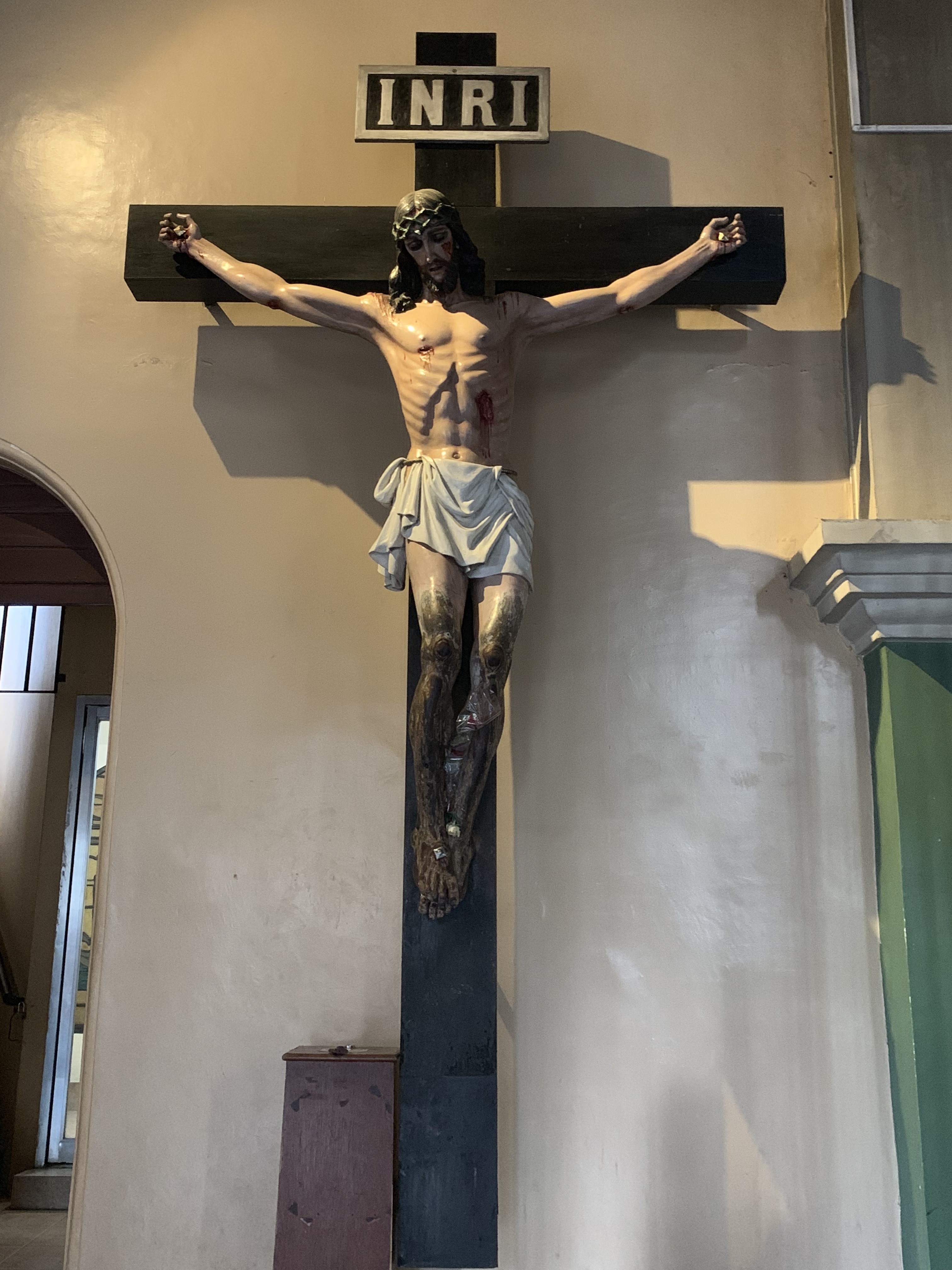
Particularly humbling were the many cathedrals and their rich history, which Dr. Pamaar explained in detail. It becomes easier to understand the population’s perseverance and hopeful disposition when its faith in God is explored.
Similarly, understanding the success of Marian Rose World Mission becomes easier when it’s understood that the biblical quote on its website — “Whatsoever you do to the least of my brethren, you do it to me. ” — is taken very, very seriously.
I cannot thank Marian Rose World Mission enough for the opportunity to take part in its work. Spending time with the doctors, volunteers, and the kind people of Iloilo gave me a clearer perspective of the things in life that truly matters, and for that I am forever grateful.
While the global pandemic threw a wrench in plans to return to the island in early 2021, I very much look froward to returning sometime in the future.
Additional details on the organization can be found here.
Regular readers of this blog know that for years I have said Marvel’s Dan Slott is more of an “idea man” than a writer’s writer. I’ve said that he spends far too much time ranting and raving on social media — or opining on plans that aren’t scheduled to take place for another 100 issues — instead of buckling down and focusing on what needs to be done in the here and now.
Regular readers also know that Mr. Slott has not taken kindly to my critiques of his writing and unprofessional behavior.
Imagine my surprise, then, when Disney+ decided to do a 44-minute Marvel 616 special on Mr. Slott titled “The Marvel Method,” which confirms everything yours truly said about the man’s work ethic over the past decade.
Tom Brevoort, Senior Vice President & Executive Editor for Marvel Comics (who blocked me on Twitter long ago after I asked if it was appropriate for Mr. Slott to tell Christians to move to “Christ-Land”), discusses the problem roughly five minutes into the episode.
An exchange with the writer goes as follows:
Dan Slott: “We’ve been planning this for ages. We’ve been seeding this for a very long time.”
Tom Brevoort: “So I know you’ve got a lot of ideas and very little actually put together. And you need more time to get it done.”
Dan Slott: “I think I could make it better.”
Tom Brevoort: “We use the term ‘work’ loosely when it comes to Dan. Dan’s terrible with his deadlines. You’ll be the famous writer of Iron Man 2022. I’ve worked with Dan for a quarter of a century. And fortunately, he’s good enough at this that those strengths help to counterbalance the fact that he is his own worst enemy when it comes to being able to produce things on the schedule that they need to be done.”
The crux of the episode is that Mr. Slott is the last of a dying breed at Marvel — writers who send a general plot to artists and then fill in the dialogue after seeing the artist’s interpretation of said plot.
Mr. Brevoort’s problem with Dan is that writer’s block, time spent on social media, and other factors habitually cause scheduling headaches and require extra help (e.g., Christos Gage) to get books completed in a timely manner.
“Chris Gage is half of my brain,” Mr. Slott says at one point. “I love plotting stories, but Chris likes scripting. If deadlines are crunching, Chris is gonna get me across.”
Why would deadlines be “crunching” on Mr. Slott? The answer, covered here for years, is because the man has spent inordinate amounts of time going on political rants against [insert Republican politician or policy here].
The lack of self-awareness on Mr. Slott’s part reaches stunning levels when he talks about readers who “lost their minds” over a storyline in 2012 because social media offers “an instantaneous way for you to be mad about anything.”
The writer says:
“One of the things that we have now today, which kinda hurts, is social media. Back in December of 2012, I killed Peter Parker. I was the guy who killed Spider-Man. When that story came out, fans lost their minds. It got scary fast. Social media went insane. That’s what social media is now. It’s an instantaneous way for you to be mad about anything.” — Dan Slott, Disney+, “The Marvel Method,” 2020.
What Mr. Slott doesn’t mention is that Marvel used outrage marketing to sell the books while its writers and editors simultaneously complained about readers who honored their request for anger.
“Dan is behind where I need him to be on his various assignments,” Mr. Brevoort continues as the printing clock for the first issue of Iron Man 2020 closes in. “I can’t really start on issue 2 until issue 1 is solid enough. I needed another writer to do the dialoguing on the book. So we made the choice to bring Christos Gage in.”
The episode rightly notes that using The Marvel Method in many ways makes the artist a de-facto ghost writer, but it fails to stress how strange it is that Mr. Slott, for all intents and purposes, becomes a book’s “Head Plotter” when someone like Mr. Gage is asked to do the heavy lifting on dialogue.
Letterer Joe Caramagna sums up what happens when a book essentially has three writers instead of one:
“Because Dan works in The Marvel Method, I’m usually waiting longer than I am from everyone else. If I have no script, I’m just looking at art and there’s nothing I can do. By the time I get the script from Dan, it’s usually about two days before the book has to go to press. I’m always sending a text or e-mailing, begging and pleading, ‘Someone please send me some script.’ … If my deadline is 6:30 p.m. to deliver a book to the printer, I could still be getting notes at 6:15. Like, that’s how close we cut it.” — Joe Caramagna, Disney+, “The Marvel Method,” 2020.
The question at the heart of the episode seems to be: “Is it worth it? Should ‘The Marvel Method’ go extinct with the eventual departure of Dan Slott?'”
Mr. Brevoort and everyone involved put a happy face on the collaborative efforts. They try their best to act as if the flavor of Slott’s creative sauce is worth the delays and frustration, but it clearly is a sore subject.
The Marvel Method makes it clear that industry icons like Stan Lee, Steve Ditko, and Jack Kirby were statistical outliers who in many ways acted out of necessity. Few people could walk the tightrope of chaos demanded by the process, and writers in 2020 who are obsessed with politics on social media should embrace a more structured working environment.
Anyone who wants some definitive reasons as to why modern Marvel Comics has gone off the rails over the past decade should watch The Marvel 616 Disney+ episode on “The Marvel Method.” It is extremely telling when an executive editor chuckles and laughs at the consequences of running a “good old boy” network: activist-writers emerge who know they can goof off on social media for days on end because the boss will always bring in an extra person to get the job done.
I don’t expect Mr. Brevoort to unblock your friendly neighborhood blogger anytime soon and apologize for acting as if my observations about Mr. Slott’s unprofessional procrastination were unfounded, but I do appreciate Disney+ vindicating my message. Check it out if you get a chance.