Iron Man #593: Bendis dragged kicking and screaming to honor Tony Stark’s “Legacy”

Iron Man 593

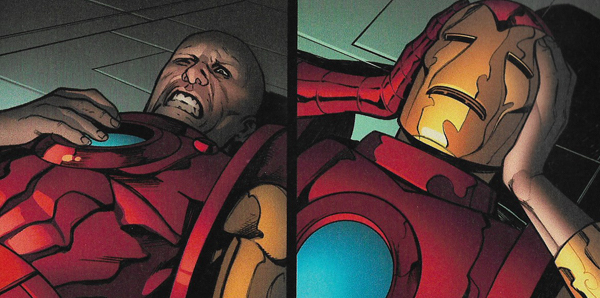
It’s here — Marvel’s attempt to tackle the “Legacy” of Tony Stark, aka The Invincible Iron Man. There’s only one problem, my friends: Writer Brian Michael Michael Bendis really wanted to keep the main character dead (for all intents and purposes) for a long, long time. Those pesky fans got in Editor in Chief Axel Alonso’s way, and now everyone who wanted to crown Riri Williams “the” Iron Man must to pretend as if they’re not backtracking against their will.

My latest YouTube video covers The Search for Tony Stark: Part 1, although what’s really going on is a search for ways to placate Disney overlords while still undermining Tony Stark’s long-term credibility.

Give my latest “quick-take” on the situation a listen and then let me know what you think in the comments section below. And, as always, if the video format resonates with you then make sure to like and subscribe. I don’t always cross-post these days (I need an intern!), but I try to do so as time permits.

Dan Slott acts like online psycho, anti-Christian bigot: Will Marvel step in?

Sometimes Marvel write Dan Slott tells Christians to go to “Christ-Land” after they win supreme court cases. Sometimes Marvel writer Dan Slott mocks prayer after terror attacks with “God isn’t fixing this” Twitter re-tweets. And sometimes Marvel writer Dan Slott mocks serious prayers by yours truly when he knows deep down that he would never do that to a Muslim comic book critic.

Check out my latest YouTube video if you want to see just how low modern Marvel Comics has fallen. Then ask yourself the following question: When will Disney step in?

BONUS: When all else fails and Marvel writer Dan Slott doesn’t know what to do about my videos, he goes back to his tried and true option — he lies.


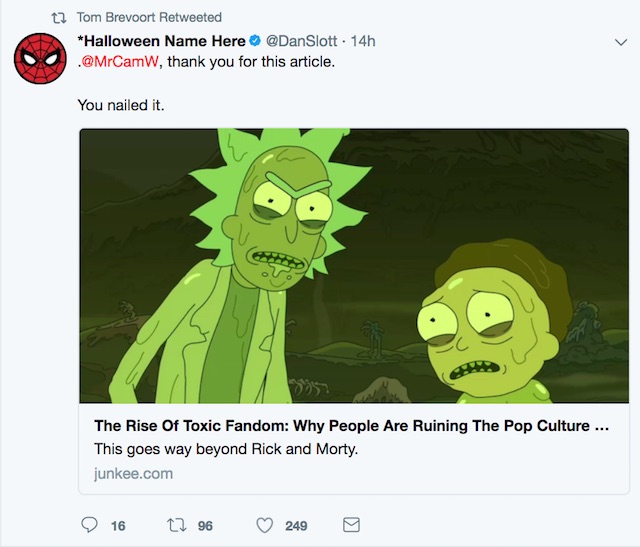
Marvel’s Tom Brevoort and ideologue pals blame “toxic” fans for comic woes; hypocrisy exposed on YouTube

Tom B toxic

Thoughts become words. Words become actions. Actions become habits. Habits become character, and character becomes destiny.

Therefore, it’s incredibly sad that Marvel’s Tom Brevoort and his activist friends make a habit of lying — to themselves, to fans, and anyone else who is willing to listen.

The House of Ideologues has attempted (and failed) for months to defame YouTube creators who are exposing its hypocrisy, and the latest effort involves blaming “toxic fandom.” It’s not going to work because, as my latest YouTube video demonstrates, the partisan propaganda spewed by Marvel’s writers and editors can always be juxtaposed with their laughable moral grandstanding.

As always, let me know what you think of the latest developments in the comments section below. If you like the format, make sure to subscribe for regular updates since I don’t always have time to cross-post onto the blog.


Marvel God Complex: Dan Slott says fans don’t know what they ‘need’

Some people are saying that “Comics Gate” is upon us. Others say that we’re in a “comic book culture war.” Whatever you decide, the bottom line is that Marvel writer Dan Slott gives bloggers and YouTuber creators like yours truly plenty of material to work with on a weekly basis.

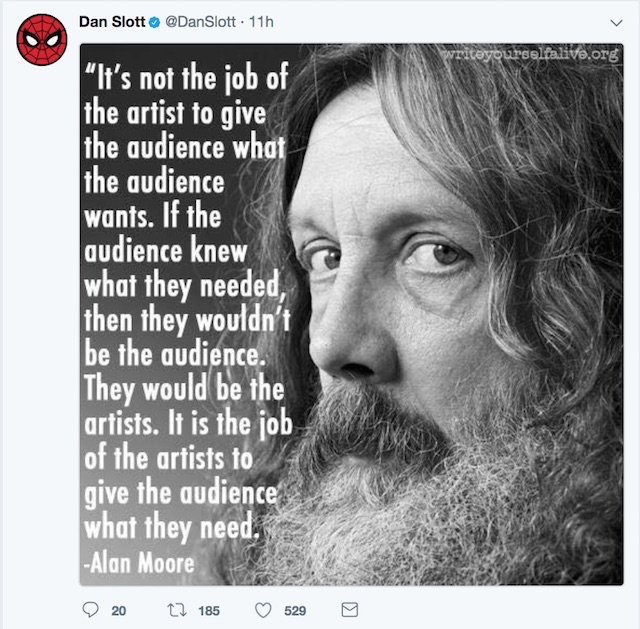
If you want to know why Marvel Comics is struggling these days, then look no further than Mr. Slott’s stance on the “job of the artist,” which he shares with Alan Moore.

Both men believe “it is the job of the artists to give the audience what they need (emphasis mine).

Dan Slott Twitter role of artist

Ask yourself, though: Is that true? Do artists decide what you “need,” or is that the position of men with seriously bizarre god complexes? Check out my latest YouTube video on the proper role of the artist, and then sound off in the comments section below.

This topic lit up YouTube, Twitter, and writer Roger McKenzie’s Facebook page this weekend, so I’d like to hear what you think.

Editor’s Note: When backed into a corner, Dan’s go-to option is to look for the “Stan Lee escape hatch,” even if the damage control is painfully obvious.

William Riverdale tweet

Marvel’s Spider-Joke: Predictable Chip Zdarsky makes critics look like prognosticators

Your friendly neighborhood blogger does not make predictions very often, but when I do they tend to come true. Take, for instance, the time I predicted that “Spider-Rockets” would grace the pages of The Amazing Spider-Man and it came true within months. I took no glee in the development, but at the same time I am grateful to have it as a data point when people question my judgment on Spidey-related matters.

Sadly, we now have another instance of yours truly playing the role of the successful prognosticator when it comes to Marvel Comics. I said in June with the launch of Peter Parker: The Spectacular Spider-Man that there was a 75 percent chance he would wind up doing standup comedy with his mask on by issue 12.

Note: I was ahead of the game by eight issues.

Check out my video below for more on the damage that writer Chip Zdarsky is doing to Peter Parker’s credibility, and as always feel free to add your thoughts in the comments section below. It’s going to get worse before it gets better.

Update: It appears as though Diversity & Comics is finally coming around on ASM’s Dan Slott. That means it is now time for me to give him some good-natured mockery: Vindicated!

Marvel’s ‘Clerksification’: Dante Spencer’s and Randal Zdarsky’s effect on comics

Over 20 years have passed since director Kevin Smith made Dante Hicks and Randal Graves famous. Clerks put him on the Hollywood map and endeared him to a generation of young writers, but there is no doubt that many of them learned the wrong lessons from his 90s “slackers.” Two contenders include Nick Spencer and Chip Zdarsky, who are guilty of what I’ve deemed the Clerksification of Marvel Comics.

To give you an idea of what my latest YouTube video is about, consider the tagline for Clerks, which goes as follows:

“Just because they serve you doesn’t mean they like you.”

Indeed, Marvel creators these days make no secret of their disdain of long-term customers, and will even tell fans not to buy the product during political disagreements. To better understand what’s going on, we must examine Mr. Smith’s work and how its sensibilities continue to reverberate in the minds of Marvel’s employees.

If you read through Secret Empire and Peter Parker: The Spectacular Spider-Man, then you should see the creative fingerprints of Mr. Smith, Quentin Tarantino, and a slew of others. Unfortunately, instead of Pulp Fiction-quality work fans received Hydra-Cap and Hipster Spider-Man.

Iron Man #10: Bendis’ Ri-regime change symbolic of hostile Tony takeover

Question: When is regime change acceptable in the Marvel Universe?

Answer: When It’s a Ri-regime change written by Brian Michael Bendis, or a self-serving effort by Dan Slott’s version of Peter Parker.

Yes, dear reader, writer Brian Michael Bendis is ten issues into Invincible Iron Man and the book’s protagonist (note: It’s not Tony Stark), is toppling problematic regimes, declaring herself queen, and then issuing a number of demands that must be met before she steps down. Meanwhile, the so-called genius has never spent one second trying to find the men who killed her best friend and stepfather.

If you think this is downright strange, then fans of the book will inevitably called you a “raaaaaaaaacist.” We’re living in strange times, but if you’re like and want to chronicle this era for future comic book fans, then check out my latest YouTube review for the full rundown.

Marvel’s Stephen Wacker weirdly claims victory over stated enemy — people who buy comics

Many years from now there will be business courses on Marvel Comics’ bizarre decision to demonize large swathes of its fanbase as a means of securing sales. Common sense tells objective observers that Marvel’s downward sales trajectory is tied to hostility towards the fans, and yet guys like Stephen Wacker, VP for Current Series and Development, continue to double and triple down on insulting loyal customers.

As has been said before, the “House of Ideas” has become the “House of Ideologues,” but if you need further evidence then check out my latest YouTube video. Mr. Wacker declared victory over the fans in a war that he has cooked up in his own mind, but he did so while preemptively blocking yours truly on Twitter.

Indeed, I am so utter defeated by men like Stephen Wacker and the Marvel’s Gate cult that I must be blocked from seeing what the victor is up to on social media. Never mind the fact that I have never made contact with him on the platform, either directly or indirectly.

Anyway, check out the video, subscribe if the format is up your alley, and make sure to leave your two cents in the comments section below. Unlike Mr. Wacker, I want to hear what you have to say.

Heather Antos: Marvel’s manufactured milkshake drama for fragile tea cups

Those who follow the comic book industry witnessed a Marvel-wide “milkshake” meltdown over the weekend, which is emblematic of everything that is wrong with the company. The whole story is incredibly bizarre, but it boils down to this:

Gwenpool editor Heather Antos saw three tweets that she didn’t like over the weekend and decided that random insults are the equivalent of harassment.

Despite the fact that a random insult is not the same as harassment or a human rights violation, the industry’s writers and artists acted as if she had barely dodged an acid attack by Taliban thugs in Afghanistan. Marvel Editor Tom Brevoort put on his daddy pants to let her know that everything would all be okay; he then told her that tens-of-thousands of fans who are tired of partisan politics at the company are “racist turds.”

There is more to the story, but for that I suggest checking out my latest YouTube video. Also, I would like to thank Mr. Brevoort for his overreaction, which netted me scores of new YouTube subscribers and Twitter followers.

Fun fact: Guys like me are not “racist turds.” Every time you criticize us, people check out our work and realize, “Hey, this seems like a pretty nice dude. I want to hear more of what he has to say.”

My suggestion for Marvel Editor-in-Chief Axel Alonso would be to concentrate on good stories instead of partisan hackery, but at this point I don’t see him listening to reason. Given that, I will continue to make videos as the House That Axel Alonso built implodes.

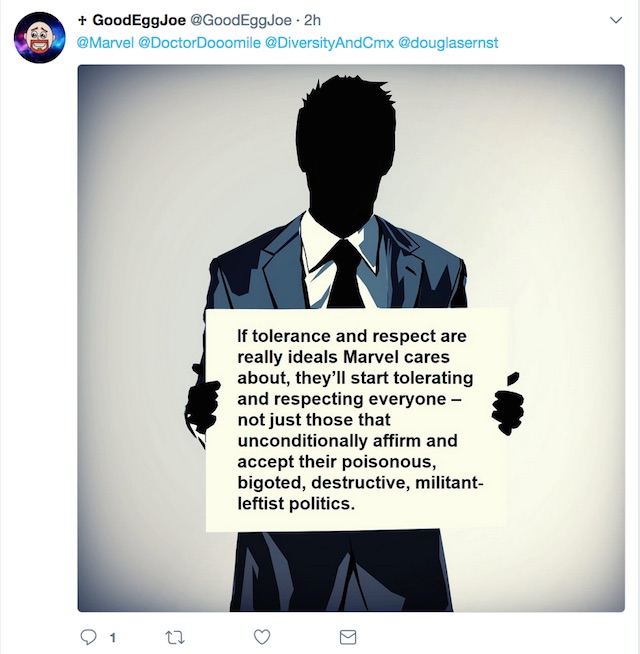
Editor’s Note: Twitter user GoodEggJoe sent me this image today, which I told him was pretty darn good and worthy of being included on a blog post. His work shows that there are numerous ways to put pressure on the comic industry’s activist-writers. One doesn’t need a blog or a YouTube channel to have their voice be heard.

GoodEggJoe

‘Dare We Hope That All Men Be Saved?’ Blogger learns his von Balthasar-esque ideas are quite controversial

Dare We Hope

Roughly four years ago I was in a late-night discussion with a Baptist friend when our attention turned to the subject of hell. I wondered aloud what would happen if a soul in hell legitimately turned to God with a contrite heart and pleaded for forgiveness. My assertion was that it is entirely possible that exceptions could be made by an infinitely merciful and loving God who dispenses perfect justice.

My friend (in a tactful way) said that I was being absurd and cited numerous biblical passages to buttress his point.

Enter stage right, Hans Urs Von Balthasar, author of 1988’s Dare We Hope That All Men Be Saved?

As Fr. Robert Barron says on the back cover of a 2014 reprinting:

“Critics contend that von Balthasar espouses universalism, the idea that all men will certainly be saved. Yet, as von Balthasar insists, damnation is a real possibility for anyone. Indeed, he explores the nature of damnation with sobering clarity. At the same time, he contends that a deep understanding of God’s merciful love and human freedom, and a careful reading of the Catholic tradition, point to the possibility — not the certainty — that, in the end, all men will accept salvation Christ won for all. For this all-embracing salvation, von Balthasar says, we may dare hope, we must pray and with God’s help we must work.”

Perhaps the impetus for my conclusions come from repeated dreams with a friend who died in an ATV accident. We were raised Catholic, but it was my understanding that he drifted away from the Church and somewhere along the line decided that he did not believe in God. In my dreams he comes to me, and when I tell him that he is dead he gets a frightened expression on his face and runs away — often exploding in a ghostly mist when he hits a nearby door or wall. (Note: I get chills when I think or write about these dreams.)

My reaction to these experiences has always been to pray for my friend’s soul because at the end of the day I have zero knowledge about his ultimate fate. If he is in hell, then do I have an obligation to pray for him? If he is consigned to eternal separation from God, then may I pray to ease his suffering?

I do not believe that God would send me on a fool’s errand; therefore, I have to believe that the urge to pray for my friend’s soul — whatever has become of him — has deep meaning.

Furthermore, it seems to me as though Søren Kierkegaard offers an incredibly wise blueprint for how a Christian man should think:

“Telling other people … ‘You are eternally lost’ is something I cannot do. As far as I am concerned, the situation is that all the others will, of course, go to heaven; the only doubt is whether I shall get there.'”

What he says is something that is perpetually at the forefront of my mind: No matter how hard we try, at the end of the day we are all unworthy to stand before God. Pure justice in the earthly sense of the word would require all of us to be banished to hell; it is only God’s infinite love and mercy that saves. Given that, why would I ever tell another man that he is destined for eternal damnation?

It seems to me that when a man constructs a moral pedestal high enough to proclaim that others are destined for hell that all he has really done is create a personal high-dive into “the lake of fire.”

Von Balthasar puts it far more eloquently than I could when he observes:

“It can be taken as a motif running through the history of theology that, whenever one fills hell with a massa damnata of sinners, one also, through some kind of conscious or unconscious trick (perhaps cautiously, and yet reassuredly), places oneself on the other side,” (152).

Additionally (and I believe this is of utmost importance):

“The strong Christian would have to endure the tension and ‘prepare himself seriously for the possibility of himself being among the rejected. Love of God first shows itself in its full purity only when one affirms God’s will even though it destroys one’s own happiness,” (155).

There is much more to say, but for brevity’s sake I will simply recommend reading Dare We Hope That All Men Be Saved? if this post has piqued your interest. It’s a fascinating book for all Christians — and those non-Christians who honestly want to better understand the faith.