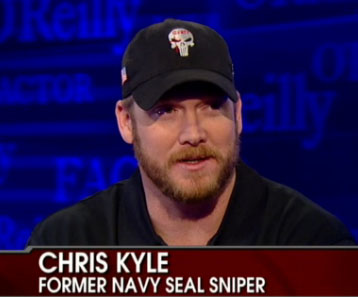
American Sniper: Chris Kyle, Guardian Angel who doesn’t know it.

American Sniper’s Chris Kyle keeps returning to the idea of a guardian angel watching over him without ever acknowledging the extent to which he is one.

I gave American Sniper an abridged review upon its release, but it’s a book that deserves an extended version. Chris Kyle may be “the most lethal sniper in U.S. history, ” but he’s much more than that. Throughout the book, Kyle wrestles with the many roles he must play (i.e., husband, father, soldier) and the responsibilities he must balance with God, Family, and Country. We ask our soldiers to be killing machines, but then expect their humanity to remain unscathed. We order them to extinguish pure evil, but then give them Rules of Engagement better suited for a cricket match. If for no other reason, civilians should read this book just for a glimpse into the psychological ringer we put our war fighters through without ever giving it a second thought.

One of the other topics that comes up repeatedly throughout American Sniper is the idea of a guardian angel. Chris postulates that there must have been one looking over him on multiple occasions (as does his friend Marcus Luttrell in the fabulous book Lone Survivor). What’s interesting about both of these soldiers is that on some level they downplay the fact that THEY are guardian angels. Chris’ obsession becomes saving every solider in harm’s way—and impossible task that begins to take a psychological toll on him as the war moves on. After his battle buddy is shot, he blames himself:

I’d put him in the spot where he got hit. It was my fault he’d been shot…A hundred kills? Two hundred? What did they mean if my brother was dead? Why hadn’t I put myself there? Why hadn’t I been standing there? I could have gotten the bastard–I could have saved my boy. I was in a dark hole. Deep Down. How long I stayed there, head buried, tears flowing, I have no idea.”

Chris often observes the unpredictable nature of war, but when it comes to an injury or a death of a fellow soldier he seems to (unfairly) place full responsibility on his own shoulders. What Chris fails to realize is that even a guardian angel can not be all places at all times. His insatiable thirst to find and kill every last enemy is commendable, but readers will know long before he addresses the issue that yes, even Navy SEALS are human, and such a mentality lends itself to the kind of physiological problems (e.g., high blood pressure) he would experience later in his career. Luckily for Chris, this story has a happy ending.

The final aspect of the book that needs to be covered concerns how wars are won—something that is not taught in college classrooms, which might be the reason for the bongo-drumming anti-war protests I experienced years ago at USC:

YOU KNOW HOW RAMADI WAS WON? We went in and killed all the bad people we could find. When we started, the decent (or potentially decent) Iraqis didn’t fear the United States; they did fear the terrorists. The U.S. told them, “We’ll make it better for you.”

The terrorists said, “We’ll cut your head off.”

Who would you fear? Who would you listen to?

We went to Ramadi, we told the terrorists, “We’ll cut your head off. We will do whatever we have to and eliminate you.” Not only did we get the terrorists’ attention—we got everyone’s attention. We showed we were the force to be reckoned with. That’s where the so-called Great Awakening came from. It wasn’t from kissing up to the Iraqis. It was from kicking butt.

The tribal leaders saw that we were bad-asses, and they’d better get their act together, work together and stop accommodating the insurgents. Force moved that battle. We killed the bad guys and brought the leaders to the peace table. That is how the world works.

Chris Kyle makes a compelling case, and it’s one that doesn’t get the attention it deserves among the civilian population, which is sad. Regardless, I’d like to narrow the scope of his argument: The United States “works” because guardian angels like Chris are willing to enter into a realms of pure evil and push back. They do so selflessly. They do so at the expense to family and loved ones.

In the late 90s I enlisted in a mechanized infantry unit. I wore a chain with the prayer to Saint Michael inscribed on it. Reading American Sniper made me realize that for a span of three years I lived and worked with guardian angels every day and I never adequately showed my appreciation to a great group of guys. Chris Kyle’s book will make you realize just how much we take the civilized world—and life—for granted. I highly recommend this book, for soldier and civilian alike.

Update: Please pray for the Kyle family. Chris was shot and murdered on February 2, 2013.

Related: No Easy Day: The Firsthand Account … of a great book

American Sniper: More Dead Terrorists Than Sales By Occupiers?

How odd is it that former Navy SEAL, Chris Kyle, has killed more terrorists than the number of “Occupy” protesters who will buy his book?

On Saturday I bought American Sniper: The Autobiography of the Most Lethal Sniper in U.S. Military History. On Sunday I started reading it. Tonight, I finished it. Needless to say, it was worth the $27.00 I laid down on the counter. If you’re a fan of Marcus Luttrell, you’ll want to add this one to your collection. If you’re a fan of Harry “surrender monkey” Reid, you might not. My full review will come in the near future, but there is one excerpt that I think sums up the essence of the book:

One night a little later on, we were in an exhausting firefight. Ten of us spent roughly forty-eight hours in the second story of an old, abandoned brick building, fighting in hundred-degree-plus heat wearing full armor. Bullets flew in, demolishing the walls around us practically nonstop. The only break we took was to reload.

Finally, as the sun came up in the morning, the sound of gunfire and bullets hitting brick stopped. The fight was over. It was eerily quiet.

When the Marines came in to relieve us , they found every man in the room either slumped against a wall or collapsed on the floor, dressing wounds or just soaking in the situation.

One of the Marines outside took an American flag and hoisted it over the position. Someone else played the National Anthem—I have no idea where the music came from, but the symbolism and the way it spoke to the soul was overwhelming; it remains one of my most powerful memories.

Every battle-weary man rose, went to the window, and saluted. The words of the music echoed in each of us as we watched the Stars and Stripes wave literally in dawn’s early light. The reminder of what we were fighting for caused tears as well as blood and sweat to run freely from all of us, (American Sniper, 84-85).

American Sniper is a very telling book. Patriots exist. But the patriotism displayed by Chris Kyle is not instilled in children today. It’s ironically very foreign to them, which is why Kyle’s run-in with anti-war protestors earlier in the book has such a profound effect on him. Once upon a time an overwhelming majority of Americans knew what it was the Chris Kyle’s of the world stood for, even if they could never know what it was like to be a SEAL. Once upon a time an overwhelming majority of Americans were rooted in the same love of country, even if military service wasn’t their calling.

Today, it’s different. It seems as though decades of moral and cultural relativism, taught in universities and reenforced through media, has taken its toll. The country is desperate for someone—anyone—who can articulate why the bedrock values the country was built on (e.g., limited government, free markets, and a strong national defense), are still relevant today. The Tea Party and the “Occupy” movements have charted two very different paths for Americans to walk down, and those in the middle are confused as to which road to take. American Sniper is a portrait of the type of American we should all aspire to be, and while Chris Kyle isn’t particularly political, the principles that guide him are deeply tied to our political discourse.

I highly suggest reading American Sniper. When you’re done you’ll have a deeper respect for the work that guys like Chris do, but you’ll also see why modern American conservatism is the last, best hope to preserving our great nation.

Update: Please pray for the Kyle family. Chris was murdered on February 2, 2013.

Update: The expanded book review for American Sniper is now up.
Related: No Easy Day: The Firsthand Account … of a great book

The Case for Santa Claus: Saint Nicholas and Advanced Quantum Mechanics!

Should parents “lie” to their kids about Santa Claus? If they teach their children about the very real Saint Nicholas and the lessons they can learn from his example (e.g., secret acts of kindness), sure! If they can work in a lesson on advanced quantum mechanics, even better!

Every time Christmas rolls around stories pop up as to whether it’s healthy or appropriate to teach kids to believe in Santa Claus. Inevitably the question of lying comes up, and what it teaches children to start them off at a young age in what is, arguably a cruel hoax. When I have kids, I’m actually inclined to be pro-Santa with a scientific twist. I’ve talked about Barack Obama Wormholes, so it’s only natural that Santa use them as well!

Santa clearly uses wormholes, the tunnels through space and time that allow travelers to jump from one side of the cosmos to the other or—in this case, from one neighborhood to the next. But trying to give your kid a primer on relativity, gravity and negative energy would be pointless. Instead, take a piece of paper, draw a picture of your house on one half, then a friend’s home on the oppposite one. Trace a line from one side of the sheet to the other to represent the standard path—the route Santa would take in an airborne sleigh. Now fold the paper down the middle so the two houses are back-to-back, one on either side.

You don’t have to get into the curvature of space-time, but you can tell your kids that Santa uses deep scientific knowledge to see a different map of the universe, one that contains roads most people don’t know about.

When I was a kid, my belief in Santa came to a halt when I noticed that many of the gifts from him had Toys-R-Us stickers attached. It didn’t scar me in any way to realize he wasn’t real. Sure, it was a let down, but I’ll always have the memories of going to bed excited, wondering what Santa would leave under the tree.

The question at the heart of the Santa dilemma seems to be: Is it ever okay to lie? As with anything, it depends on what the underlying motive is. If you act in a way where the root motivation is to deceive another to benefit yourself, then it is wrong. A person who “lies” to their friend in order to buy time to set up a surprise party has done no wrong. A person who lies to their “friend” to buy time for a surprise party—knowing their friend has hormephobia (the fear of shock)—might be a really big jerk.

Kids today seem to have almost no window of time where they get to be a kid. They’re bombarded from the very beginning by a culture that seeks to strip them of their innocence, and to me the “lie” of Santa allows them to suspend disbelief, if only for a few moments each year. Thomas Hobbes said that life is “nasty, brutish, and short,” and he was right. I’d like to think that as long as the real meaning of Christmas is conveyed to a child, there is nothing wrong with a Santa charade.

Does the anti-Santa truth brigade stop the child who pretends to be a superhero or a princess and say, “Stop lying to yourself. That’s not real. That’s make-believe. It’s weird. Live in the real world,”? Of course not. It might be funny on some level…but no one says that. A child that dreams and pretends is healthy. They can have a sense of wonder about tall tales of fiction, and can glean very real, very practical lessons from them. Likewise, the child who realizes that Santa Claus isn’t real can be encouraged to figure out who Saint Nicholas really was, why he did matter (e.g., secret acts of kindness), and how the way he ran his life is important to their own.

I would even argue that when the Communist Chinese—openly unfriendly to religion—start to embrace the commercialized depiction of Santa they’re really just opening the door for millions of citizens to look into his origins. And when they look into who Saint Nicholas was, many of them will be led to that which China is notorious for stamping out—faith.

When I have kids, Santa’s tale will be told, but he’s generally going to avoid chimneys and opt for wormholes and advanced quantum mechanics. Hopefully yours will too!

Why Marriage Matters

It wasn’t until my own marriage took place that I realized how important the institution of marriage really is. The little bits of wisdom I laughed at in my youth have piled up high over the years, to the point where I now have a silo filled with shoulda, woulda, couldas.

Humans are like metal, all of us with our purities and imperfections. When two people come together in a healthy marriage, a mental and spiritual metallurgy takes place, similar to the super alloys we see in the aerospace industry (admittedly not the most romantic analogy, but I’m going for accuracy, ladies).

Imagine the Air Force’s best fighter jet, and the kind of stresses that it must withstand during the course of its lifetime. When two people commit to spend their lives together, in essence they become one, and the implications of that union are felt immediately by the psyche. A married man, who knows he has a wife by his side, carries himself in a different manner. He’s much more confident and mentally strong, because he knows that if he ever stumbles there is someone there for him. A married man knows that there is nothing he can not accomplish, because a support structure is there to buttress him from the weight of workplace and professional setbacks, criticism, and bad breaks. The professional arena rewards confidence backed up with results, and it’s much easier to concentrate on performance when someone behind the scenes is stoking the fires of optimism in the heart, sanding the rough edges of the soul, and making sure that the creative wells never run dry.

Anyone who has forged metal knows it’s an intense process—like marriage—which is why “no fault” divorces and celebrity marriage fiascoes, complete with the drive-through divorce days or months later, are so destructive to our societal fabric. That’s not to say there are instances where it “doesn’t work out,” but by and large society’s expectations about marriage, what it is, and what it entails happens to be completely detached from reality. Sadly, we live in a society that nourishes narcissism. Individuals are expected to view themselves as the center of the universe, which might not be a problem if they actually knew how the universe worked…

The celestial bodies balanced in space (much more delicately than we realize) spin and circle and dance around each other, but there’s a synchronization to it all. One who views himself as the earth in his marriage shouldn’t forget that he needs the moon. The Sun is the brightest light in the sky, but if the planets and stars around it were aligned differently it might very well collapse in on itself. There’s a give and play to marriage that isn’t about one person not getting their way—nothing could be further from the truth. It’s a relief to the mind, the body, and the soul when one person can periodically give up control because they know their partner is going to lead them to someplace they wanted to go.

Two people who live together for a long time can have a healthy relationship, but there is an almost-unconscious change that happens to the married couple. When someone has taken an official oath to be faithful their spouse, those last little tinctures of doubt or questions about fidelity fade away. Those two individuals—again, now one—know that they have become the sole proprietor of their destiny, and the incentive to succeed goes off the charts.

While we can never go back and erase past mistakes, we can prevent others from walking into similar minefields. If this blog prevents even one person from getting hurt or from hurting someone else, I’ll have considered it a success. Marriage matters. Don’t let anyone tell you otherwise.

Plato’s Man in the Cave Allegory Updated: Nation in the Toilet.

Someone needs to update Plato's Republic. We are no longer the man in the cave. We are the nation in the toilet. I invite you to climb out with me.

In January the world saw video of Alan Haywood, a DC florist who was attacked on the Metro Green Line by a bunch of thugs…for minding his own business. Less than one year later I had the unfortunate experience of writing about a run-in with a Green Line low-life, although it ended quite differently since thugs don’t like it when their victim becomes the aggressor.

Today there is the case of Scotty Mandingo Strahan, who it appears is the young man responsible for cold-cocking a homeless, elderly man along Chicago’s Red Line. We can thank WorldStarHipHop for bringing this incident into the light, where it can now be examined (and possibly used to ensure that justice is served).

Some people despise sites like WorldStarHipHop and its glorification of a culture that finds entertainment value in treating homeless people as a punching bag. To me, WorldStarHipHop is whatever you make of it. For me, it’s a mirror that simply reflects American cultural decline. It serves as a wake-up call for those caught in the cesspool created by decades of moral relativism. Are we too close to the waterfall to prevent ourselves from going over a cliff? Are we stuck in an undertow and only gasping for breath before it all goes black? I don’t know, but the image of a homeless elderly man lying unconscious on the cold concrete, while his hand rests on the American flag on his chest, is powerful for all the wrong reasons.

Listen to the audio, and in between the hoots and hollers and laughs and giggles someone asks why the perpetrator didn’t go through the man’s pockets! The response: He’s homeless! (i.e., I would have robbed him too, but I knew he didn’t have anything on him).

When it’s not psychoanalyzing our political process, the world wonders why a Penn State coach can get away with robbing children of their innocence for years on end. The world wonders why it’s ignored or under the radar until it blows up in our faces (at which time everyone gets up on a moral pedestal and pretends like they would have been the Knight in Shining Armor if only they were there to rise to the challenge).

The truth hurts: We’re like the man in the cave Plato speaks about in The Republic, but instead of a deep dark cave we’re the Nation in The Toilet. We’ve been in the toilet so long that most of us don’t even realize it because we’ve never looked up. Most people think they live in a pretty porcelain palace until they get hit in the head with a big piece of crap (e.g., The Penn State scandal).

Sad, isn’t it? Instead of swimming in circles, try climbing out of the toilet and helping a few others on your way out.

Kal Penn: Mocking Christians Is More Profitable Than Working for Obama.

Kal Penn will run to the Huffington Post crying if Joel Stein cracks a few jokes about Indians, but is perfectly okay making millions punching out priests (in 3D) for his stoner flicks. Maybe they should title his next movie Harold and Kumar Go Hypocrite.

Kal Penn once made a lot of money, in part, by making movies that make fun of Christians and Conservatives. He then got a job working for the Obama Administration as part of the White House Office of Public Liaison. Why?

“I’ve been thinking about [moving into politics] for a while. I love what I do as an actor. I couldn’t love it more…probably from the time I was a kid, I really enjoyed that balance between the arts and public service.”

Public service jobs don’t pay as much as making fun of Christians, so Penn returned to Hollywood to make A Very Harold and Kumar Christmas (or perhaps to Penn making fun of Christians is a public service?) Who knows. The one thing we do know is that he’s a bit more prickly when it comes to making fun of Indians; when liberal Joel Stein had some fun at the expense of Kal Penn’s heritage he couldn’t quite hide his hypocrisy:

Gags about impossibly spicy food? I’d never heard those before! Multiple Gods with multiple arms? Multiple laughs! Recounting racial slurs like “dot-head”? Oh, Mr. Stein, is too good! I don’t know how he comes up with such unique bits.

Indian jokes are off limits for Kal Penn, but Jesus in a strip club is hilarious! Indian jokes are off limits, but punching out priests (in 3D) is holiday fun you can’t miss! Comedians are only funny if they go after everyone. Guys like Kal Penn are just intellectual bullies, making jokes at the expense of people who don’t fight back. They’re like Kevin Smith, who is perfectly fine making horror movies about fundamentalist Christians, but scared stiff (or should I say Silent Bob) on jihad.

Remember when Kal Penn was robbed at gunpoint in Washington, DC? Instead of penning a scene for A Very Harold and Kumar Christmas that ridicules gun control laws that benefit violent criminals at the expense of law-abiding citizens, Penn opts to…shoot Santa in the face. Personally, I’d rather shoot criminals in the face.

Good luck with the movie, Kal. I hope you bring in sleighs full of cash. I just wish you realized what a hypocrite you are.

Jesus in a strip club is hilarious to Kal Penn. Jokes told by Joel Stein about the food Indian people eat? Blasphemy.


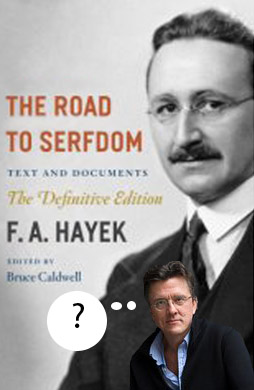
The New York Times: Why Read Hayek When Ad Hominem Attacks Work?

Kurt Anderson from the New York Times understands that it’s so much easier to call someone a lunatic than to try and understand what they’re saying. Conservatives don’t think he’s stupid (he’s apparently just a jerk).

I’ve been reading a lot of liberal responses to the debt ceiling fallout. Whereas once the media simply tried to label the Tea Party “racist”, we are now “madmen” and actually unhinged,” according to New York Times op-ed columnist Kurt Anderson (emphasis his). The only thing that is mad is our Mad Debt, as Mark Steyn points out for National Review Online:

“Cutting federal spending by $900 billion over ten years” is Washington-speak for increasing federal spending by $7 trillion over ten years. And, as they’d originally planned to increase it by eight trillion, that counts as a cut. If they’d planned to increase it by $20 trillion and then settled for merely $15 trillion, they could have saved five trillion. See how easy this is?

As part of this historic “cut,” we’ve now raised the “debt ceiling” — or, more accurately, lowered the debt abyss. Do you ever discuss the debt with your neighbor? Do you think he has any serious intention to repay the 15 trillion racked up in his and your name? Does your congressman? Does your senator? Look into their eyes. You can see the answer. And, if none of these parties seem inclined to pay down the debt now, what are the chances they’ll feel like doing so by 2020 when, under these historic “cuts,” it’s up to 23-25 trillion?

Most independent voters will read Mark Steyn’s analysis of the situation and conclude he’s a pretty logical guy. In fact, I would wager that most people would (even those who disagree with him) concede that he’s an incredibly smart man. But yet, according to Kurt Anderson, the millions of people who agree with the Steyn’s sentiments are “unhinged.” Obviously, Mr. Anderson has never read F.A. Hayek (another undeniably smart man):

It is a common mistake to regard National Socialism as a mere revolt against reason, an irrational movement without intellectual background. If that were so, the movement would be much less dangerous than it is. But nothing could be further from the truth or more misleading. The doctrines of National Socialism are the culmination of a long evolution of thought, a process in which thinkers who have had great influence far beyond the confines of Germany have taken part. Whatever one may think of the premises from which they started, it cannot be denied that the men who produced the new doctrines were powerful writers who left the impress of their ideas on the whole of European thought…Once one accepts the premises from which it starts, there is no escape from its logic. It is simply collectivism freed from mall traces of an individualist tradition which might hamper its realization,” (F.A. Hayek, The Road to Serfdom).

Smart conservatives know that to dismiss liberalism as “a mental disorder” is to set the conservative movement up for failure. The left has incredibly sharp minds at work promoting an ideology that should not be taken lightly. While I hate to give advice to the guy who flat-out says that I’m an unhinged lunatic, I can’t help but advise Kurt Anderson to rethink his position. The Teaparty is composed of millions of people who are familiar with economic giants like F.A Hayek, Ludwig von Mises, Thomas Sowell, and Walter E. Williams, among others. The Teaparty turns to the Constitution, The Federalist Papers, and the timeless principles so eloquently articulated by our Founding Fathers, to guide them. To dismiss the Teaparty as a bunch of “madmen”, one wonders how Kurt Anderson feels about the Founders…

Actually, we know how liberals feel about them—and it’s not warm and fuzzy. In order to hide their animosity towards the Founding Fathers and the magnificent document they produced, liberals refer to the Constitution as “a living document” (i.e., it means whatever it is they want it to mean.) Only by viewing the Constitution in that light can liberals work around what has been an impediment — and a source of frustration — to their central planning for ages. In order for them to succeed, they need power. In a country of 400 million people — each with their own thoughts and dreams and desires —it requires incredible power to get everyone “in line.” The Constitution stops them in their tracks, which is why its defenders must be labeled “unhinged.”

Crazy? I think not.

The Man of Steel’s One Weakness: Political Hacks

Is Henry Cavill's Superman the kind that fights for "Truth, Justice, and...All That Stuff", or will he fight for the American Way? The intensity in his eyes says director Zack Synder has the Man of Steel back on track.

The first images of Henry Cavill as Superman are up and about. He looks good. Case closed, which frees us up to ask the more important question: Who is the Man of Steel? Underneath all those bulging biceps—deep down inside—what’s really making him tick? What motivates him? Who is he at the center of his being?

Not too long ago moviegoers were asking the same thing about Captain America, and it turned out that despite the director’s best efforts at self-sabotage, it turned out to be a good film.

Because Superman is an American icon, writers and directors worth their salt need to have a firm grasp on America’s core principles. Superman should exude our highest ideals, which is why doing him “right” is extremely difficult. Placed in the hands of a confused writer or pseudo-intellectual, the character will collapse under his own weight. Writer Grant Morrison (who can be brilliant at times) misses the mark when he says:

“Each decade, these characters represent our own best idea of what we’d like to be, our own big idea…Superman started out as a socialist fighter for the oppressed in 1938, but that was the time of the Depression. In the ’80s, he’s a yuppie,” (H/T Four Color Media Monitor).

Wrong. Only bad writers are so lured by a sign of the time that they’d boil a character down to something that can be summed up in pithy pejoratives or political talking points. Only bad writers mistake universal rights for international opinion. Only bad writing essentially creates FDR’s Superman and Reagan’s Superman. Good writing transcends the kind of political sniping Grant Morrison sets the stage for.

So when Henry Cavill says he wants to “[be] as true as I can be to the original character and who the character is,” someone needs to follow up with the soon-to-be Clark Kent. They need to poke and prod his muscles with something deeper than, “How cool is it to put the big ‘S’ on every morning for work?”

I have confidence that Zack Snyder will do Superman proud. In fact, I would argue that his spot-on understanding of Dr. Manhattan (an awesome, yet cynical, take on what Superman would end up like if he existed) has prepared him for the task. He’s ready.

And now, it’s time to watch Rorschach die in all his awesomeness.

Marvel’s New Spider-Man: Miles Morales. Is Your Spider-Sense Tingling?

Some people will be angered by the new Spider-Man's race. They have problems. Others will be angered by Marvel's obsession with alliteration. They are healthy.

In Marvel Comics’ Ultimates line, the new Peter Parker is Miles Morales. Miles is a half-black, half-hispanic boy. Of all the angles to this story, his race is one of the least noteworthy aspects—even more so than Marvel’s continued use of alliteration. (Will the next Spider-Man be named Guillermo Guillen?) Since I’m sure there are conservatives who will be annoyingly offering “unhelpful” comments about this new character, someone needs to set the record straight:

  1. The original Peter Parker is right where he’s always been. Unfortunately, liberal writers and editors had their way with him and he now makes deals with (for all intents and purposes) the Devil.  If Spidey fans are upset, their anger should be directed at what is quite possibly the worst editorial mistake in the history of the character. That’s saying a lot, since Marvel has botched him for years.
  2. The Ultimates line is completely separate from the universe casual fans know about.
  3. Everyone’s seen and experienced the black Nick Fury. It worked. Big time. Sometimes switching it up is a good thing.

With that said, here’s where the story gets interesting:

Italian artist Sara Pichelli, who was integral in designing the new Spider-Man’s look, says, “Maybe sooner or later a black or gay — or both — hero will be considered something absolutely normal.”

Note to Sara Pichelli: It is normal! It’s only not normal when it’s shoved in our faces. It’s only not normal when political points are shoe-horned into a story for no other reason than to make readers wear a Progressive worldview. There’s a difference between crafting a story that has—or requires—a black, gay hero, and crafting a story with a black, gay hero just so you can have one. Or so you can play sociological experiments with your readers.

As a business, it makes sense that Marvel would want to reach out to a growing demographic of young, multi-ethnic readers. As the pigment of our population changes, so will the color of our fictional heroes. And there isn’t anything wrong with that—as long as they’re fighting for Truth, Justice, and the American Way. Would you rather have a black Superman who fights for the American Way, or Brian Singer’s white Superman who fights for “all that stuff”? The answer is simple.

Fact: future generations of Americans will be increasingly brown. And no one in their right mind should care. What they should care about are the principles that will guide those future Americans. Will they be the kind of people who consider balanced budgets an “extremist” position, or will they be fiscally sane? Will they believe in limited government and the increased personal liberties that come with it, or will they allow an ever-expansive entitlement mentality to eat away at their entrepreneurial spirit? Will they believe in American Exceptionalism, or will they believe that America’s rightful place in the world is as an also-ran (or worse) with Belarus?

Welcome to the Marvel Universe, Miles Morales. Best of luck to you. I just wish the same could be said for those penning your exploits.

Captain America: A Conservative Review

How can you go wrong with a guy dressed in the America flag busting down doors, weilding weapons, and cracking Nazi heads? You can't. His "Howling Commando" friend with the derby hat, crazy mustache, and shotgun? Also very cool.

Captain America could have been bad. In fact, it probably should have been bad based on many of the director’s comments leading up to its release. Marvel’s decision to weirdly title the film “The First Avenger” in South Korea and Russia was also a PR blunder. But, in spite of the studio’s liberal tendencies, it’s been a financial success.

As it turns out, the grenade scene first witnessed in the full trailer was indeed a harbinger of good things to come! Want some honor, integrity, personal courage, and selfless service on a Saturday night? This is your movie. Captain America is by no means a perfect film, but it is good, solid family entertainment—the hero is wholesome, the good guys win, the bad guys lose, and it’s not necessary to shield (no pun intended) the kiddie’s eyes.

The biggest complaint conservatives should have about Captain America is that director Joe Johnson put together a good movie when he could have made a great one—if he had a better understanding of what makes America great:

“But I think that as far as good vs. evil, it’s something that is such a universal theme and there are translations of that good vs. evil theme in all times, and in all cultures, and all situations…but I think that it’s really more about the spirit of this guy, of our main character more than anything. And that spirit of determination and wanting to do the right thing is translatable into any nationality and any period really – it’s just sort of a universal theme.”

Joe is right, in that good and evil exist. There are universal truths. But this movie wasn’t about “this guy”—it was about Captain freakin’ America. And what makes America exceptional is that it’s one of the few nations throughout the history of the world with a respectable run on recognizing universal truths. It’s one of the few nations with an honorable human rights record. How disappointing is it that X-Men: First Class did a better job juxtaposing human beings’ dual nature than a superhero movie that takes place during World War II? (i.e., a young—innocent—Magneto must bring his nascent powers to the surface or watch his mother die if he fails, courtesy of the Nazi regime).

The Red Skull could have been Darth Vader evil. He should have been Darth Vader evil. Instead, he was this kind of cool, underdeveloped red and black guy with a lot of potential who got killed at the end of the movie—like Darth Maul. Joe Johnson went for a muted color palette when it came to Captain America’s final costume, but he also muted the good vs. evil dichotomy he wanted to highlight! It’s great that Steve Rogers was allowed to kill Nazis on screen, but even their nature was downplayed; Hydra is a splinter group of the Nazis shrouded in mystery. The Red Skull may have sought to take over the world, but at least he really did have superior genes, even if it was accomplished through the world’s first forays into gene therapy. Doesn’t his somewhat legitimate claim make him less evil than Hitler? If the guy in front of you has the strength and speed of a dozen soldiers it’s hard to argue with him when he says he’s a superior human specimen. But Joe Johnson doesn’t want you to think about it because you’re supposed to just think about “evil.”

Fair enough, but if Joe Johnson wanted a movie completely devoid of politics, perhaps Captain America’s World War II origin story wasn’t for him. Regardless, Kudos to the man for making a fun summer movie despite his best efforts at self-sabotage.