’13 Hours’: Michael Bay does Benghazi victims justice

John Krasinski 13 Hours

I have never seen a single Transformers movie because Michael Bay movies irritate me that much. The fact that I saw 13 Hours: The Secret Soldiers of Benghazi should tell readers how much the coverup of the September 11, 2012, terror attack in Benghazi, Libya, means to me. In short, Mr. Bay proved to the world that it is possible for him to direct a movie that is worthy of box office success and critical praise.

13 Hours

Ambassador Christopher Stevens, foreign service officer Sean Smith, and CIA contractors Glen Doherty and Tyrone Woods died four years ago in Benghazi and then the government tried to cover it up. President Obama and then Secretary of State Hillary Clinton tried to blame what happened on an obscure video. The man who made that video was arrested and sat in jail in a scenario straight out of NBC’s “The Blacklist” — only it was real.

If it wasn’t for Michael Bay, the world would only have denial after denial after denial by the people who set the stage for bad things to happen and then watched while good men died. Bay uses Navy SEAL Jack Silva, played by John Krasinski, to tell the tale. The verdict is in: The guy from “The Office” does not disappoint.

13 Hours trailer

The fortunate thing for Bay is that like Lone Survivor or similar tales, 13 Hours does not need much character development. Bay’s stock in trade is action, so as long as the audience believes Krasinski and his crew are special operators, the heavy lifting has been accomplished.

The audience wants to see these men come face-to-face with death. The audience wants to feel what it’s like on the modern battlefield. The audience wants to hear all the sights and the sounds that Ambassador Stevens experienced in his last horrifying moments, and on every level Bay delivers.

Perhaps the most haunting part of 13 Hours was the a drone circled overhead while wave after wave of Islamic terrorists destroyed Stevens’ diplomatic compound and then attempted to do the same to a nearby CIA annex.

I explained it to my wife like this: Imagine you’re in the middle of the ocean on a giant ship and you fall overboard with only a small life preserver. You look up at the ship and yell for help at a man who stands over you with his arms crossed — but he says nothing.

Then sharks begin to circle and you yell some more — but he remains silent.

Then the sharks start bumping your legs under the water and you kick and thrash and scream — but the man refuses to move.

You are cut and bruised and broken and you barely survive the whole ordeal when, miraculously, another boat comes by and aids in your rescue.

When you go home and tell reporters what happen the man finally speaks, but he provides an entirely different account of your fight with the sharks. Millions of people believe the man did everything in his power to help you, and when he tells them to forget about your testimony they dutifully obey.

Michael Bay’s decision to bring 13 Hours to the big screen was a godsend for anyone who cares about the truth. Orwellian agents of the government will continue to try and revise history, but 13 Hours now exists and will make their job exponentially harder.

If you liked Lone Survivor and even movies like Blackhawk Down, then you should really see 13 Hours during its theatrical release.

Take a bow, Michael Bay. You earned it.

Editor’s Note: Yours truly will now begin reviewing movies for Conservative Book Club. I gave them a different review for 13 Hours that you can check out here.

‘Creed’ delivers: Michael B. Jordan, Stallone, make great team

Creed

Rocky Balboa is back — as a supporting character in a boxing film. While that may sound strange to long-time Italian Stallion fans, they should rest easy: Ryan Coogler’s Creed is a welcome addition to the Rocky universe.
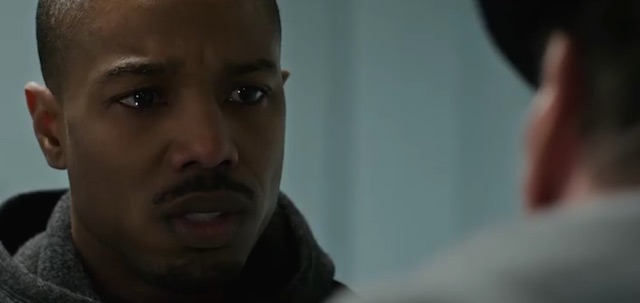
Creed Balboa

For movie fans who have been living under a rock, Michael B. Jordan stars as the illegitimate son of Apollo Creed, Adonis Johnson. The young man never met his father, who died in the ring during Rocky IV at the hands of Ivan Drago. Johnson’s mother also died when he was a boy, but Mary Anne Creed (played by Phylicia Rashad) took him in as her own.

It isn’t surprising to see what kind of themes are explored as Johnson attempts to define himself as a man while working his way out of his father’s shadow (e.g., abandonment, coping with death, letting go of the past, the importance of family). What is surprising is just how well Coogler pulls it all off — not for any lack of talent on his part, but because he is trying to succeed while tinkering with the “Rocky” brand. 

Rocky Apollo

Perhaps the easiest way to explain the movie’s worth to the franchise is to rank it in terms of the other films.

A convincing case can be made that Creed is the second-best movie featuring Balboa, if Oscar-contention is used as part of the litmus test. Coogler has given fans a drama. He has given them a tale of two men who slowly realize that if we become a prisoner to the past then we risk losing any number of potentially-beautiful futures.

Rocky Creed

Creed is not a movie for people who want to see larger than life characters like “Clubber Lang” or popcorn-movie gold like Rocky IV. It’s an tale that respects the source material, particularly 1976’s Rocky, but at the same time is very much its own film.

And for those who want to know how Johnson’s love interest, Bianca (played by Tessa Thompson), matches up with Adrian (Talia Shire), the answer is the same: Rest easy. Bianca is a welcome addition the the “Rocky” universe.

In short, everything in Creed feels natural. Nothing seems awkward or forced, which is good because the accomplishment has paved the way for a sequel if the creative team wants it.

The only way Coogler could have done a better job is if he invented a time machine and stopped Rocky V from ever happening, or Michael B. Jordan from signing on for Josh Trank’s Fantastic Four.

Jessica Jones: Marvel, Netflix attempt to walk ‘dark’ tightrope

Jessica Jones

Somewhere out in space and time there is an alternate dimension where Marvel’s “Jessica Jones” somehow wound up on network television in the 90s, and instead of Krysten Ritter in the lead role fans got Janeane Garofalo. That is one major obstacle dodged, but there is still a challenge — walking the tightrope between “dark” and “dark for the sake of being dark.”

I was first introduced to Jessica Jones in 2001 when I picked up Brian Michael Bendis’ “Alias.” The book was part of Marvel’s “Max” line (i.e., not for children). It was incredibly well-written for a long stretch. I always thought it would make for good television. However, the one major problem any producer of a “Jessica Jones” show will have is, “How dark should it be?”

Jessica Jones fire

There is a fine line between exploring evil that can lurk inside the human heart, and simply wallowing in filth just to get a reaction out of others.

Bendis, at his best, seems to be a skilled tightrope walker. Examples of failure in this regard may include Garth Ennis’ “The Boys” and the Mark Millar-Steve McNiven collaboration “Nemesis.”

Jessica Jones Police Department

Marvel and Netflix did a fabulous job with Daredevil, but it isn’t hard to imagine mindless producers saying, “Daredevil was dark and it was popular. Maybe we should go really dark with Jessica Jones!” 

If Marvel and its creative partners avoided this trap, then it is likely “Jessica Jones” will be a show worth watching. At least for now, everyone can stand up and cheer for a.) the inclusion Mike Colter as Luke Cage, and b.) the absence of Janeane Garofalo from the finished product.

‘Mission Impossible: Rogue Nation’: Tom Cruise and friends continue churning out cool spy flicks

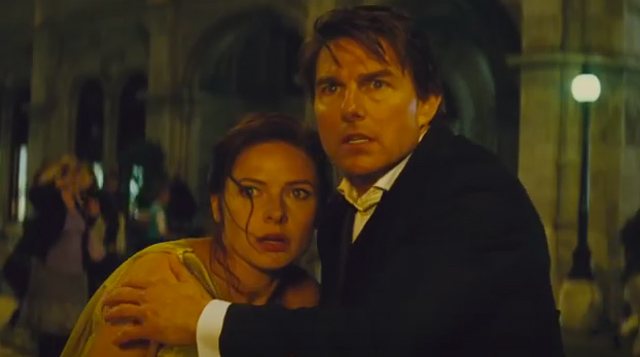
Tom Cruise Mission Impossible Rogue NationTom Cruise’s Mission Impossible: Rogue Nation not only is a genuinely fun summer spy movie, but it now serves as the cinematic antacid for anyone who made the mistake of seeing Josh Trank’s Fantastic Four. The 5th installment of the Mission: Impossible franchise has everything fans expect from it — great acting, twists and turns, exotic locations, humor, amazing stunts, etc. — and there isn’t one of those levels on which it disappoints.

This time around, Ethan Hunt (Tom Cruise) and his IMF buddies are tracking the “anti-IMF” known as The Syndicate. There is only one problem: CIA Director Alan Hunley (Alec Baldwin) saw to it that the U.S. government officially shut down IMF. If Benji Dunn (Simon Pegg), William Brandt (Jeremy Renner), and Luther Stickell (Ving Rhames) help Ethan in his quest to bring to the “Rogue Nation,” then they will be committing an act of treason.

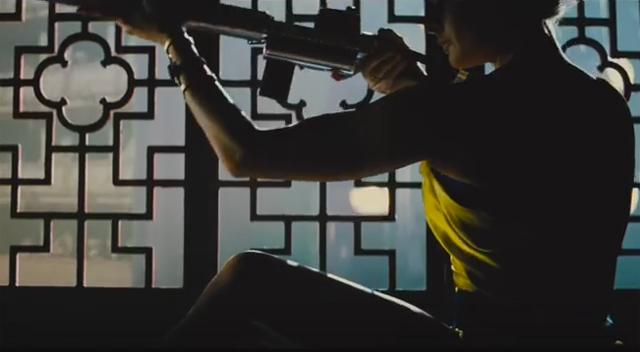
One aspect of Rogue Nation that helped guarantee its success was the ability of Rebecca Ferguson to nail the role of Ilsa Faust. She’s convincingly tough as nails, alluring, smart, cunning and athletic. She isn’t just a pretty woman in a fancy dress — she’s a take-no-prisoners, highly-trained intelligence agent (who may or may not have gone rogue).

Mission Impossible Rogue NationRogue Nation’s villain, played Sean Harris, is also impressive. Solomon Lane is convincingly one step ahead of Ethan Hunt throughout the movie, and in general the only thing to really gripe about is his brief time wearing a black turtleneck. No matter how evil a character is, it’s always slightly harder to take him seriously if he looks like the old Mike Meyers Saturday Night Live skit “Sprockets”… Regardless, it says something about a movie when the worst a critic can do is to complain about clothes the villain wore for less than five minutes of screen time.

If you like Tom Cruise movies, then see Mission Impossible: Rogue Nation. If you don’t like Tom Cruise and have just made up your mind that anything starring him is just “bad,” then take a moment to realize that your lack of objectivity is preventing you from seeing a really fun espionage flick.

In short, this movie reviewer hopes that Tom Cruise has a least another two or three Mission: Impossible movies up his sleeve, because Rogue Nation was one of his best efforts yet.

Alan Moore blasts ‘catastrophic’ superhero fixation of a culture on life support

A friend of mine sent me a fascinating Alan Moore interview from 2014. The comic industry icon told Pádraig Ó Méalóid at Slovobooks that the heightened popularity of Marvel and DC superheroes may be ‘culturally catastrophic’.

The Guardian reported January 21, 2014:

“To my mind, this embracing of what were unambiguously children’s characters at their mid-20th century inception seems to indicate a retreat from the admittedly overwhelming complexities of modern existence,” he wrote to Ó Méalóid. “It looks to me very much like a significant section of the public, having given up on attempting to understand the reality they are actually living in, have instead reasoned that they might at least be able to comprehend the sprawling, meaningless, but at-least-still-finite ‘universes’ presented by DC or Marvel Comics. I would also observe that it is, potentially, culturally catastrophic to have the ephemera of a previous century squatting possessively on the cultural stage and refusing to allow this surely unprecedented era to develop a culture of its own, relevant and sufficient to its times.”

Mr. Moore is close — he’s so close — but he doesn’t seem ready to acknowledge that the catastrophe has arrived. It is now. We are living through it. An introduction to our cultural implosion can be found in my Nov. 14, 2014 blog post titled: “Rossetta scientist cries over feminist outrage at his shirt: It’s been fun, Western Civilization.”  In short: societies that live in perpetual fear of the “micro-aggression” are societies that have seen better days.

For those who want to know just how obsessed our culture is with superheroes, I suggest watching Red Letter Media’s “Nerd Talk: Sequels, Spin-Offs, and Standalones,” which was posted July 22. It perfectly highlights just how much of an industry “nerdom” has become. Other symptoms of Western civilization’s disease might include the preponderance of men who spend inordinate amounts of time playing video games, collecting figurines, endlessly cycling through imgur, or trolling Tumblr — while simultaneously showing little to no interest in expanding their own intellectual horizons.

There is nothing wrong with having an interest in video games or superhero movies, but there is something culturally suicidal when large segments of the population delve deep into fantasy worlds before they have a sound grasp of reality.

In a strange way, technology acts like a double-edged sword: our standard of living is so high and our problems so few and far between that we invent dragons to slay (e.g., political pundits must be excoriated for not being “polite to the pronouns” of transgender individuals). The poorest Americans live better than the kings of old, and so they engage in sad and pathetic wars over whether or not The Dukes of Hazzard is too offensive for television.

As the character Cooper says in Christopher Nolan’s Interstellar: “We used to look up in the sky and wonder at our place in the stars. Now we just look down and worry about our place in the dirt.”

For all intents and purposes, America has become a nation filled with infantile men and women who fight over intellectual belly button lint. They feign outrage over puerile affairs while legitimate threats to the safety and security of future generations mount around them.  Bubble-butted celebrities bump serious news stories off the front page. Strange diversity quotas for Star Wars movies that don’t even have finished scripts are more talked about than state-sponsored hackers stealing the personal data of millions of federal employees. To put it more succinctly, we are lost.

If you get a chance, read Mr. Moore’s interview with Pádraig Ó Méalóid. It’s titled ‘Last Alan Moore Interview?’. If it is, then it’s definitely one worthy of the man’s exit from public life. Time and time again, he puts his finger on the pulse of all that ails us, but for whatever reason he doesn’t give his patients a frank diagnosis: Western civilization has a fever. Instead of going to the doctor, its men and women are going to movie theaters, man-caves to play video games, or San Diego Comic-Con.

‘Suicide Squad’ trailer released: DC makes bad guys look darn good

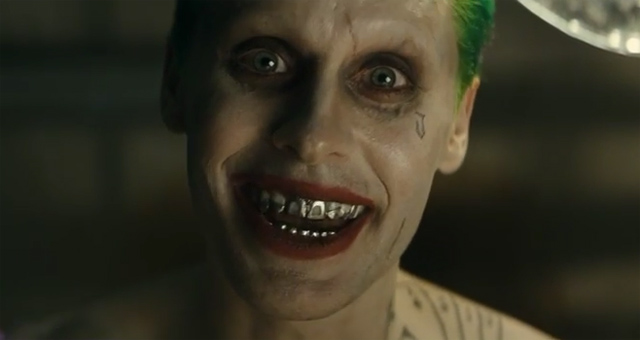
Suicide Squad groupDC and Warner Bros. didn’t have a memorable roll-out when the first images of Jared Leto’s Joker were released. The “Damaged” tattoo on his forehead, for all intents and purposes, flopped. With that said, if “Suicide Squad” is as good as its first trailer when it hits theaters Aug 5, 2016, then all will be forgiven.

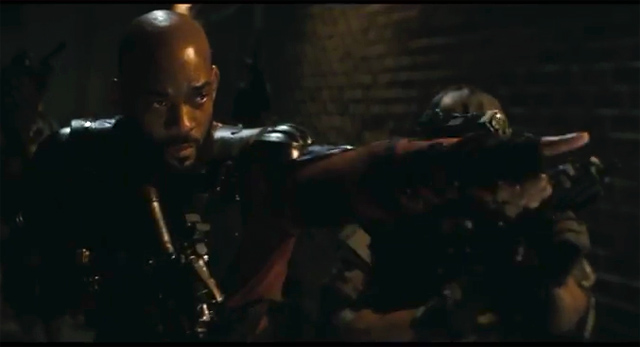
Suicide Squad Will SmithAs someone who doesn’t particularly have a vested interest in DC projects — my allegiance was to Marvel growing up — certain questionable aspects of film (e.g., Joker’s unique dental work) do not serve as deal-breakers. The essential question is “Does it look cool?”. The answer appears to be “Yes.”

Margot Robbie Suicide SquadDoes Will Smith look like he will do an admirable job as Deadshot? Yes.

Does it ever get old hearing Mr. Smith say things like “Let’s save the world”? No.

Does Margot Robbie sound demented while looking absolutely gorgeous? Yes.

Does Adewale Akinnuoye-Agbaje as Killer Croc look cool? Yes.

Does Karen Fukuhara pull off Katana? Yes.

The only real question mark will be Leto’s Joker, and even that can be turned into a plus for opening weekend. Countless fans will want to see how he performs out of sheer morbid curiosity.

Suicide Squad JokerWarner Bros. has done an admirable job — with its trailer. I know this because I am not fond of movies that turn twisted men and women into heroes. From a cultural point of view, I would prefer movies like “Suicide Squad” were never made. I don’t think it’s healthy to portray evil as “cool.” Regardless, from a cinematic point of view, I would be lying if I said “Suicide Squad” looked like a bad movie.

If you have a strong opinion one way or the other on the trailer for David Ayer’s “Suicide Squad,” then let me know in the comments section below. I’m interested in hearing your thoughts.

‘Batman v Superman’ trailer: Zack Snyder goes were Marvel Studios fears to tread

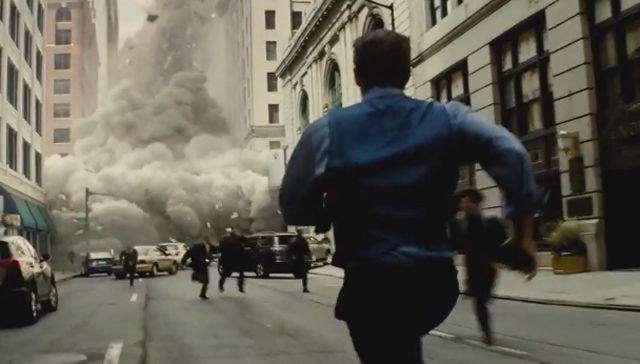
Batman v Superman 911The Batman v Superman trailer is out, and one thing is obvious: Zack Synder is going with a level of realism that Marvel Studios has shown no desire to duplicate. Anyone who lived through the September 11, 2001 terrorist attacks will not be able to see Ben Affleck’s Bruce Wayne engulfed in dust and debris without thinking of that day. If they decide to accept the director’s decision, then they can appreciate what the visual does for the story — while everyone else sprints away from the carnage, Bruce Wayne hurls himself head first into the chaos. That is the kind of bravery (bordering on psychosis) a man would need for him to seriously attempt to challenge Superman.

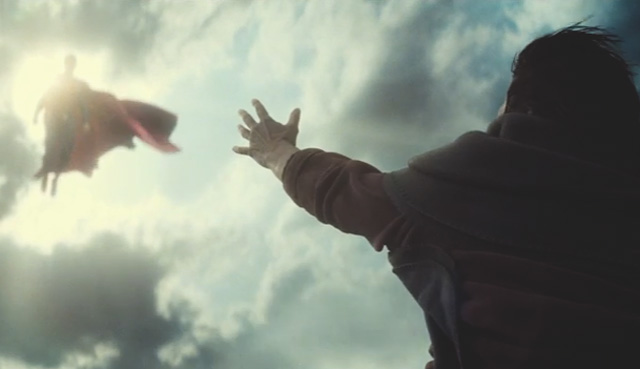
Batman v Superman flyThere are plenty of valid criticisms that could be made of Mr. Synder’s DC Universe, but it is hard to deny that his Superman exudes raw power. When he is on the screen, he demands respect. The argument that his costume is dated and cheesy just doesn’t fly (no pun intended), because if you can be led to believe that a character possesses the power to exterminate the entire human race, then you will respect him in almost any outfit.

Batman v Superman desertThe strength Superman wields is what will (understandably) cause Bruce Wayne to fear the alien and, at least for a portion of the film, seek to destroy him.

Jesse Eisenberg’s Lex Luthor telegraphs exactly what “Batman versus Superman” is about:

“Black and blue. God versus man. Day versus night.”

If a man had the power of a god — but he wasn’t God — wouldn’t he have to be destroyed? The same question would, of course, apply to a … Wonder Woman.

Batman v Superman Wonder WomanMarvel Studios has a track record of making great movies, but for the most part it has shied away from the level of realism embraced by Christopher Nolan’s Batman films and Zack Synder’s “Man of Steel.” Both kinds of movies can happily exist in the summertime blockbuster market, but Marvel’s problem is that there are only so many times the world can be demolished in a shared cinematic universe before the cotton candy-ish tone seems weird. Perhaps Marvel Studio’s “Civil War” will finally address that problem, but as of now DC has the pole position on superhero fare that makes an audience think about real-world issues.

If you plan on seeing “Batman v Superman,” then let me know what you think about the trailer or anything else related to the movie in the comments section below.

Wired’s Angela Watercutter bashes Tom Holland as Peter Parker — because he’s white

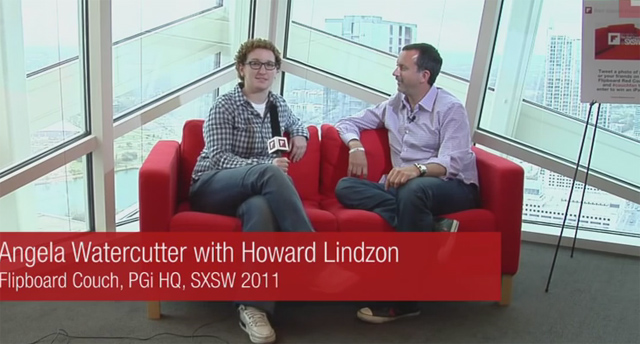
SpiderMan Angela WatercutterSony Pictures and Marvel Studios announced this afternoon that actor Tom Holland would be the next actor to play Spider-Man on the big screen. Wired’s Angel Watercutter was ready within hours to bash the decision because…he’s white.

Tom Holland APMs. Watercutter said Tuesday for her piece ‘Your New Spider-Man Is a…Fresh-Faced White Dude. Great’:

When Marvel and Sony announced Spider-Man’s inclusion in the Marvel Cinematic Universe earlier this year, fans got excited that we could see a fresh take on the character, rather than just another fresh-faced white dude. (No offense to fresh-faced white dudes.) In particular, the studio had a chance to shift gears and make the new cinematic Spider-Man not Peter Parker, but Miles Morales—the half-black, half-Latino teenager who wears the Spidey suit in the Ultimate Comics: Spider-Man. The prospect of that was virtually nil (though Morales is taking over as the web-slinger in the comics), but there was still a shot that Peter Parker could be re-imagined.

As for Watts, he’s the latest in a series of young and relatively unknown directors to take on a Marvel property. Sure, Joss Whedon and Kenneth Branagh are big deals, but folks like Thor: The Dark World’s Alan Taylor or Joe and Anthony Russo, who will likely direct Holland in his Parker introduction in Captain America: Civil War, were mostly TV directors before joining Marvel. Those directors have all done good work in the MCU, and there’s no reason to believe Watts won’t as well, but if you were expecting this new Spider-Man flick to be directed by a big-name director (or a woman, or a non-white person), that’s not going to happen this time around.

Just as Brian Michael Bendis believes that white superheroes cannot be for “everybody,” Ms. Watercutter seems to define “fresh take” as “anything but a white guy playing a character who has been white since his inception.” And by “fans” who were excited, she really means “fans who subscribe to Angela Watercutter’s race-obsessed worldview.”

Ms. Watercolor is so obsessed with race that she even laments that the next Spider-Man movie is being directed by a white man. How sad is it when a woman can’t look at anything unless she’s wearing a racial View-Master while simultaneously taking on the role of racial bean counter. “Are there too many white people in this story? Why are there so many white people? Is this justified? If I think it’s justified, then is it truly justified — or is that just my white privilege talking? Raceraceraceraceracerace!”

Angela Watercutter WiredIf you think this is an isolated mindset, then think again. It was only a few months ago that Dan Slott weirdly started referencing Jim Crow laws when fans said that Peter Parker should remain white for his cinematic appearances. It was just days ago that Gawker’s Sam Biddle said “Spider-Man is a fucking dork” because he is a straight white male who does not do drugs or have sex as a high school teenager.

The ideal Peter Parker for Wired and Gawker writers is apparently a popular gay black woman who does copious amounts of drugs while engaging in teen orgies. Classic.

Maybe instead of being bitten by a radioactive spider, Peter (or was it Pam?) could snort an arachnid up her nose like a line of cocaine. Maybe that would take away the “fucking dork” status. (If you write for Gawker, then you have to swear because that somehow makes your arguments more valid.)

The one bright spot in all of this is that Stan Lee is speaking up.

Newsarama reported June 22:

“I wouldn’t mind, if Peter Parker had originally been black, a Latino, an Indian or anything else, that he stay that way. But we originally made him white. I don’t see any reason to change that. …

I think the world has a place for gay superheroes, certainly. But again, I don’t see any reason to change the sexual proclivities of a character once they’ve already been established. I have no problem with creating new, homosexual superheroes. It has nothing to do with being anti-gay, or anti-black, or anti-Latino, or anything like that. Latino characters should stay Latino. The Black Panther should certainly not be Swiss. I just see no reason to change that which has already been established when it’s so easy to add new characters. I say create new characters the way you want to. Hell, I’ll do it myself.”

But hey, what does Stan Lee know? Until he’s a gay black heroin addict his authority on all things Peter Parker is pretty much zero.

Robert Downey Jr. ambushed over politics: Reporters want Iron Man to be a liberal activist

Robert Downey Jr Channel 4 InterviewI said in 2013 that one of the reasons conservatives defended Robert Downey Jr. was because liberals attacked the man. Perhaps the best example was the 2011 hit piece from Jeffrey Wells’ Hollywood Elsewhere (now flushed down the Memory Hole), in which an anonymous source said the actor’s values “are pure Republican values.” That came after an interview in The New York Times that drove liberals batty, but before the actor attended a fundraiser for President Obama. Apparently Robert Downey Jr’s ideological blasphemy is still stuck in the media’s craw because he was just ambushed during an interview with British reporter Krishnan Guru-Murthy.

The Huffington Post reported Wednesday on the interview, which ended with Marvel Studio’s Iron Man walking out:

Krishnan Guru-Murthy: I’d really like to ask you about a quote you gave to The New York Times. I don’t want to pry so if you don’t want to talk about it that’s fine, but what you said to The New York Times was — it was about, it was after your incarceration and you said that you can’t go from a $2,000 a night hotel suite to a penitentiary and understand it and come out a liberal. I just wondered what you meant by that.”

Robert Downey Jr.: The funny thing is — and I appreciate your point of view — things you said 5-7 years ago or things you said in an interview that made sense to you at the time — I could pick that apart for two hours and I’d be no closer to the truth than I’d be giving you some half-assed answer right now. I couldn’t even really tell you what a liberal is, so therein lies the answer to your question.

Krishnan Guru-Murthy: The statement sort of stands by itself, doesn’t it? Does that mean that you’re not a liberal? Or that you came out of a prison not being liberal?

Robert Downey Jr.: Are we promoting a movie? To me the thing is that it’s — I’m certainly not going to backpedal on anything I’ve said, but I wouldn’t say I’m a Republican or a liberal or a Democrat. I think when I was talking to the person who was doing the interview that day and that just happened to be my opinion. That’s the nice thing, you can have opinions and they change and flow.”

Robert Downey Jr. is in a horrible position. A guy who has been to prison probably realizes that hard-core criminals will never adopt the peace-love-dope worldview of liberal beat poetry readings and bongo-circles. Perhaps he’s a fiscal conservative who is socially liberal. Maybe he was against the war in Iraq but he understands that leaving radical Islamic head choppers the their own devices is a bad idea.

How does the man define himself politically, especially when he has to work with hard-core liberal activists like Joss Whedon and Mark Ruffalo? The best thing to do to keep the peace on set is probably to just stay silent and stick to playing Tony Stark really well — but that is not good enough for the media.

Robert Downey Jr. will always have to be on guard against a media ambush because he refuses to use his Twitter feed to lecture people on climate change. He doesn’t get into abortion politics. He doesn’t harangue people about minimum wage laws or demonize Republican politicians. This is unacceptable to pundits who want celebrities to push liberal politics on as many people as possible while they’re in the limelight.

Krishnan Guru-Murthy RDJ interviewThe vast majority of Americans do not want Hollywood stars to lecture them on public policy. They appreciate that Robert Downey Jr. keeps his politics close to the vest. They are glad that he walked out on Krishnan Guru-Murthy and wish more actors would follow his example.

The moral of the story is this: The creative team behind “Avengers: Age of Ultron” could learn a thing or two from Robert Downey Jr. If Marvel’s talent wants independent, libertarian, and conservative fans to continue flocking to Marvel Studio movies, then they should knock it off with the political activism.

Ben Affleck went full-Lex Luthor instead of Batman, pushed PBS to censor slave-owning ancestry

Ben Affleck Bill MaherI said in August of 2013 that Ben Affleck’s political activism would derail the ability of many people to see Batman v Superman with an open mind. The actor would go on to insult Republican moviegoers by December. He then disappeared to make Gone Girl, only to almost break down into tears while discussing radical Islam with Bill Maher in October, 2014. Mr. Affleck is now in the news with another embarrassing story: he pressured PBS to censor his slave-owning ancestry while filming PBS’s Finding Your Roots series.

USA Today reported April 19 on the newest Wikileaks revelation:

The emails between Finding Your Roots host Henry Louis Gates and Sony chief executive Michael Lynton show Gates’ dealing with the issue of featuring the slave-owning portion of Affleck’s past on the popular PBS program.

“Here’s my dilemma: confidentially, for the first time, one of our guests has asked us to edit out something about one of his ancestors — the fact that he owned slaves,” Gates’ leaked email states. ” Now, four or five of our guests this season descend from slave owners, including Ken Burns. We’ve never had anyone ever try to censor or edit what we found. He’s a megastar. What do we do?” …

“Once we open the door to censorship, we lose control of the brand,” Gates writes in the emails, adding that he wouldn’t “demonize” the slave-owning ancestor.

“Now Anderson Cooper’s ancestor was a real s.o.b.; one of his slaves actually murdered him. Of course, the slave was promptly hanged. And Anderson didn’t miss a beat about that,” Gates writes.

The series ultimately did leave out Ben Affleck’s slave-owning ancestry, laughably saying “We decided to go with the story we used about his fascinating ancestor who became an occultist following the Civil War.” Sorry PBS, but now everyone knows that you have “lost control of the brand.”

A friend of mine asked why Ben Affleck would run from his history instead of embracing it. The answer once again ties back to the actor’s political activism.

Ben Affleck not only runs from history — he tries to revise it. He is the type of person who literally stops himself mid-sentence while saying Americans are endowed by their Creator with certain inalienable rights to say that Americans are “endowed by our forefathers with certain inalienable rights.” Rights don’t come from God, according to Batman — they come from a small group of liberal guys like Ben Affleck in the nation’s capital.

Given that the Hollywood actor is a committed liberal, it’s a safe bet to say that on the right episode of “Real Time” with Bill Maher, he would be happy to lecture Americans on “white privilege.” It’s also likely that when cornered on constitutional debates, he would resort to the tried-and-true red herring that “the founding fathers had slaves” (as if a man’s flaws invalidate the timeless principles he espouses).

Ben Affleck knows that the knowledge of his slave-owning ancestry makes it near-impossible for him to spew spurious racial arguments with impunity. Bloggers like yours truly will always be able to joke, “You know what, Ben? You’re right! We need to do something about white privilege. Why don’t you lead the way by paying reparations to Americans whose ancestors were chained and whipped by Old Man Affleck.”

It is now apparent that Ben Affleck will act manipulatively behind the scenes like a wannabe Lex Luthor when his political activism is threatened. There is no reason for a man to hide from his family’s past unless it threatens to topple the moral pedestal he stands upon while lecturing the rest of us.

If PBS executives are smart, then they will release a version of Finding Your Roots where Ben Affleck is confronted about his slave-owning ancestry. Why would anyone want to watch a show titled “Finding Your Roots” when in reality it should be called “Finding the Roots that Hollywood Wants You To See”? They wouldn’t.

Word of advice for Zack Synder: Tell Ben Affleck to go into his own personal Batcave and not come out until it’s time to promote Batman v Superman. It’s hard to believe Ben Affleck is Bruce Wayne when every few months he strengthens the impression that he’s really just a pampered Hollywood activist.