Francis De Sales’ ‘Introduction to the Devout Life’: 1609’s must-read still amazing in 2015

Francis De Sales Intro Devout LifeIt is a rare occurrence to read a book and come to the conclusion that the writer’s initial inspiration was perfectly realized upon its completion. Saint Francis De Sales’ “Introduction to the Devout Life” may have been published in 1609, but its stunning insight into the human condition makes it a must-read in 2015. In another 400 years, it will still be leaving readers in awe.

While De Sales wrote for a Christian audience, the blueprint for a healthy civil society he presents is one that men and women of all faiths (or no faith) would be hard-pressed to criticize. The virtues he seeks to cultivate in his readers may be motivated by a desire to instill a love of God in  as many hearts as possible, but at the end of the day he is still talking about honesty, humility, patience, charity, fortitude, prudence, etc.

Even more impressive is how De Sales addresses the reader (“Philothea”) directly, yet with a delivery that feels like a kind and gentle father imparting time-tested wisdom to a child. De Sales (who must have consulted countless men and women from all walks of life) has such an exquisite grasp of humanity’s trials and tribulations that it is hard not to feel as though he already knows everything about you — yet still offers unconditional love.

De Sale somehow manages to write for the YouTube-Instagram-Facebook culture of 2015 while living in 1609:

“We apply the term vainglory to whatever we assign to ourselves, whether something that is not actually in us or something in us but not of us, or something in us and of us but not such that we can glory in it. Noble ancestry, patronage of great men, and popular honor are things that are not in us but either in our ancestors or in the esteem of other men. Some men become proud and overbearing because they ride a fine horse, wear a feather in their hat, or are dressed in a splendid suit of clothes. Is anyone blind to the folly of all this? If there is any glory in such things it belongs to the horse, the bird, and the tailor. It is a mean heart that borrows honor from a horse, a bird, a feather, or some passing fashion.

Others value and pride themselves because of a fine mustache, well-trimmed beard, carefully curled hair, soft hands, ability to dance, play cards well, or sing. Such light-minded men seek to increase their reputation by frivolous things. Others would like to be honored and respected by men because of a little learning, as if everyone should go to school to them and take them as their teachers. They are called pedants for this reason.

Other men have handsome bodies and therefore strut about and think that everybody dotes on them. All this is extremely vain, objectionable, and foolish and the glory based on such weak foundations is called vain, foolish, and frivolous.

We recognize genuine goodness as we do genuine balm. If balm sinks down and stays at the bottom when dropped into water, it is rated the best and most valuable. So also in order to know whether a man is truly wise, learned, generous, and noble, we must observe whether his abilities tend to humility, modesty, and obedience for in that case they will be truly good. If they float on the surface and seek to show themselves, they are so much less genuine in so far as they are more showy. Pearls conceived and nourished by wind or thunder claps are mere crusts, devoid of substance. So also men’s virtues and fine qualities conceived and nurtured by pride, show, and vanity have the mere appearance of good, without juice, marrow, solidity.” Francis De Sales, Introduction to the Devout Life (New York: Image, 2014), 121–122

The depth and breadth of De Sales’ understanding of humanity is a marvel to behold. If for no other reason, “Introduction to the Devout Life” shines a giant spotlight on just how far we’ve fallen as a culture. The book was written for the likes of carpenters, soldiers, sailors, and tailors — not academics — and yet the man on the street in 2015 would likely have a hard time digesting much of De Sales’ intellectual discourse.

If you have ever sat alone in your bed at night and tried to plumb the depths of your soul to root out what is rotten and realize what is wholly good, then I cannot recommend Francis De Sales’ “Introduction to the Devout Life” enough. If it is read with an open mind and seriously meditated upon, then I have no doubt that it will truly change your life for the better.

‘Angels in My Hair’: Lorna Byrne’s gentle touch creates solid stepping stone to spirituality

Angels in My HairLorna Byrne’s 2008 book ‘Angels in My Hair’ is a bestseller. Her memoir covers the trials and tribulations she experienced while growing up with the ability to see angels — but not talk about it with anyone. Her own family thought she had mental problems. She was warned that there was a possibility they would send her to a mental institution. She was given foreknowledge of painful events that would happen later in life (e.g., the early death of her husband), but was sworn to secrecy. Finally, at a much later stage in her life, she was told to write her book so that people would know one simple message: We are never alone.

Ms. Byrne’s book has plenty of detractors — atheists, agnostics, Christians of various denominations, and individuals from other religious faiths. That is understandable, given the nature of her claims. As a Catholic, I certainly have qualms with topics that were left out of the book, but many of her editorial decisions make sense when one considers Ireland’s violent history between Protestants and Catholics.

‘Angels in My Hair’ is a great book for anyone who has ever wondered if angels exists. It’s also a worthwhile read for those who identify as a devout [insert religious denomination here], provided he or she accepts from the beginning that Ms. Byrne is writing exclusively on angels — not the Bible.

Before I go on, perhaps the best way to sum up how I feel about Ms. Byrne’s book is to first share a quick story from my own life.

When I was a young child I had a snowball fight with a bunch of kids. Half of us were on one side of the street, and half of us were on the other. We were running around having a good time, and at a certain point I picked up a snowball and charged towards the road with tunnel vision on my target. Suddenly I felt a force, as if someone had grabbed me by the shoulders and planted my feet into the ground. I was brought to an abrupt stop. A car slammed on its breaks and skidded to a halt right where I had been running. Even as a young child — with no formal religious education — I knew that I should have been hit by that car. I knew that I should have been injured or possibly dead. I knew that something intervened on my behalf. I had no knowledge of guardian angels at that time, but I remember being completely in awe of whatever force made itself known to me in that moment.

I tell this story because I have no reason to lie to my readers. I am not insane. I am not schizophrenic. I am not on some secret Vatican payroll to deceive people. I do not do drugs. I rarely drink. I am a law-abiding citizen who tries to do what is morally right. I also acknowledge that I am an incredibly flawed individual. Likewise, countless others like me — perhaps including individuals in your life who have never given you a reason to trust their integrity or mental health — have experienced something supernatural. Why should those individuals be treated as hostile witnesses? Answer: They shouldn’t.

Ms. Byrne says:

“We have become a very materialistic society, and so frequently we look at death and ask, ‘Is this it? I rot away and there is nothing more?’ I assure you there is more — much more. I hope that through the books I write I can communicate this and help people to understand. Believe what I say. Believe that, yes, there is more, much more, even though I may not be able to prove it or show it to you now; it is proven to everyone when they die. Some people feel that then it’s too late — if they have to wait to die to see the proof. People are given proofs while they are alive, but sometimes they have to look or listen very hard to recognize them.” Lorna Byrne, Angels in My Hair (New York: Random House, 2008), 174.

It is healthy to be skeptical. We should always read with a discerning eye. However, it is also healthy to have an open heart. The search for truth requires ample doses of each, even if it seems paradoxical. I believe that if you read ‘Angels in My Hair’ with that balancing act in mind, then you will see that there is much truth to what Ms. Byrne says.

You do not have to be a superman or superwoman. You do not have to bear all of life’s burdens as if you were Atlas holding up the globe. You do not have to create a tough-talk exterior shell to protect you from the opinions of others and you do not need to have all the answers. That is because you are not alone. In your darkest hours there is always someone by your side. Ask your angels to give you strength, and you will be surprised at what they bring you from the depths of your soul.

Atheists mock science-loving Catholics from afar because ego massages feel better than ego checks

HubbleThe “Atheists 10 Commandments” recently made news with the release of “Atheist Heart, Humanist Mind,” by John Figdor and Lex Bayer. Yours truly pointed out how ridiculous it is to have nine “commandments” that are all superseded by “There is no one right way to live.” As a result, a slew of atheists deemed me a “fundie.” Two of my quotes generated rounds of ego-massaging among the congregants of “Fundies say the Darndest Things.”

Sadly, the majority of people over FSTDT seem to mistake sarcasm and personal attacks for intellect:

“While there is no one right way to live, there are certainly many wrong ways, such as being an adult with imaginary friends.”

“The self-loathing of the religious zealot is the same self-loathing that drives the heroin addict to the needle and the alcoholic to the bottle. It blunts the pain, but does nothing to resolve the underlying issues that cause that pain, the feelngs [sic] of worthlessness and despair, as revealed here.”

“Yet another person who’s good only because he’s scared of God. People like that scare me.”

It’s easier to laugh and joke about “being an adult with imaginary friends” than it is to have a mature conversation on the body, mind and spirit. It is also easier to mock science-loving Catholics from afar than it is to venture from the safe confines of the digital hive.  The modern atheist seems to think that science strengthens the case against God, and avoiding discussions with guys like me allows them to continue such a delusion.

Author Eric Metaxas wrote for The Wall Street Journal Dec. 25:

Today there are more than 200 known parameters necessary for a planet to support life—every single one of which must be perfectly met, or the whole thing falls apart. Without a massive planet like Jupiter nearby, whose gravity will draw away asteroids, a thousand times as many would hit Earth’s surface. The odds against life in the universe are simply astonishing. …

There’s more. The fine-tuning necessary for life to exist on a planet is nothing compared with the fine-tuning required for the universe to exist at all. For example, astrophysicists now know that the values of the four fundamental forces—gravity, the electromagnetic force, and the “strong” and “weak” nuclear forces—were determined less than one millionth of a second after the big bang. Alter any one value and the universe could not exist. For instance, if the ratio between the nuclear strong force and the electromagnetic force had been off by the tiniest fraction of the tiniest fraction—by even one part in 100,000,000,000,000,000—then no stars could have ever formed at all. Feel free to gulp.

Multiply that single parameter by all the other necessary conditions, and the odds against the universe existing are so heart-stoppingly astronomical that the notion that it all “just happened” defies common sense. It would be like tossing a coin and having it come up heads 10 quintillion times in a row. Really?

Fred Hoyle, the astronomer who coined the term “big bang,” said that his atheism was “greatly shaken” at these developments. He later wrote that “a common-sense interpretation of the facts suggests that a super-intellect has monkeyed with the physics, as well as with chemistry and biology . . . . The numbers one calculates from the facts seem to me so overwhelming as to put this conclusion almost beyond question.”

Men of faith look at the mind-bending odds against the possibility of life — any kind of life — in the universe, we conclude that our existence is a miracle attributable to God, and the response by online atheists is to liken us to a “self-loathing … heroin addict.” Which group is acting like an adult and which group is acting like a petulant child who is lashing out at his father?

Men of faith readily admit they fear eternal separation from God, and online atheists make the strange leap in logic that we view Him as some sort of cosmic Communist police state overseer. Which group is acting like an adult and which group is acting like a recalcitrant child who is upset that he will one day be held accountable for his actions?

The online atheists’ inclination to view anyone who believes in God as a backwoods hick with a sixth-grade home-school education is bizarre — but I welcome it. Their decision to cloister themselves in little online echo chambers is to the man of faith’s advantage. Keep likening law-abiding, well-adjusted, and productive members of society to heroin addicts, my atheist friends — each outlandish caricature you create only makes open-minded individuals more likely to ignore your future overtures.

The Atheist 10 Commandments are here — even though ‘There is no one right way to live’

A humanist chaplain at Stanford University and his co-writer on “Atheist Heart, Humanist Mind” have crowd-sourced the 10 Commandments — for atheists. The result is a philosophically-convoluted mess.

CNN reported Dec. 20 that John Figdor and Lex Bayer gleaned the Atheist 10 Commandments from 2,800 submissions from 18 countries and 27 U.S. states.

The “commandments” are:

1. Be open-minded and be willing to alter your beliefs with new evidence.
2. Strive to understand what is most likely to be true, not to believe what you wish to be true.
3. The scientific method is the most reliable way of understanding the natural world.
4. Every person has the right to control of their body.
5. God is not necessary to be a good person or to live a full and meaningful life.
6. Be mindful of the consequences of all your actions and recognize that you must take responsibility for them.
7. Treat others as you would want them to treat you, and can reasonably expect them to want to be treated. Think about their perspective.
8. We have the responsibility to consider others, including future generations.
9. There is no one right way to live.
10. Leave the world a better place than you found it.

If “there is no one right way to live,” then why should anyone “be willing to alter” their beliefs? If there is “no one right way to live,” then why do we have “a responsibility to consider others”? If there is “no right way to live,” then why should a man consider the perspective of others? If there is “no right way to live,” then it can not be wrong if one man decides that his “right way to live” includes controlling the bodies of those around him.

This is the conundrum atheists face: if we are all just cosmic accidents and God does not exist, then no man has the moral authority to tell another man how to live. If we are all just sentient space dust with no soul, then there really are no objective truths — right and wrong are relative — and there is no valid argument against those whose sole existence is based on taking advantage of their fellow man.

Even the authors seem to realize this. They told CNN about the inspiration for writing their book:

“A lot of atheists’ books are about whether to believe in God or not,” he said. “We wanted to consider: OK, so you don’t believe in God, what’s next? And that’s actually a much harder question.”

“What’s next?” is a very hard question, indeed. Perhaps the reason why so many atheist books concentrate on “whether to believe in God or not” instead of “What’s next?” is because it leads to “There is no one right way to live.”

On another level, it is incredibly telling that with limited real estate, atheists would use one of their “ten commandments” to emphasize the importance of not believing in a non-existent god. Try as he might, the atheist can not escape God. Perhaps for their next book, Messrs. Figdor and Bayer could write “Atheist Heart, Humanist Mind: We Can’t Escape God No Matter How Hard We Try.”

Related: Atheists mock science-loving Catholics from afar because ego massages feel better than ego checks

Atheists attack easy targets to distract you from men like Hubert Van Zeller

A recent YouTube video that went viral shows a woman who claims Monster Energy Drinks are the work of the devil. Atheists and their allies in the media ran with it. An atheist friend of mine even passed it along with the message, “One of your people.”

I love my friend on many levels, but like most atheists these days he tends to reflexively go after the low-hanging fruit while ignoring the works of serious Christians.

The reason why many websites are keen to find the Christian equivalent of 9/11 Truthers or the next Westboro Baptist Church is because the mind that can be convinced early on that men and women of faith are all intellectually bankrupt kooks is the mind that is much more likely to avoid picking up books by C.S. Lewis, G.K. Chesterton, and Hubert Van Zeller.

To an atheist, men like Mr. Zeller are terrifying. Picking almost any random page out of Mr. Zeller’s “Suffering: The Cross of Christ and Its Meaning For You,” gives insight as to why Christians — particularly intelligent Christians — come across as frightening to unbelievers:

“A man is discouraged either because he looks back at the past and sees a sequence of misfortunes that has shaped for him a mold of failure, or because he looks into the the future and can see no security, happiness, or prospects of success. His experience of life has given him these findings, so he feels, understandably, that life is insupportable.

But if he knew more of Christ, he would know that he had misinterpreted his experience, and that life is not at all insupportable. He would neither shy away from the thought of the past, nor stand dismayed by the thought of the future. The immediate present would not daunt him either: he would know that it could be related, together with the failures that have been and the horrors that are in store, to the Passion.

That is not to say that deliverance from disillusion, discouragement, and despair can be effected by a mere trick of the mind — the knack of referring our desolations  automatically to God — but that, in the gradual and painful conversion of the soul from self-centeredness to God-centeredness, there will be a growing tendency toward confidence. No longer brought low by the sight of so much evil in ourselves, in others, and in the world, we rise by the slow deepening of detachment to the sight of a possible good in ourselves, in others, and in the world. The vision extends to a probable good, and then to a certain good. Together with this widening horizon, which reveals the positive where before only the negative was expected, goes the knowledge that the only good is God’s good, and that it exists on earth — as those who receive the Word made flesh exist on earth — not of the will of man, but of God,” (57-58).

A man who believes in God is confident. He sees pain and suffering as a path to overcoming pain and suffering. There is nothing that the world can throw at him — nothing — that will deter him from steadily marching towards his objective. He finds strength in weakness. He is calm. He sees God everywhere and in everything — grace can come from even the most unexpected of places.

Put another way:

“The man of faith has reserves; he surrenders to nothing but the will of God. His desire is united to the desire that was in the mind of Christ when He fell on the road to Calvary. His failure is Christ’s failure; the waste of his talents is the waste of Christ’s. There is no question here of desperation, panic, self-pity, rebellion; no talk of accident or bad luck,” (25).

Put yourself in the shoes of an atheist Huffington Post editor, whose deepest desire is to have 400 million Americans dependent on an ever-expansive federal government. If you wanted the civilian population to dutifully bow to 535 bureaucratic overlords in Washington, D.C., would you want them watching Christian conspiracy theorists who see the devil in caffeinated beverages, or reading the works of men who believe “When I am weak, then I am strong”?

If you want to see just how powerful you really are, then I highly suggest reading “Suffering, The Cross of Christ and Its Meaning For You.” If you want to put yourself on a moral pedestal while denying the existence of God, then stick to The Huffington Post.

Americans need to read more Saint Augustine and listen to less Mike Huckabee

Saint_Augustine Philippe de ChampaigneFormer Arkansas Gov. Mike Huckabee is once again threatening to leave the Republican Party if its leadership refuses to be outspoken critics of gay marriage. He made similar threats in March of 2013, which indicates he’s all bark and no bite. Regardless, every time I hear someone like Mr. Huckabee imply that the cultural decline of America begins and ends with a half-hearted rhetorical war with gay people, I cringe. Afterward, I think about how much better of a place America would be if those who believed in God spent less time listening to Mike Huckabee’s radio show and more time reading the works of Saint Augustine — “Confessions” in particular.

As hard is it might be for some Americans to believe, they could learn a lot from guys born over 1,600 years ago. Saint Augustine is one of them.

“Confessions” is a must-read for anyone who cares about preserving the intellectual brick and mortar of Western Civilization, but it’s also an amazing blueprint for Christians looking to share the faith. It may sound counter-intuitive, but in order to expand you must, on many levels, travel inward. Instead of pointing angry fingers at “You! And you! And you! And you! And you!” — we must take serious stock of our own spiritual shortcomings.

Take note of how Saint Augustine analyzes the time he sneaked into another man’s orchard to steal pears:

“Those pears were truly pleasant to the sight, but it was not for them that my miserable soul lusted, for I had an abundance of better pears. I stole those simply that I might steal, for having stolen them, I threw them away. My sole gratification in them was my own sin, which I was pleased to enjoy; for, if any one of these pears entered my mouth, the only good flavor it had was my sin in eating it. …

Covetousness desires to possess much; but you are already the possessor of all things. Envy contends that its aim is for excellence; but what is so excellent as you? Anger seeks revenge; but who avenges more justly than you?

Thus the soul commits fornication when she is turned from you, and seeks apart from you what she cannot find pure and untainted until she returns to you. All things imitate you — but pervertedly — when they separate themselves far from you and raise themselves up against you. …

What was it then, that I loved in that theft? And how was I imitating my lord, even in a corrupted and perverted way? Did I wish, if only by gesture, to rebel against your law, even though I had no power to do so actually — so that, even as a captive, I might produce a sort of counterfeit liberty, by doing with impunity deeds that were forbidden, in a deluded sense of omnipotence? …

See, my god, the lively review of my soul’s career is laid bare before you. I would not have committed that theft alone. My pleasure in it was not what I stole but, rather, the act of stealing. Nor would I have enjoyed doing it alone — indeed I would not have done it! What an unfriendly friendship this is, and strange seduction of the soul, eager to make mischief from games and jokes, craving another’s loss without any desire for profit or revenge of mine — only so that, when they say, “Let’s go, let’s do it,” we are ashamed not to be shameless. …

I fell away from you, my god, and in my youth I wandered too far from you, my true support. And I became a wasteland to myself.”

How many more people would Mike Huckabee draw to his message if he talked about all the times he became a wasteland unto himself instead of lashing out at gay people? Would the path to God be more easily found by non-believers if the radio host spent more time talking about his gluttonous past and youthful indiscretions, or if he continued to imply that those who believe in gay marriage are the dregs of society? Has Mike Huckabee ever viewed pornography? If so, what kind? How much? And if so, how did it spiritually damage him? It seems as though Saint Augustine’s decision to bare his soul before God is a much more productive strategy for growing the flock than throwing political temper tantrums at ideological allies while spitting invective at non-believers.

The Catholic Saints were not perfect when they walked the earth. They toiled with the same temptations as you and me. They anguished over the same kind of inner demons that plague man today. They understood, however, that “the commander triumphs in victory, yet he could not have conquered if he had not fought; and the greater the peril of battle, the more the joy of the triumph.”

Saint Augustine writes: “I was so fallen and blinded that I could not discern the light of virtue and of beauty which must be embraced for its own sake, which the eye of flesh cannot see, and only the inner vision can see.

If a man makes it his life’s mission to cast aspersions on those around him, then it is much less likely that he will see what “only the inner vision can see.” The cultural road ahead for America is dark and dangerous due to years of neglect, but the path will be lighted if we first look within.

Cenk Uygur names son ‘Prometheus’ in misbegotten attempt to smite God, fails miserably

Cenk Uygur Young TurksUnder normal circumstances I would never write about Cenk Uygur of “The Young Turks.” However, it turns out that he named his son “Prometheus Maximus” as a metaphorical middle finger to the God he … doesn’t believe in. While years from now people will make the mistake of thinking his son was named after the Simpsons episode where Homer goes by Max Power, I still wanted to hear Mr. Uygur’s reasoning.

The Young Turks’ YouTube channel provides his answer:

Host: For the first question … How did you come up with the awesome name for your son? I wouldn’t have thought of that in a million years. Go!

Cenk Uygur: All right. My son’s name is Prometheus Maximus. Prometheus is my favorite mythical character of all time ’cause he had the nerve, the courage to challenge the gods to say ‘I’m going to help humanity.’ It’s the kind of thing the rest of mythology is set up to hate. … No, bow your head. Bow your head to God … In all religions, Christianity, it said bow your head to God, listen to whatever he says, do not challenge him, even if, for example, he slaughters everyone on earth as he did, you know, doing that that little fun thing called the flood with Noah’s Ark. Literally almost everyone but Noah’s family was killed. Support. Bow your head and support. No. Prometheus said I’m not going to bow my head. I’m going to take fire and give it to humans. Lovely.

Before we begin exposing Mr. Uygur’s confusion, we must first point out how sad it is that he has to crib Bill Maher’s old jokes, in which the Real Time host called the God … he doesn’t believe in … a “psychotic mass murderer” for bringing forth the flood. If this is some sort of new talking point among liberal atheist pundits, then we might as well address it now.

As Whittaker Chambers eloquently put it long ago, “Between man’s purposes in time and God’s purpose in eternity, there is an infinite qualitative difference.” That Mr. Uygur thinks his tiny insignificant mind could wrap itself around the purpose in eternity that God’s actions serve is quite hilarious. Consider this: A man who struggles to understand basic economics actually believes he could comprehend the actions of a being with the power to bring space and time into existence.

God’s role as the Creator also poses another conundrum: Whose life is it? Is it yours, or is it God’s? The Christian would say that his existence belongs to the one who breaths life into him every second of every day — God. Since life is only sustained by God, getting upset at Him for ending it makes no sense. Raising a fist in anger and shaking it at God for those who died in the flood assumes that the lives lost actually belonged to the departed. They did not. Mr. Uygur doesn’t understand that the body he has is essentially a rental home that houses his spirit for a short time before it returns to its Father.

And finally, while the young Turk may pride himself on his literary knowledge, it is quite apparent that he hasn’t read up on Dante.

In Canto XX of “The Inferno,” Dante weeps for those in hell and is instantly rebuked by his guide Virgil:

Truly I wept, leaning upon a peak
Of the hard crag, so that my Escort said
To me: “Art thou, too, of the other fools?
Here pity lives when it is wholly dead;
Who is a greater reprobate than he
Who feels compassion at the doom divine?”

God is certainly capable of separating the wheat from the chaff, and yet Mr. Uygur laments the “slaughter” of those in the flood. Those who wind up in hell do so because that is the choice they made with the free will they were given. Trying to elicit sympathy for those who made the conscious decision to reject God does not work with those who know Him.

Jesus says in John 10: 14-16:

I am the good shepherd; and I know My sheep, and am known by My own. As the Father knows Me, even so I know the Father; and I lay down My life for the sheep. And other sheep I have which are not of this fold; them also I must bring, and they will hear My voice; and there will be one flock and one shepherd.

He also says in John 13: 12-17 after washing Peter’s feet:

Do you know what I have done to you? You call Me Teacher and Lord, and you say well, for so I am. If I then, your Lord and Teacher, have washed your feet, you also ought to wash one another’s feet. For I have given you an example, that you should do as I have done to you. Most assuredly, I say to you, a servant is not greater than his master; nor is he who is sent greater than he who sent him. If you know these things, blessed are you if you do them.

That is a God who is worthy of endless bows. That is a God to listen to and obey. If the world wants to mock His followers as “sheep,” then it is a pejorative worth embracing because He truly is a “good shepherd.”

The funny thing is that despite Mr. Uygur’s efforts to deny his spirit, he can not rid himself of the tinctures of truth that flow through his mind:

Host: Do you believe in ghosts/paranormal activity?

Cenk Uygur: No, because I’m a rational human being. But not quite as rational as I make out. I will confess to two things: One is I know it’s not right, but from time to time I think I’ll look at signs or something and think, “Oh, is that a message?” And I’m like, ‘ Knuckle head, of course it’s not a message!’ … The second thing is one I’m perfectly proud of: I keep an open mind, meaning I haven’t foreclosed on the idea that there might be things that happen on this planet and in this universe that we haven’t yet figured out.

It is incredibly difficult to ignore the stinging slap of synchronicity, and yet the man deludes himself into thinking otherwise with each message that comes his way. He says he has an open mind while slamming it shut. He believes that with enough time humans can “figure out” the totality of the universe, when the person who truly possesses an open mind understands that perhaps reality exists in ways our five senses are incapable of detecting.

In a world of sentient AM radios, many of them would call frequency modulation a myth. Some of them would even name their AM radio kids “Prometheus.” Luckily, there is always hope that those who deny the truth today will accept it before it’s too late.

Here is what one looks like on the back end of WordPress. I erased part of his IP address because I’m a nice guy. I also erased part of the link he wanted to share. Sad. I was hoping Mr. Uygur’s Reddit fanboys would bring more to the table than “myballsinyourmouth.” I guess not.
Here is what a troll looks like on the back end of WordPress. I erased part of his IP address because I’m a nice guy. I also erased part of the link he wanted to share. Sad. I was hoping Mr. Uygur’s Reddit fanboys would bring more to the table than “myballsinyourmouth.” I guess not.

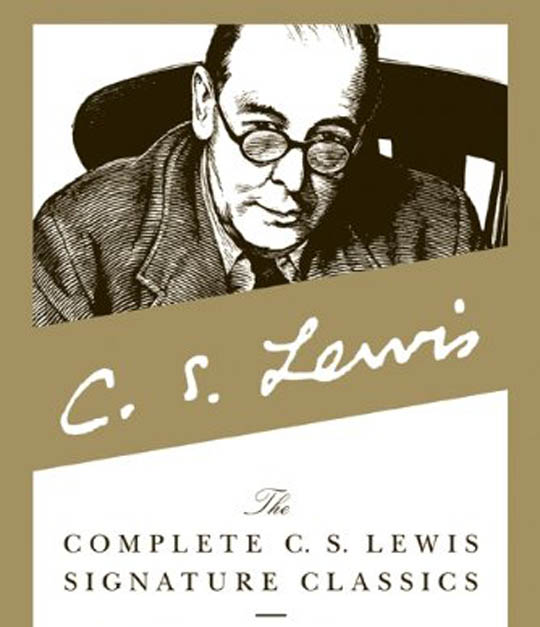
‘The Complete C.S. Lewis Signature Classics’: Pay a small price for the work of an intellectual giant

CS LewisFor years I only knew C.S. Lewis as the guy who was good for some really witty quotes and the author of “The Chronicles of Narnia.” I knew he was a Christian, and I knew he was friends with J.R.R. Tolkien. When I started writing a book roughly a year ago I told myself that I should really read his work to augment my knowledge of the Christian faith, yet I still procrastinated. Finally, after his name came up in the comments section of this blog, I vowed to get up to speed on C.S. Lewis — and I’m glad I did. “The Complete C.S. Lewis Signature Classics” may be $34.99, but it’s worth every penny.

Here is what readers get for their money: Mere Christianity, The Screwtape Letters, The Great Divorce, The Problem of Pain, Miracles, A Grief Observed and The Abolition of Man. Another way of putting it: 730 pages of philosophical and creative works written by an intellectual giant. Even those who disagree with the man, if they are honest, will concede that he was powerhouse.

C.S. Lewis writes in “Miracles”:

“Let us suppose a race of people whose peculiar mental limitation compels them to regard a painting as something made up of little colored dots which have been put together like a mosaic. Studying the brushwork of a great painting, through their magnifying glasses, they discover more and more complicated relations between the dots, and sort these relations out, with great toil, into certain regularities. Their labor will not be in vain. These regularities will in fact ‘work’; they will cover most of the facts.

But if they go on to conclude that any departure from them would be unworthy of the painter, and an arbitrary breaking of his own rules, they will be far astray. For the regularities they have observed never were the rule the painter was following. What they painfully reconstruct from a million dots, arranged in an agonizing complexity, he really produced with a single lightening-quick turn of the wrist, his eye meanwhile taking in the canvas as a whole and his mind obeying laws of composition which the observers, counting their dots, have not yet come within sight of, and perhaps never will,” (Miracles, 387).

The beauty of Lewis’ work is that it’s smart, but it’s personable. A man without a high school education and a Rhodes Scholar can both appreciate the product. Lewis’ insights are sharp, but he never talks down to his audience. Just as the U.S. Declaration of Independence artfully articulates the rights given to all men by their Creator — in ways anyone can understand — Lewis makes the case for God in ways that individuals of varying degrees of mental acuity can comprehend.

“What can you ever really know of other people’s souls — of their of their temptations, their opportunities, their struggles? One soul in the whole creation you do know: and it is the only one whose fate is placed in your hands. If there is a God, you are, in a sense, alone with Him. You can not put Him off with speculations about your next door neighbors or memories of what you have read in books. What will all the chatter and hearsay count (will you even be able to remember it?) when the anesthetic fog which we call ‘nature’ or ‘the real world’ fades away and the Presence in which you have always stood becomes palpable, immediate, unavoidable?” (Mere Christianity, 170).

One of the most interesting aspects of Lewis’ life is the fact that for many years he was an atheist. In many ways, his early atheism actually benefited Christianity because it is obvious that he thought long and hard about the existence of God. Those doubts are revisited in his journal entries pertaining to the death of his wife; the result is thought-provoking and hauntingly beautiful. Lewis says of dealing with his wife’s passing due to cancer: “You never know how much you really believe anything until its truth or falsehood becomes a matter of life and death to you.” He is correct. His faith comes out in tact, but the journal entries from “A Grief Observed” leaves readers shaken because the truth can be jarring.

I highly recommend “The Complete C.S. Lewis Signature Classics” for agnostics, atheists, Christians and non-Christians everywhere.

Andrew W.K. channels G.K. Chesterton in reply to ‘Son of A Right-Winger’

Almost four years ago I wrote a piece titled ‘The Andrew W.K. Conservative: Scaring elitists everywhere’. While I don’t know his voting history, I said then and still maintain that he is “rugged, witty, down and dirty, but dangerously intelligent.” I do not necessarily use ‘dangerous’ as a pejorative, either. Blessed with top-shelf raw material in the smarts department, Andrew appears to use it to build others up instead of tear others down.

In a recent “Ask Andrew W.K.” for the Village Voice, the artist was sent a letter by “Son of a Right-Winger.” His response is classic.

First, the letter:

Hi Andrew,

I’m writing because I just can’t deal with my father anymore. He’s a 65-year-old super right-wing conservative who has basically turned into a total asshole intent on ruining our relationship and our planet with his politics. I’m more or less a liberal democrat with very progressive values and I know that people like my dad are going to destroy us all. I don’t have any good times with him anymore. All we do is argue. When I try to spend time with him without talking politics or discussing any current events, there’s still an underlying tension that makes it really uncomfortable. Don’t get me wrong, I love him no matter what, but how do I explain to him that his politics are turning him into a monster, destroying the environment, and pushing away the people who care about him?

Thanks for your help,
Son of A Right-Winger

Now, the response:

Dear Son of A Right-Winger,

Go back and read the opening sentences of your letter. Read them again. Then read the rest of your letter. Then read it again. Try to find a single instance where you referred to your dad as a human being, a person, or a man. There isn’t one. You’ve reduced your father — the person who created you — to a set of beliefs and political views and how it relates to you. And you don’t consider your dad a person of his own standing — he’s just “your dad.” You’ve also reduced yourself to a set of opposing views, and reduced your relationship with him to a fight between the two. The humanity has been reduced to nothingness and all that’s left in its place is an argument that can never really be won. And even if one side did win, it probably wouldn’t satisfy the deeper desire to be in a state of inflamed passionate conflict. …

When we lump people into groups, quickly label them, and assume we know everything about them and their life based on a perceived world view, how they look, where they come from, etc., we are not behaving as full human beings. When we truly believe that some people are monsters, that they fundamentally are less human than we are, and that they deserve to have less than we do, we ourselves become the monsters. […] This is the power of politics at its most sinister.

Some people might say that Andrew is putting forth a kind of moral relativism that says “there is no point to having a debate.” I do not believe that is the case. I think that he’s tapping in to a mentality that used to go “hate the sin, but love the sinner.” We all have our own ideas on what constitutes “right” and what constitutes “wrong.” We tell people they “ought” to do this, but “ought not” to do that. However, we used to be able to have spirited discussions without letting politics poison our souls — and by extension our relationships with family and loved ones.

Regular readers know that this very blog has undergone a shift in tone and the type of content I tend to favor in recent years. That is because, like Andrew, I believe that it is very easy to allow “politics at its most sinister” to take root and grow like weeds resistant to the best pesticides.

Here is what I said in June, 2013:

The world’s elite would rather have you playing XBox and looking at pictures of animals on the Internet than looking into “God” or “Source” or “Enlightenment,” because when you do that everything melts away (perhaps literally, but that’s a discussion for another time). The sickest thing may be that the elite even enlisted many of your friends and family to do their dirty work for them. Is it possible to convince a prisoner to lust over his own chains? Yes.

Someone who looks within and then turns that eye back on the material world can see the charade. You have been trained to play with the anger and hate and resentment that resides on some level in all of us like a kitten with string.

There are many ways to break free from the mind-forged manacles we’ve willingly fastened in place. Without much effort, you can find many inspirational figures online who are willing to discuss this journey. I happen to believe that real change only comes from looking inward, so here now is my challenge to you:

For one year — every day — actively look for ways to give of yourself. If there’s a man on the street corner asking for change, give it to him. If you think he’s scamming people, give him some money or food anyway. If you have an opportunity to give someone a genuine compliment, do it. Call up (or text if you must) an old friend and remind them of something nice they once did for you years ago; tell them you still think about it and are thankful for what they did. Make someone feel good. Be the light in your office environment or at school or in your immediate family. There are any number of ways you can give of yourself or perform a kind gesture. The key is to make a conscious decision every day to take advantage of — or create — such opportunities.

It is possible to create a world that is more in tune with God’s plan for all of us, but all too often individuals become devils trying to make it happen.

I do not know if Andrew W.K. is a religious man, but what he is essentially getting at (whether he realizes or not), is what Christianity has always done: to balance, as G.K. Chesterton once said, “furious opposites.”

G.K. Chesterton wrote in “The Paradoxes of Christianity”:

“Thus, the double charges of the secularists, though throwing nothing but darkness and confusion on themselves, throw a real light on faith. It is true that the historic Church has at once emphasized celibacy and emphasized the family; has at once (if one may put it so) been fiercely for having children and fiercely for not having children. It has kept them side by side like two strong colors, red and white, like the red and white upon the shield of St. George. It has always had a healthy hatred of pink. It hates that combination of two colors which is the feeble expedient of the philosophers. It hates that evolution of black into white which is tantamount to dirty grey. In fact, the whole theory of the Church on virginity might be symbolized in the statement that white is a color: not merely the absence of a color. All that I am urging here can be expressed by saying that Christianity sought in most of these cases to keep two colors coexistent but pure.”

A Christian understands the importance of balancing “furious opposites,” and as such he should be able to find a way to live in peace and harmony with a father who is a “right winger” or a “left winger,” a Democrat or a Republican. It can and should be done. While my own blueprint for achieving that end comes from the Catholic Church, in this instance I readily acknowledge that we can all learn something from Andrew W.K.’s response to this Village Voice reader. I will not, however, be petitioning my local church to play its own rendition of “Party Hard” during mass.

Kudos to Andrew W.K. for imparting good advice to a young man who needed it. I look forward to reading future installments of “Ask Andrew W.K.”

Editor’s note for regular readers: As many of you know, I have been working on a book in addition to juggling personal and professional responsibilities. If you are a fan of “G.K. Chesterton” or the idea of balancing “furious opposites,” then I think you may enjoy my project when it is complete. I will continue to keep you updated on its progress. It is coming along quite well. Some of the research needed in order to create credible characters has slowed the process down, but I believe the investment in time will pay off.


Marvel’s Dan Slott stretches his bigotry muscles, tells Christians to build companies in ‘Christ-land’

Members of the comic industry recently got a little testy when Chuck Dixon and Paul Rivoche went to the Wall Street Journal about a bias against conservative creators in the industry. Marvel’s Tom Brevoort quickly assured everyone that no “blacklist” exists at Marvel (Can you name one openly conservative writer who is employed there?), and then surmised that it wasn’t conservatives that editors have a problem with, but certain kinds of “behavior” **cough** that might translate into not getting employment.

Sure, no “blacklist” exists, as long as you don’t consider The Amazing Spider-Man writer telling Christians to move to “Christ-land” as evidence that maybe — just maybe — Marvel isn’t too friendly towards guys like Messrs. Dixon and and Rivoche.

Here is Dan Slott’s response to the SCOTUS ruling on the Hobby Lobby case.

Dan Slott Christians

Imagine if I found out that my local pool was going to have very specific “women-only” hours for Muslim women, who don’t want to be seen by men outside their immediate family. We’ll use Seattle as an example:

Seema is from Pakistan. Sahra is from Somalia. Both are Muslim. They say having a women-only swim program allows them to get some exercise while observing their religious customs. Seema says their religion requires them to cover in front of men. “We don’t cover our heads in front of our husbands, our dads, brothers,” she says. “But when we go outside we’re supposed to cover for woman’s modesty.”

What if I pulled a Dan Slott-like move, stretched my bigotry muscles, and told Muslim women: “This is America. Go find pools in ‘Muslim Land.'” I’m pretty sure my employer would fire me.

And then there’s this gem:

Dan Slott Hobby LobbyThe thing with Hobby Lobby and other small religious businesses is that they took their grievance to court — and won. They followed the rule of law and the highest court in the land agreed with them. That is not an “asshole” move, but yet Dan Slott likens Christians to “conquistadors” and “assholes.” It’s incredibly mean, but also cartoonish; it’s reminiscent of 1992’s Office Space, where the character Peter Gibbons says “You know, the Nazis had pieces of flair that they made the Jews wear.”

Speaking of the Jewish faith, it’s now well-known that Dan Slott is very protective of his ancestry (just don’t mention that his own characters get taken to task by Bleeding Cool for engaging in “Nazi-like experimentation”). How would the Marvel scribe react if someone went full-Dan Slott on Jewish people like he does on Christians and Americans who are strong advocates of the Second Amendment?

Here we see another example of Dan Slott’s intolerance:

Dan Slott guns

Hube over at Colossus of Rhodey made a good point shortly after the tweet went live: How would Dan Slott react to someone who tweeted him in a New York Jewish accent about money?

Dan Slott Amazing Spider Man

The tweet was deleted — down the Memory Hole — Dan Slott’s go-to move when he gets caught saying things that reflect poorly on his employer. It’s a good thing the Internet is forever.

If you are a fan of Marvel comics who just so happens to be a Christian, a Second Amendment advocate or simply someone who just doesn’t like seeing bigotry broadcasted via social media, you should probably think twice about buying products put out by Dan Slott. You might want to also consider contacting Marvel. It doesn’t have many standards these days, but there are a few that are hanging by a thread.

Dan Slott MarvelSlow clap for Dan Slott. He’s the guy you want to find when you want tweets infused with anti-Christian bigotry, or Marvel comics that are consistently trying to see how low the bar can go.

Update: Dan Slott continues to read this little old blog and attack it from afar because, as we all know, it’s much safer to allow Twitter groupies to massage your ego than to actually defend the indefensible.

Question for Dan Slott: If I just had a beef with a few Jews over a religious issue with political implications, and I told them to go to “Jew-land,” how would you respond? How would my employer respond? That’s right — you’d go ballistic. And then my employer would fire me. But you get to tell a bunch of Christians to go to “Christ-land” without consequences. Hypocrite.

Dan Slott Hobby Lobby tweetUpdate II: Marvel’s Tom Brevoort has weighed in. No response to the question “If Chuck Dixon told Dan Slott to go to ‘Jew-land’ over a religious gripe, would he still get work?” Telling.

Tom Brevoort MarvelMarvel Hobby LobbySomeone else brought up similar sentiments about Marvel’s creators over at the New Brevoort Formspring. It turns out that Mr. Brevoort really does embrace the the strange business model “needlessly alienate potential customers” to grow the company.

New Brevoort Formspring