With apologies to Jeremiah Wright, Marvel’s ‘chickens come home to roost’

Fans have been scorned, taunted, and belittled by comicbook creators on social media for — politely now, mind you — daring to ask questions about altering long-time characters and stories all for “diversity’s” sake.

You know the routine by now. Doug, myself and many others have written about it ad nauseam.

Still, the creators have continued in their snobbish, egomaniacal ways.

However, now there is this from Newsarama (emphases mine):

According to David Gabriel, Marvel’s Senior Vice President of Sales, Print & Marketing, a sales downturn at the publisher that accompanied a “big shift in the entire industry” beginning in October 2016 came as a result of many factors, including, according to the executive, the market “turning up their noses” at any title not featuring a “core Marvel character.”

Suggesting the answer to the question of why people’s tastes suddenly changed was better answered by Direct Market retailers, Gabriel told ICv2 that “What we heard was that people didn’t want any more diversity. They didn’t want female characters out there. That’s what we heard, whether we believe that or not.  I don’t know that that’s really true, but that’s what we saw in sales.”

“We saw the sales of any character that was diverse, any character that was new, our female characters, anything that was not a core Marvel character, people were turning their nose up against,” he explained. “That was difficult for us because we had a lot of fresh, new, exciting ideas that we were trying to get out and nothing new really worked.”

Dan Slott Renew Your Vows

And Jon Del Arroz’s (love that name) article from a couple of weeks ago is spot-on:

Marvel has a diversity problem.

In that they have none in terms of diversity of thought. They are a pure social justice propaganda arm. This is dangerous when it comes to creating art, as if you have everyone thinking in lockstep, unable to get outside the box, you’ll have creative stagnation. More than that, when you turn children’s adventure fiction into adult message browbeating, you lose any semblance of fun that a product formerly had. It’s no wonder that sales have dropped by about half, when they have an entire writing core of every single one of their monthly writers hell-bent on a crusade of alienating half of the country in some social engineering through comics.  I don’t exaggerate my numbers either, and I did some leg work for you all so you might better make educated purchases, or lack thereof, of Marvel Comics. …

According to marvel.com, there are 18 writers on the current releases. I went through each and every one of their twitter accounts to give you a summary of where they spend their time on social media in terms of politics. I don’t mind people getting political occasionally, or even necessarily holding left wing views, but when it’s constant beating the drum of anger and hate, that’s what makes an SJW, and that’s where one needs to stay away (and is a primary reason for Marvel’s steep sales decline in recent years).  Here’s a brief summary of the writers’ twitter feeds, as I’ve gone through all of them for you:

Mike Costa – Constant Anti-Trump posts.

Jason Aaron – Anti-Trump, has #resist greenpeace retweet from inauguration. However, he doesn’t post politically very often, not pushing some anger crusade all the time.

Brian Michael Bendis – Anti-Trump posts, but posts so much it’s not a large percentage of his tweets.

Cullen Bunn – Rabid anti-Trump.

Becky Cloonan – a couple of snarky anti-Trump posts pre-election, but no political posts since. From the feeds, appears to be the sanest of the Marvel staff.

Gerry Duggan – Constant Anti-Trump posts, retweets Bernie (he can still win!).

Al Ewing – British, and doesn’t seem to post a lot of American politics, but very heavily steeped in globalism in immigration “rights” in his posts. Anti-Western civilization. 

Roxanne Gay –  Constant rants about feminism, anti-Trump posts. 

Zac Gorman – Complains about Republicans as “joke”, but only one recent post as such. Low percentage of political tweets.

Derek Landy – Anti-Trump, not overwhelming in political posts. Mostly sticks to posts about writing.

Kate Leth – Regular anti-Trump posts. Constant complaints about some boogeyman “privilege”, rambles at racist, sexist, etc., “white dudes”.  Rants about queer issues.

Stuart Moore – Regular posts anti-republican, anti-Trump.

Greg Pak – Complains about “representation” of different races. Lots of anti-Trump posts.

Dan Slott – Anti-trump rants all the time. 

Charles Soule – Constant anti-trump rants.

Nick Spencer – Rants about trump/republicans and calls anyone who disagrees with him flat out evil.

G.Willow Wilson – “Muslim” Ms. Marvel writer, rants anti-Trump posts all the time.

Chip Zdarksy – Constant anti-Trump posts.

That is  … “100% […] extreme left-wing ideologues who hate half of the country [and] have nothing nice to say about the USA or its president ever,” Del Arroz continues.

Comic fans of goodwill, those with nary a racist/sexist/homophobic etc. bone in their bodies, have been blasted as just that by creeps such as Dan Slott, et. al. all because they’ve asked simple questions regarding characterization and stories.

Many, like Doug and myself, have pointed out that Marvel’s permissive attitude towards horrendous creator behavior on social media is hardly an appropriate business model.

I feel like going on a Randy Quaid-in-Independence Day-style rant: “I’ve been sayin’ it. I’ve been sayin’ it for ten damn years. Ain’t I been sayin’ it? Yeah, I’ve been sayin’ it.”

I — we — knew all this nonsense was unsustainable. We knew the chickens would be seeking out that proverbial roost.

Amazing Spider-Man and the craft of writing: A YouTube hangout with Mike McNulty (Stillanerd)

It’s been years in the making, but the stars have finally aligned for your friendly neighborhood blogger and Mike McNulty (Stillanerd) to team up for a discussion on comic books.  If you’ve enjoyed Mike’s reviews over the years — both at Spider-Man Crawlspace and now with Whatever a Spider Can — then you’ll want to check out this YouTube chat. It’s one hour of the two of us talking about craft or writing, The Amazing Spider-Man, and a few other topics of interest to those who tuned in during the live stream.

Mike, as always, was the consummate professional. I hope to have him back again for another YouTube hangout sooner rather than later.

Spider-Man #7: Bendis writes strong tie-in to Civil War II

Hulk kill

Brian Michael Bendis’ Civil War II has taken its lumps in terms of fan interest and sales, but the story is helping to define Miles Morales. Spider-Man #7 features the young man trying to determine whether he will stand and fight alongside Tony Stark in a war over the Inhuman named Ulysses, or if he will sit on the sidelines and let the veterans sort it out for themselves.

Here is what you need to know for Spider-Man #7:

  • Miles is having nightmares about the potential future he experienced, where the Hulk goes completely off the deep end (even by the Hulk’s standards), and kills everyone.
  • Miles’s parents cannot sleep. His mother knows that private investigator Jessica Jones is keeping information about Miles from her. Jones had to use her superhuman strength to carry Rio out of her office…and send a message to stay away.
  • Miles’s father wants the investigation (launched by his mother-in-law) called off, but the two parents seemingly don’t have the power to make it happen.
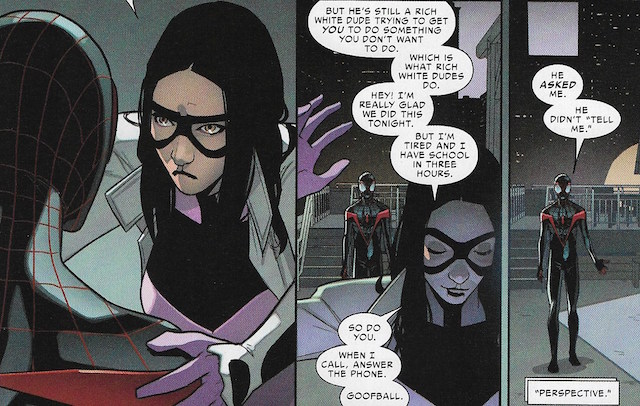
  • Miles web-slings around New York to clear his head and runs into Lana Baumgartner, aka Bombshell. After she stops a robbery by blowing up a van, Miles says her behavior is symbolic of a lot of other superheroes: “You stopped a robbery, but you started a fire.”
  • The two teenagers talk about the upcoming war between superheroes and Lana says that Miles is being manipulated by the “rich white dude” known as Tony Stark to do something against his will. Her reasoning — that’s what “rich white dudes do.” (Note: Don’t expect Bendis to ever have Miles Morales sarcastically reply: “You mean like Steve Jobs or Bill Gates or Elon Musk?”)
  • Miles has a nightmare during class and is forced to leave the room. He goes up onto a roof as Spider-Man and is confronted by Jessica Jones and Luke Cage.

All things considered, this was a pleasing issue for Bendis and it was made even better by strong work by artist Nico Leon. Whether one likes Civil War II or not, one of the long-term benefits of the tale is that it serves to define young characters like Miles.

SpiderMan Bombshell

The challenge for Bendis, however, will be to adequately show the “now what?” — the follow-through that often seems missing from his work. The writer has a habit of toying with big ideas and then placing them aside to focus on something else.

Whether Bendis is writing Tony Stark in Invincible Iron Man or Miles Morales in Spider-Man, in many ways he keeps them in a holding pattern. He occasionally dips and swerves the plane to the left or the right, but at some point in time his passengers realize that they have been deceived — they’ve just been flying in circles.

After seven issues of Spider-Man, readers want to know “Who is Miles Morales?” While it is true that he is a young character who is finding his voice — and part of the fun is going on that journey with him — it seems as though Bendis is being stingy with key aspects of the hero’s personality. Either the writer doesn’t yet know what the character really represents, or he is scared that readers will not like what they hear.

If you planned on checking on Spider-Man, then Bendis’ seventh issue is a good jumping-on point. Potential customers just need to know that  Miles Morales’s character development has been frustratingly slow since the series first launched. Perhaps the conclusion of Civil War II will change that.

Bombshell SpiderMan

Dan Slott’s Spider-Man: ‘White Privilege’ is having Peter Parker resort to corporate espionage, getting Hobie Brown to die for his sins

Hobie Brown death

Your friendly neighborhood blogger said less than one month ago that Marvel writer Dan Slott’s setup for “Dead No More” was worth buying, but that all the warning signs were there “for another round of character assassination.” In lightening-fast speed that would make Olympic sprinter Usain Bolt blush, Mr. Slott managed to stab Peter Parker in the back and twist the knife in 21 days.

Years from now, The Amazing Spider-Man #17 will hopefully be used in a documentary titled The People vs. Dan Slott. The issue includes the moment in time when Peter Parker — the guy who took on corporate saboteur Ghost on multiple occasions — became the very same kind of criminal. Worse, he guilted a good friend with a criminal past into doing the dirty work for him — and the result was deadly. 

For all those social-justice activists out there, let me put it to you in a way that you can understand: “White Privilege” is having Peter Parker resort to corporate espionage and convincing a black friend to die for his sins. Thanks, Dan Slott!

Here is what you need to know about ASM #17:

  • Peter Parker tells Hobie Brown that he needs him to break into New U and steal their intellectual property. He wants to use the company’s nascent technology on Jay Jameson, but requires access to its private data. (Yes Dan Slott, “taking pictures” of a company’s private research after breaking and entering is stealing.)
  • Hobie Brown tells Peter he can’t do that because “industrial espionage” is out of bounds. “I don’t do that anymore,” he says, which is met with a guilt trip about “FAMILY.”
  • Hobie reluctantly agrees and puts on his Prowler uniform. The once-reformed criminal, thanks to Dan Slott’s Peter Parker, becomes a recidivist offender. (The whole scene is more disgusting, given Spider-Man’s lecture to Clayton Cash in Civil War II: Amazing Spider-Man #3.)
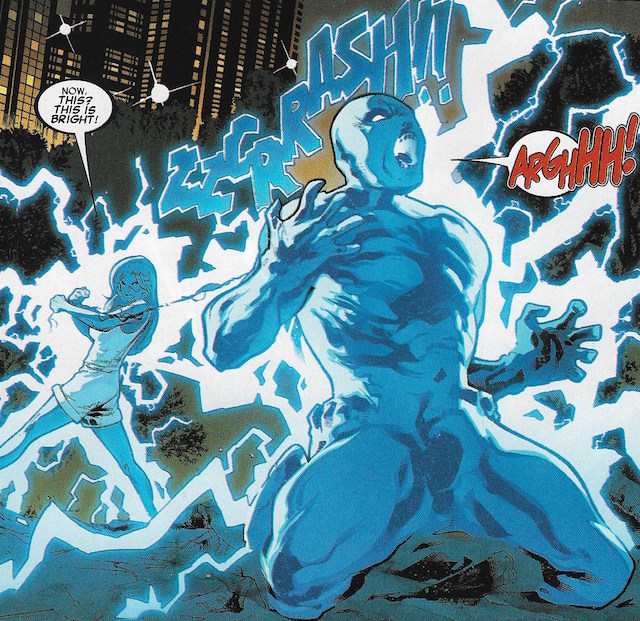
  • Miles Warren, aka The Jackal, tries to give Electro his powers back but the process does not work. Francine (the woman he killed with a kiss before she was resurrected) is nearby, which causes her “genetic mix” to attract Max Dillion’s latent powers. She kisses him to absorb his energy and ironically kills him.
  • Hobie gives up his position to stop Francine. He tries to flee after it is obvious that Dillion is dead, but the new Electro tracks him down and chars him to a crisp. “Told Parker I wasn’t cut out for this. I work best in the shadows…and I stay out…of the light,” he thinks before death overcomes him.
  • The Jackal revives Hobie and shows him secrets that prove his team consists of the real “good guys.” Hobie agrees. When Peter calls from Oklahoma to say New U scientists are going to perform a procedure on Jerry Salteres, he gives no indication that anything is wrong.
  • Miles Warren shows Hobie a pill and says he needs to take it on a daily basis.

Yes, you read that right, Peter Parker asked Hobie Brown to break the law, and then before his partner in crime got back to him with a full report he admits that he was going to approve New U’s procedure anyway (i.e., Thank for dying for nothing, sucker. Mr. Salteres is the perfect guinea pig to see if the surgery would be right for Jay Jameson).

Prowler

If you’re wondering how on earth Spider-Man fans got to the point where their hero is no better than the goons who tried to steal Tony Stark’s technology over the years, then look no further than the flashback scene Dan Slott writes on the first page of the issue.

Bad guys are just like the good guys…except they don’t hold back. They don’t follow any rules,” Francine says before kissing Electro.

This is the kind of moral relativism that has been on display since The Superior Spider-Man. Doctor Octopus is a megalomanic who nearly succeeded in exterminating 6 billion people, but to Dan Slott the two men are not all that different. (Heck, the writer even said that Doc Ock was better than Peter at appreciating those who are “truly beautiful”…)

Mr. Slott told Newsarama on April 5, 2013:

Slott: [Otto is] trying his best to be a hero, but he’s doing it in a very Doc Ock way. And Doc Ock’s an egotistical, annoying sh*t. It makes him an interesting character. At his core, he’s someone we don’t really think of heroic. But is he any more annoying than [former villain] Hawkeye used to be? …

Also, when you look at Doc Ock, he was so much like Peter Parker. Peter Parker, if he didn’t know the lessons of power and responsibility, that teenage nerd would have grown up to be an Otto Octavius nerd, with the same kind of, “I’m going to make them pay.” This is the flip of that. …

Do you see Punisher as a hero? Do you see Wolverine as a hero? If these guys can be heroes, why can’t Doc Ock?

Dan Slott admits that he thinks Peter Parker is, for all intents and purposes, one step away from becoming Doctor Octopus.

That is why his Peter is so obsessed with death.

That is why his Peter is willing to exploit the trust of a reformed criminal for his own selfish purposes.

That is why his Peter’s moral compass aimlessly spins in circles — and that is why readers can expect more embarrassing behavior from their “hero” in the months to come.

Hobie Electro

ASM #17 is officially the issue where Hobie Brown died, but many Spider-Man fans should consider it the issue where Dan Slott assassinated Peter Parker.

Prowler Hobie Brown death

Related:

Amazing Spider-Man #16: Dan Slott sets the stage for ‘Dead No More’

Amazing Spider-Man #15: Dan Slott’s Regent took down a god, then falls to … Mary Jane

‘The White Donkey’: Iraq War veteran’s graphic novel a powerful read

White Donkey

For  years this blog has tried to make the case that a comic book can be much more than “just” a comic book. For years this blog has tried to make the case that the industry would benefit if it employed, say, men like Terminal Lance creator Maximilian Uriarte. His New York Times bestseller, “The White Donkey,” should officially put that debate to rest.

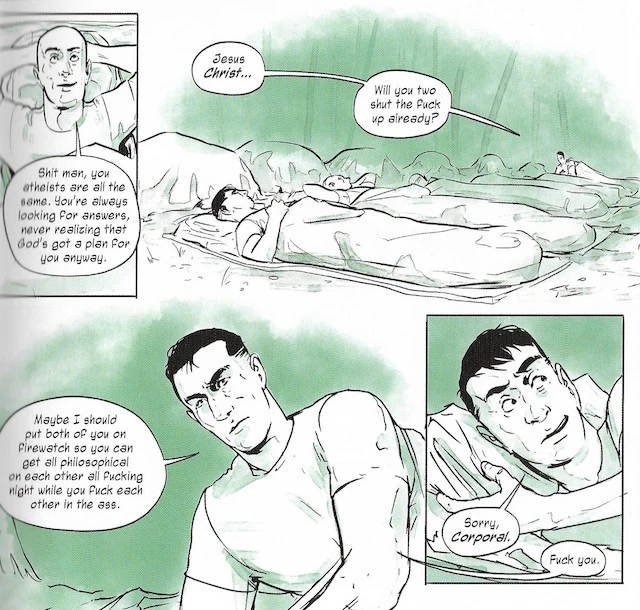
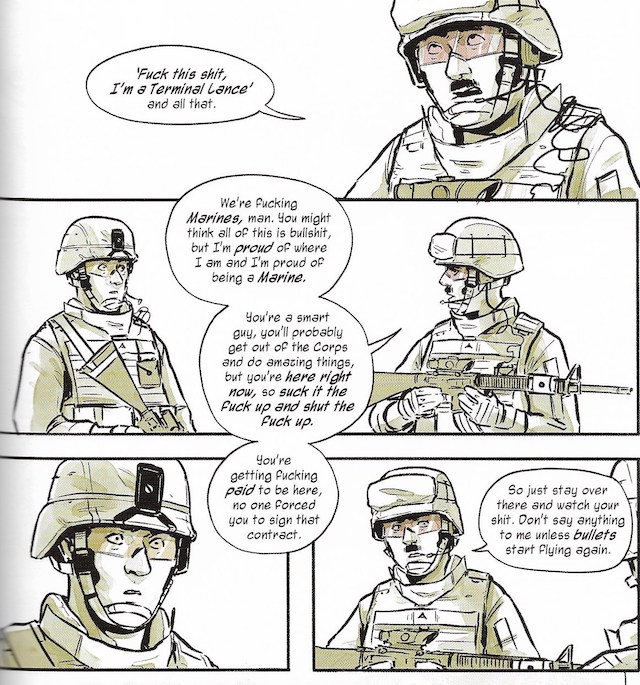
“The White Donkey” is the story about Abe, a young man who left his small Oregon town in search of … something. He wasn’t quiet sure what he was looking for, but he thought he might find it in the United States Marine Corps as an infantryman. Abe, his best buddy Jesus Garcia, and the rest of their battalion are eventually deployed to Iraq. There is not much more I can say without spoiling the book other than to note its honesty rivals National Book Award Winner Redeployment,” by Phil Klay.

White Donkey Garcia

Every so often a critic comes to this blog and says something along the lines of, “You write about popular culture because you wanted to make it in Hollywood and never did.”

Yes, I did go to USC upon exiting the Army as a mechanized infantryman, but nothing could be further from the truth regarding professional regrets. In fact, a better personal attack would be that I exited the military prior to 9/11, didn’t have the courage to re-enlist after the Twin Towers fell, and that it still haunts me to this day.

There actually is some truth to that — I carried a ton of guilt with me for years after 9/11, which was exacerbated after a friend of mine, Hector Leija, had his head blown off in Iraq by a sniper. I disclose these details because readers need to know that everything that happens to “Abe” prior to his deployment is eerily close to what I experienced as a peace time soldier (i.e., it’s authentic). The characters, situations, and confrontations Abe navigates in many ways mirror my own.

I see myself in Abe (except the atheist part), and cannot help but wonder what I would be like had I stayed in military.

White Donkey leave

If you’re looking for a book with intelligence and emotional weight, then check out “The White Donkey.” If you’re looking for a book that can help civilians better understand returning war veterans, PTSD, and the other burdens they might be carrying, then Uriarte’s work is a must-read. One can only hope that he continues telling tales for many years to come.

Dan Slott’s Peter Parker: ‘I’m an idiot’ (Fans wonder when recurring theme will end)

ASM 10 Scorpio

Readers of The Amazing Spider-Man know that a recurring theme under writer Dan Slott’s watch has been Peter Parker’s Sudden Onset Idiocy (we’ll call it SOI), such as forgiving multiple women in his inner circle who allied with corporate saboteurs or terrorists groups to destroy his company. ASM #4 featured the time a child had to clue him in on how to stop a terrorist attack. Years from now, however, it appears at though ASM #10 will cited more often as the quintessential Slottian Spidey.

The latest issue of ASM takes place moments after the hero’s “nuke the fridge” moment — Spider-Man has fallen to earth like a meteor and survived. The terrorist leader Scorpio stands over Spider-Man ready to administer a death blow when his Gemini minions earn their deus ex machina badge. They tell Scorpio that he will miss “The Ascension” if he uses an extra second to blast through Frenchmen acting as a human shield for the hero.

Luckily for Peter, Anna Maria Marconi and Living Brain (i.e., Doctor Octopus) arrive in a flying car to help him locate the villain once he escapes. They eventually track him down to the Chunnel, where SOI rears its ugly head — Parker tries to spray his web-shooters forward on a train going 186 miles per hour and then somehow comes to the conclusion that Scorpio — who would be firing an energy weapon backwards — can’t get “a good shot either.”

Scorpio inexplicably decides to target Anna and Living Brain instead of Spider-Man, who can barely keep his footing on the fast-moving train and is rendered highly immobile. The terrorist escapes again.

With time running out before The Zodiac take control of the future, Peter needs to find clues as to where Scorpio might be. He’s stumped. SOI returns, but Doctor Octopus hidden within Living Brain jogs his memory regarding ways to track Scorpio’s movements.

“Brain. I’m an idiot. And YOU, are one smart robot!” Peter says for the intellectual assist.

ASM 10

The trio eventually wind up in the home of Vernon Jacobs, Parker Industries’ “biggest shareholder and investor.” After admitting that Jacobs (aka: terrorist Scorpio) was his “Secret Santa” for Christmas, Peter’s SOI kicks in and he asks Anna for help figuring out how Parker Industries’ technology was exploited.

Anna (who does not suffer from SOI) tells Peter to utilize his employees, calls them in for a hologram meeting, and harnesses their collective genius to quickly figure out what Scorpio has been up to for months.

ASM 10 Anna

The issue comes to a close with Scorpio appearing via a hologram and threatening to use his inside knowledge of Parker Industries to bring it all crashing down.

Spider-Man responds by saying Peter would still have “responsibility” if his company tanked, and that “losing it all” would be worth it if the end result were Scorpion’s defeat. Fans are asked to come back next month for a showdown that should have happened seven issues ago.

If readers are looking for a graphic analogy for ASM’s Zodiac story line, I will liken it to a bout of diarrhea I recently suffered while on vacation: It was funny at first for all the wrong reasons, annoying and embarrassing, repetitive, it went on for far too long, and in the end it was downright exhausting.

The stars are speaking, and this story needs to come to a close as soon as possible. Scorpio is a dud as a villain, which is always unfortunate, but he is now a failed foil who will have consumed at least eleven issues of ASM during its latest relaunch.

Do not buy this book unless you enjoy seeing Peter Parker repeatedly bailed out after outbreaks of Sudden Onset Idiocy.

Editor’s Note: Did anyone else find it odd that Peter Parker could run calculations in his head that would allow him to enter Earth’s atmosphere as a human meteor, but he doesn’t know how to convert kilometers to miles? There’s that SOI again…

Dan Slott: Peter Parker should be like Tony Stark or Bruce Wayne — and perhaps boink Shanghai women

ASM Parker IndustriesMarvel has a “new” idea for Peter Parker: Make him sort of like Tony Stark and Bruce Wayne — and have him stuck in love triangles because Dan Slott liked that as a kid.

MTV reported Tuesday:

Move over, Stark Industries: Spider-Man is in charge this time.

“Peter Parker has stepped up,” Slott told MTV News over the phone. “He’s grown. He’s become the Peter Parker we’ve always hoped he was going to be. This company, with Peter’s inventions and Peter’s gumption has gone to new heights.” …

“He’s operating with Parker industries in not just New York, but also Shanghai and San Francisco and London,” Slott said. “He’s going to be a far more global Spider-Man, and with that is going to come all new global threats. Things that will really test Spider-Man like never before. …

“One of the things I always loved was there was always a triangle,” Slott said. “There’s all these characters who are vying for Pete’s attention and I think you’re going to get back to that. You’re going to see all kinds of different characters we know and care about.”

Take a look at Marvel’s promotional material for its upcoming relaunch of The Amazing Spider-Man (yes, fans get another Slottian relaunch): Nothing says “Peter Parker” than James Bond-ish attire and two casino-bimbo wannabes latched onto his arms. Spider-Man even gets his own Nolan-inspired Bat-Spider Mobile…

If Peter Parker has grown up, then why is he still stuck in endless love triangles? Did he grow up into the “Peter Parker we’ve always hoped” he would be, or did he merely pupate into some weird version of himself consistent with Dan Slott’s childhood fantasies?

Here are the different versions of Peter Parker given to fans by Mr. Slott over the years:

  • Dumbed-down Peter Parker, who acts like a novice superhero when he’s had years of experience.
  • Dead Peter Parker.
  • Ghost Peter Parker, whose impotence is only forgotten with time because Doctor Octopus randomly gave the hero his life back.
  • Where’s Waldo Peter Parker, who became lost in a sea of spider-men during Spider-Verse.
  • Peter Stark-Wayne-Parker, who perhaps gets to boink women in Shanghai love triangles.

Was Peter Parker always destined to be a jet-setting CEO who flies from New York to London to Shanghai, or was he more likely to lead a life of quiet research conducted by men like Reed Richards? Was Peter Parker always destined for expensive love-triangle tribulations of the world’s billionaire elites, or was he more likely to settle down with a good woman by his side like, again, Reed Richards?

If Dan Slott were a violinist, he would be a third-string musician who weirdly wormed himself into a first chair. His “ear” for ASM indicates that while he understands the “harmonies” and “melodies” that make Spider-Man a winning character, his handling of Peter Parker is almost always off pitch.

The next volume of The Amazing Spider-Man already sounds like a disaster waiting to happen.

Tom Brevoort says OMD’s devil deal was ‘medicine’ for fans; his hubris knows no bounds

Tom BrevoortPeter Parker fans often wonder where it all went wrong. Marvel’s flagship character has, more or less, been an inconsistent performer in his own book for years. With each passing season there are glimpses of what makes the hero so enduring, but in general it seems like he is creatively adrift in a sea of editors who don’t know what to do with him. Enter Tom Brevoort, who went a long way in terms of clearing up why the character regularly disappoints in his own title.

In response to a question about the almost universally-panned “One More Day,” where Peter Parker made a deal with the devil (for all intents and purposes) and his marriage was magically dissolved deus ex machina-style, Mr. Brevoort replied:

“The medicine may not taste good, but if it makes you better, then you need to take it.” – Tom Brevoort on why Marvel refuses to undo “One More Day.” Jan. 30, 2015.

According to Tom Brevoort, deals with the devil are fan-medicine, and if they don’t like it, then they’re just being recalcitrant fools.

Tom Brevoort Twitter OMDThe hubris of modern Marvel editors like Mr. Brevoort knows no bounds. The reason why so many horrible stories go forward is because they think they’re beyond reproach. Marvel’s Orwellian message boards long ago cleared out evidence of just how much Peter Parker fans detested the story, but at least one can still go on sites like Amazon and read some classic one-star reviews.

Here one example from a reviewer named Cindy:

Yes, boys and girls… You are now told to believe that your hero makes deals with Satan, sacrifices his wife to keep his 80-yr-old Aunt alive (who would pinch his head off if she knew what he did) and that now, in this “new” reality, Peter Parker, a.k.a. Spider-Man, Mr. Responsibility, just “shacked-up” with a live-in lover, even tried to make a baby with her, but never got around to marrying her. Yeah… it didn’t work out, they split up and they are moving on… Whatever.

Cindy, Cindy, Cindy… Don’t you get it? Making a deal with Mephisto had to happen because apparently that’s a better option than divorce.

Here’s what Joe Quesada said to CBR on Jan. 28, 2008:

“First and foremost, I think Peter getting divorced to me says that they gave up on their love, that their life in love together was so awful, so stressful, so unfulfilling that they had to raise a red flag and walk away from it. They quit on their marriage and even more tragic, they quit on each other. In other words, Peter would rather be alone and single than to spend another moment with MJ.” — Joe Quesada

This, according to Tom Brevoort, is “medicine.” Even though there are countless examples of people who divorced and then eventually got back together, it was for your own good that Peter Parker made a deal with a devil to save his … ancient aunt who should already be dead and reunited with Uncle Ben.

Here is the bottom line: Tom Brevoort and his team of geniuses killed Peter Parker’s marriage and the stories still stunk. Then they literally killed Peter Parker off for over a year and made Doctor Octopus the book’s “hero.” Nothing says “good reads” like making a deal with the devil and then making the villain the hero… Then, Marvel brought back Peter Parker and made him a supporting character in his own book with Spider-Verse. Was Mary Jane the problem all along, or is it narcissistic know-it-alls like Tom Brevoort?

Years ago doctors gave women Thalidomide to alleviate nausea during their first trimester. Their babies were then born with arms and legs that were too short and incredibly deformed. If Tom Brevoort were a doctor, he probably would have been the guy who gave out large doses of Thalidomide to pregnant women. Luckily he decided to work at Marvel, where his “medicine” only damages fictional characters and his employer’s reputation.

Related: Dan Slott’s Spider-Verse: Peter Parker sadly gives off ‘Where’s Waldo?’ vibe in his own book

Related: Dan Slott: I love Peter Parker so much I turned him into a ‘meat puppet’

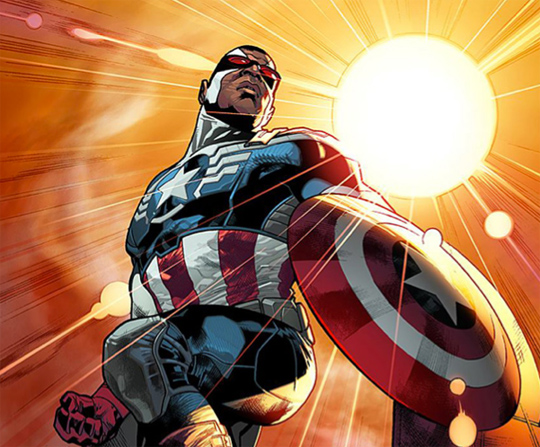
Falcon can soar as Captain America, but Tom Brevoort crashes and burns as a Marvel representative

Sam Wilson Captain America

Marvel has taken a lot of heat in recent days for its shameless She-Thor publicity stunt, but the announcement that Sam Wilson will be the new Captain America does not deserve similar scorn. While its press release on the decision to give Falcon a chance to shine in a new role successfully articulates Rick Remender’s thought processes, it also includes further evidence of Tom Brevoort’s rhetorical buffoonery.

Superhero Hype reported July 16:

This fall, Sam Wilson flies where eagles dare, as the intrepid Falcon assumes his new role as Captain America. A new chapter begins in ‘All-New Captain America” #1 by Rick Remender and Stuart Immonen.

“This is it,” says Remender of the culmination of two years of storytelling in ‘Captain America’ and the dawning of “All-New Captain America”. “This is the fireworks factory we’re arriving at, and now everything’s going to blow up and be very pretty and exciting to look at. It leads into an evolution of Steve Rogers’ character that I had very early when I was given the job. I think that it’s important with these stories to do things that are natural and make sense and have an inherent logic to the universe, but are also constantly shifting and exciting, keeping the drama high. In order to do that it really comes down to creating new dynamics.

“I’ve been having a lot of fun writing Sam. It’s a completely different attitude. The fact that he’s not a soldier shifts things up a bit. Sam’s not going to be Steve. Steve can be very rigid. That can be kind of joyless at times, whereas Sam is absolutely not that.”

This is logical. Sam Wilson and Steve Rogers have a long history together. Iron Man fans know that Tony Stark and Rhodey have a similar dynamic. Fair-minded fans — even if they dislike the move — will admit that on many levels it makes sense for Falcon to become Captain America in the event of Steve Rogers’ death or prolonged absence. In fact, one could make a convincing argument that Anthony Mackie deserves a chance to play Captain America in the event that Chris Evans walks away from big screen Captain America role a few years down the line. Agree or disagree, there is sound logic behind what Marvel is doing.

Enter Tom Brevoort, whose track record of embarrassing behavior can fill many, many blog posts.

“While Sam shares many of Steve’s beliefs in a general sense, he’s also a very different person with a very different background,” adds editor Tom Brevoort, “He didn’t grow up in the 1930s, he’s a modern day man in touch with the problems of the 21st Century. For most of his professional life, Sam has worked as a social worker, so he’s seen the worst of urban society up close, and how crime, poverty, lack of social structure and opportunity can affect the community. So he’s got perhaps a greater focus on the plight of the common man, and perhaps a greater empathy for the underprivileged than maybe even Steve himself.

The idea that Steve Rogers —  Captain America — would have less empathy for his fellow Americans than anyone who might temporarily fill his shoes is cringeworthy. To understand what Mr. Brevoort means by the “common man,” one must first view his comment within the context of his own openly-leftist politics.

Ronald Reagan may have put it best during a 1978 radio address to the American people in regards to elitists’ references to the “common man.”:

“I wonder, though, about the people in those cars, who they are, what they do, what they’re thinking about as they head for the warmth of home and family. Come to think of it I’ve met them oh, maybe not those particular individuals but still I feel I know them. Some social planners refer to them as the masses which only proves they don’t know them. I’ve been privileged to meet people all over this land in the special kind of way you meet them when you’re campaigning.They are not the masses or as the elitists would have it the common man. They’re very uncommon. Individuals each with his or her own hopes and dreams, plans and problems and the kind of quiet courage that makes this whole country run better than just about any other place on earth.”

A character like Steve Rogers, who would have experienced the horrors of Nazi Germany up close and personal — who would have lived in a time when black men had significantly less rights than they do in 2014 — would certainly empathize with any grouping that racial bean counters or “social justice warriors” could come up with. A man like Steve Rogers, who we’re told has gone to all corners of the earth to fight tyranny and injustice and pure evil — heck, all corners of the universe — would most-certainly have empathy for all Americans that is equal to or greater than the man who borrows his shield.

Steve Rogers, however, has one thing that he can’t overcome in the mind of Tom Brevoort: he is a blonde-haired blue-eyed white man. It doesn’t matter if he’s fought for freedom and liberty all around the globe, or traveled the stars to save the entire planet — his empathy for the “common man” is always up for debate. In Mr. Brevoort’s world, a social worker in 2014 probably has more empathy for how “social structure” affects a community than the soldier who saw the death and destruction caused by the “social structure” that created Nazi Germany.

Marvel fans can be proud of the fact that Sam Wilson will officially be Captain America for an extended period of time, but they should shake their heads in disappointment that a guy like Tom Brevoort represents the company.