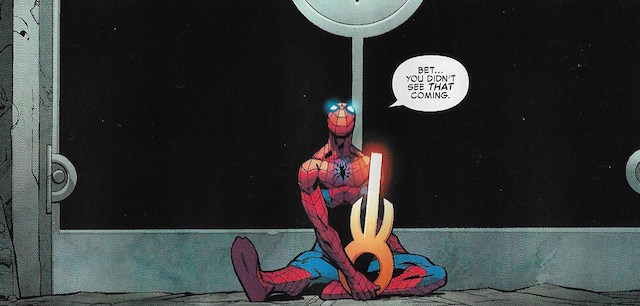
Imagine you are a superhero. You have tracked an international terrorist for months as he feverishly looked for an inter-dimensional field of pure “power” and “information.” In short, your suspect wanted to locate a “door into the future.” You catch up to him at the very moment he finds his target. Would you decide to push the terrorist into a quantum field of infinite possibility and lock the door, or would you try to pull him out?
Dan Slott’s Spider-Man chooses the former and says, “I bet you didn’t see THAT coming.”
Fans of The Amazing Spider-Man do not typically expect their hero to aid villains in their evil machinations, so it is true that most of them probably would not have anticipated such a move. Touché, Dan Slott. Touché, indeed.

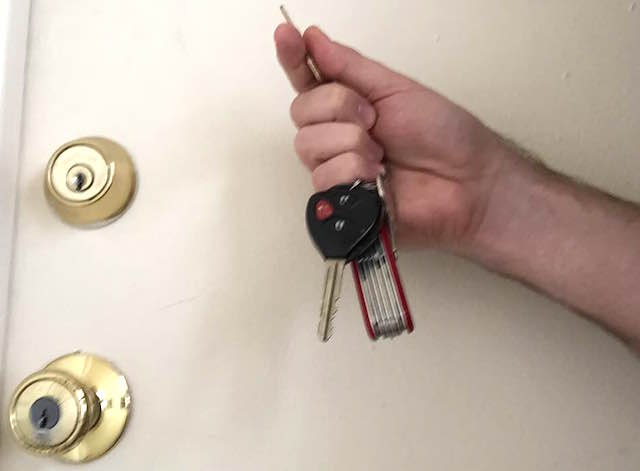
Here is an easy experiment: Glance at your front door. If you were standing under the threshold and a man pushed you inside, locked it from the outside and exclaimed, “Well, we don’t need to worry about that guy anymore,” then how would you react?
My guess is that you would laugh at the man’s stupidity before opening the door and demanding your key back. In a worst-case scenario you would go out your garage, a back door, or possibly one of many windows.
The Amazing Spider-Man #11 is technically the culmination of many months of stories surrounding the Zodiac terrorist group, its mastermind Vernon Jacobs, and his plan to usher in the “age of Scorpio.” The issue was supposed to serve as this story’s climax, but in the end Peter Parker “saves” the world by kicking the can down the road — one year to be precise.
Note: Superheroes are not supposed to treat villains like the U.S. treats its $19 trillion debt and then declare victory. It doesn’t work that way. Regardless, here is the abridged version of how ASM #11 unfolds:
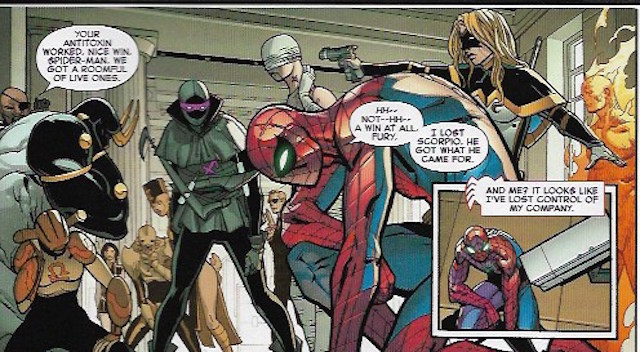
- Nick Fury turns the International Space Station into a giant beacon for Morse code and sends Scorpio’s location to Spider-Man since most of earth’s satellites are inoperable.
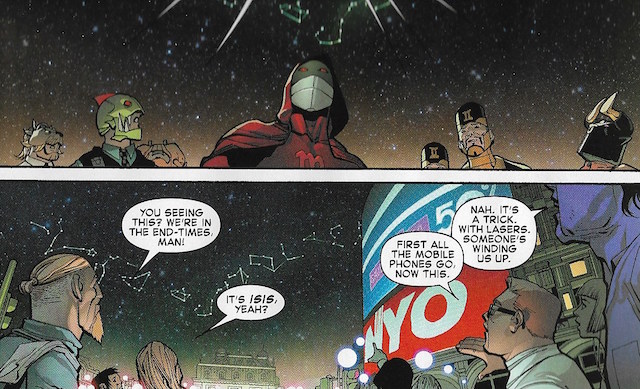
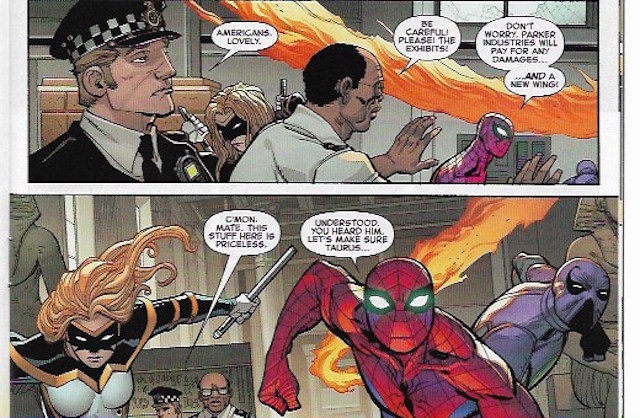
- Spider-Man, Anna Maria, and Living Brian (aka: Doctor Octopus), and Mockingbird arrive at Greenwich, London, to stop Scorpio but are quickly dispatched by a giant energy pulse from the Zodiac Key.
- A doorway to the future is opened and Jacobs reveals that he is the grandson of the original Scorpio, Jacob Fury.
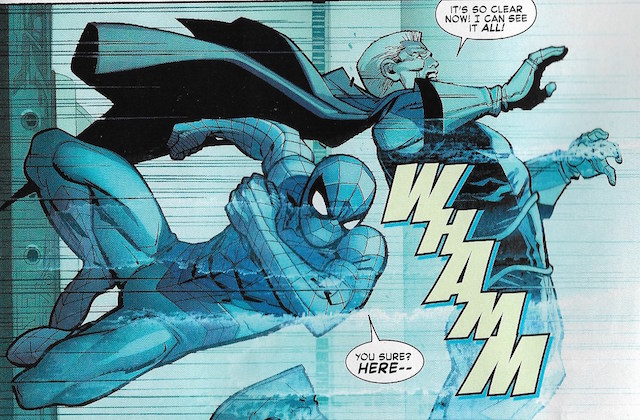
- Spider-Man decides the best way to defeat Scorpio — as the portal telepathically gives him immense power and precognition — is to push him through and shout, “Take a closer look!”
- Peter Parker tells Mockingbird he “smacked [Scorpio] into next year,” and she jokes that he did it so they have an excuse to spend more time together.
- Anna Maria tells Peter that Mockingbird likes him, and then tries to make her “jealous” by clinging to his arm.
- Doctor Octopus witnesses the “intolerable” act and vows to make his “superior return!”
Regular readers who are disappointed with how the Zodiac tale wrapped up should look at the bullet points above and notice an ongoing trend: Dan Slott, fittingly, often expends more care setting up future events than he does with the task at hand (i.e., telling a tight and compelling story in the here and now).
Just as Batman v Superman faltered because the writers spent too much time trying to set up a Justice League movie, Slott’s ASM regularly falls flat because he focuses too far into the future. No one except Mr. Slott and his good friends will care if 10,000 plot points over the course of ten years can be amusingly traced on a Saturday night if the stories connecting them are mediocre.
It is unfortunate, but once again ASM’s creative team over-promised and under-delivered. Giuseppe Camuncoli should take a bow for consistently stellar art, but he may want to ask to work on a title where his efforts are not a metaphorical life raft.
Exit Question:
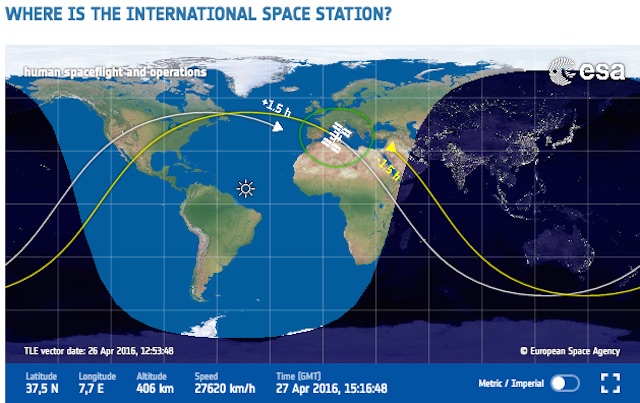
The International Space Station orbits the earth at over 17,000 miles per hour. Someone can correct me if I am wrong, but ASM appears to have been written like it is a fixed object in space. My guess is that Morse code would not have been a possibility for an object orbiting that fast at 155 miles above the earth.
Editor’s Note:
The Amazing Spider-Man may be the first Marvel comic to actually acknowledge the existence of the Islamic State group. The first person who can confirm this one way or the other will win a “Doug Prize.”















 Douglas Ernst Blog