The new teaser trailer for “Star Wars: The Force Awakens” is out, and it looks pretty darn amazing. It’s got a little something old, a little something new, and George Lucas has been replaced by J.J. Abrams. Score. However, the history nerd in me has his interest piqued because of the squadron of X-Wing fighters seemingly headed into battle about 100 feet above a large body of water. Did Mr. Abrams draw inspiration from Israel’s Six-Day War — Operation Focus in particular? If so, then I’m more excited to see the film.
If you’re not familiar with what the Israeli air force did during the Six-Day War in 1967, then look it up. In short, Israel’s air force pulled off a daring operation in which they flew over the Mediterranean — so low that they would not be picked up by Egyptian radar — and then destroyed the entire Egyptian air force.
If J.J. Abrams needed the Rebel Alliance to pull off an inspiring win, then drawing from Operation Focus was a brilliant move. If it turns out to have absolutely nothing to do with the movie, then I guess we’re just left with really cool images of X-Wing Fighters flying over water. It’s a win-win situation.
Let me know what you thought of the trailer below, and make sure to include your thoughts on the new lightsaber as well. I think the crossguard looks cool, but I’m not sure if it would work in battle. Since I’m not a Sith Lord, I’ll withhold judgment until December, 2015.
There’s a line from 2004’s “The Incredibles” where the villain Syndrome says, “When everyone’s super, no one will be.” Dan Slott’s “Spider-Verse” tale operates on many of the same levels — when the Marvel Universe is filled within an infinite amount of “Spider-Men,” it becomes much harder to distinguish why Peter Parker is special.
Those who have read The Amazing Spider-Man since its relaunch have seen Peter Parker take a back seat in his own title for much of the lead-up to Spider-Verse, and now that it’s here the trend continues. Readers are told he’s some sort of Harry Potter-ish “Chosen One,” but the evidence as presented — up to this point — doesn’t support the claims. Peter comes across as just one of many heroic “spiders” throughout multiple dimensions, each doing his or her own part to protect the “spider-totem” from falling to “The Inheritors” — a dysfunctional family of beings that like to dine on “spiders.” When Peter Parker gives off a “Where’s Waldo” vibe in his own book, something is wrong.
Dan Slott’s “Spider-Verse” generally reads like a convoluted mess from the mind of a man who still goes to fast food restaurants and fills his glass with a little bit of each kind of soda without realizing that the end result isn’t all that special and usually tastes gross.
Spider-Verse’s saving grace appears to be the artwork by Olivier Coipel — it really is quite beautiful, and he’s able to organize Dan Slott’s clutter like a mother who picks up after her son when he’s old enough to know better.
To make matters worse, the commanding presence of Doctor Octopus (aka: “The Superior Spider-Man”) provides another example of just how diminished Peter Parker is in his own book. Readers know that as “The Chosen One” Peter will play a crucial role in defeating The Inheritors, but up until this point — ten issues into the relaunch of The Amazing Spider-Man — one has to imagine that many Peter Parker fans are asking: “Why?”
Peter Parker should be a shining star in his own book, but these days he is little more than a polished cog in Marvel’s “Spider-Verse” machinery.
A recent YouTube video that went viral shows a woman who claims Monster Energy Drinks are the work of the devil. Atheists and their allies in the media ran with it. An atheist friend of mine even passed it along with the message, “One of your people.”
I love my friend on many levels, but like most atheists these days he tends to reflexively go after the low-hanging fruit while ignoring the works of serious Christians.
The reason why many websites are keen to find the Christian equivalent of 9/11 Truthers or the next Westboro Baptist Church is because the mind that can be convinced early on that men and women of faith are all intellectually bankrupt kooks is the mind that is much more likely to avoid picking up books by C.S. Lewis, G.K. Chesterton, and Hubert Van Zeller.
To an atheist, men like Mr. Zeller are terrifying. Picking almost any random page out of Mr. Zeller’s “Suffering: The Cross of Christ and Its Meaning For You,” gives insight as to why Christians — particularly intelligent Christians — come across as frightening to unbelievers:
“A man is discouraged either because he looks back at the past and sees a sequence of misfortunes that has shaped for him a mold of failure, or because he looks into the the future and can see no security, happiness, or prospects of success. His experience of life has given him these findings, so he feels, understandably, that life is insupportable.
But if he knew more of Christ, he would know that he had misinterpreted his experience, and that life is not at all insupportable. He would neither shy away from the thought of the past, nor stand dismayed by the thought of the future. The immediate present would not daunt him either: he would know that it could be related, together with the failures that have been and the horrors that are in store, to the Passion.
That is not to say that deliverance from disillusion, discouragement, and despair can be effected by a mere trick of the mind — the knack of referring our desolations automatically to God — but that, in the gradual and painful conversion of the soul from self-centeredness to God-centeredness, there will be a growing tendency toward confidence. No longer brought low by the sight of so much evil in ourselves, in others, and in the world, we rise by the slow deepening of detachment to the sight of a possible good in ourselves, in others, and in the world. The vision extends to a probable good, and then to a certain good. Together with this widening horizon, which reveals the positive where before only the negative was expected, goes the knowledge that the only good is God’s good, and that it exists on earth — as those who receive the Word made flesh exist on earth — not of the will of man, but of God,” (57-58).
A man who believes in God is confident. He sees pain and suffering as a path to overcoming pain and suffering. There is nothing that the world can throw at him — nothing — that will deter him from steadily marching towards his objective. He finds strength in weakness. He is calm. He sees God everywhere and in everything — grace can come from even the most unexpected of places.
Put another way:
“The man of faith has reserves; he surrenders to nothing but the will of God. His desire is united to the desire that was in the mind of Christ when He fell on the road to Calvary. His failure is Christ’s failure; the waste of his talents is the waste of Christ’s. There is no question here of desperation, panic, self-pity, rebellion; no talk of accident or bad luck,” (25).
Put yourself in the shoes of an atheist Huffington Post editor, whose deepest desire is to have 400 million Americans dependent on an ever-expansive federal government. If you wanted the civilian population to dutifully bow to 535 bureaucratic overlords in Washington, D.C., would you want them watching Christian conspiracy theorists who see the devil in caffeinated beverages, or reading the works of men who believe “When I am weak, then I am strong”?
If you want to see just how powerful you really are, then I highly suggest reading “Suffering, The Cross of Christ and Its Meaning For You.” If you want to put yourself on a moral pedestal while denying the existence of God, then stick to The Huffington Post.
Christopher Nolan’s Interstellar is out, and it is ambitious. It aims to be a blockbuster movie, but it is also about big ideas — really big ideas — and it succeeds on almost every level. It is entertaining, but it forces anyone with the least bit of intellectual curiosity to leave the theater with a lot to think about.
On a cursory level, Interstellar is about a group of astronauts who go on an expedition to find habitable planets for humans to colonize. The earth is dying, and Cooper (Matthew McConaughey), must leave his family behind, knowing that he may never see them again.
On a deeper level, Interstellar is about what we seem to have lost as a species. Cooper says early on in the film, “We used to look up in the sky and wonder at our place in the stars. Now we just look down and worry about our place in the dirt.”
There are two types of people: There are those like Cooper and Brand (Anne Hathaway), and then there are those like the Orwellian teachers early on in the film who try to brainwash Cooper’s child Murph, played wonderfully by Mackenzie Foy.
Teacher: Murph is a great kid. She’s really bright, but she’s been having a little trouble lately. She brought this in to show the other students. The section on the lunar landings.
Cooper: Yeah, it’s one of my old textbooks. She always loved the pictures.
Teacher: It’s an old federal textbook. We’ve replaced them with the corrected versions.
Cooper: Corrected?
Teacher: Explaining how the Apollo missions were faked to bankrupt the Soviet Union.
Cooper: You don’t believe we went to the moon?
Teacher: I believe that it was a brilliant piece of propaganda. That the Soviets bankrupted themselves pouring resources into rockets and other useless machines.
Cooper: Useless machines?
Teacher: And if we don’t want a repeat of the excess and wastefulness of the 20th Century, then we need to teach our kids about this planet — not tales of leaving it.
Cooper: You know, one of those useless machines they used to make was called an MRI. And if we had any of those left, the doctors would have been able to cut the cyst in my wife’s brain before she died, instead of afterwards. And then she would have been the one sitting her listening to this instead of me, which would’ve been good because she was always the calmer one.
Are we merely meant to run around in the dirt like ants, or are we meant to explore — to constantly seek out new horizons — physically, mentally, and spiritually?
What are the limits of science? What does it mean for science that the human body might not have the hardware necessary to perceive realities that exist outside of its five senses?
Cooper: You’re a scientist, Brand.
Brand: So listen to me when I say love isn’t something that we invented. It’s observable. Powerful. It has to mean something.
Cooper: Love has meaning, yes. Social utility, social bonding, child rearing.
Brand: You love people who died. Where’s the social utility in that?
Cooper: None.
Brand: Maybe it means something more — something we can’t yet understand. Maybe it’s some evidence, some artifact of a higher dimension that we can’t consciously perceive. I’m drawn across the universe to someone I haven’t seen in a decade who I know is probably dead. Love is the one thing that we’re capable of perceiving that transcends dimensions of time and space. Maybe we should trust that, even if we can’t understand it. All right Cooper. Yes, the tiniest possibility of seeing Wolf again excites me. That doesn’t mean I’m wrong.
Cooper: Honestly, Amelia, it might.
It’s hard to comment much more on Mr. Nolan’s film without giving away key details. In short, it’s a touching, momentarily terrifying, beautiful labor of love by a man who is clearly a master of his craft. Han’s Zimmer’s score is fantastic and all of the primary actors involved did a superb job.
If you get a chance to see Interstellar before it leaves theaters, then I highly suggest making time on a Friday or Saturday night. Then, let me know what you thought. I would love to hear what you have to say.
Ben Affleck made national news in early October when he nearly broke down crying during a debate with Bill Maher and Sam Harris over Islam. In my rush to cover his petulant behavior I completely glossed over one important detail — Mr. Affleck refused to say that all men were “endowed by their Creator with certain unalienable rights.” He corrected himself as the “Cr” came out of his mouth to say our “forefathers” were the source of our rights. The implications of such an edit to our history are profound, and give insight into the liberal mind that must be exposed.
The exchange went as follows:
Bill Maher: “Why are you so hostile about this concept?”
Ben Affleck: “Because it’s gross! It’s racist! It’s like saying ‘you shifty Jew.’”
Bill Maher: You’re not listening to what we are saying.”
Ben Affleck: You guys are saying, if want be liberals believe in liberal principles. That’s freedom of speech. Like we are endowed by our Cr-forefathers with certain inalienable rights. All men are created equal.
Sam Harris: No, Ben. We have to be able to criticize bad ideas.
Ben Affleck: Of course we do. No liberal doesn’t want you to criticize bad ideas.
Here is an excerpt of what the U.S. Declaration of Independence actually says:
We hold these truths to be self-evident, that all men are created equal, that they are endowed by their Creator with certain unalienable Rights, that among these are Life, Liberty and the pursuit of Happiness. — That to secure these rights, Governments are instituted among Men, deriving their just powers from the consent of the governed, — That whenever any Form of Government becomes destructive of these ends, it is the Right of the People to alter or to abolish it, and to institute new Government, laying its foundation on such principles and organizing its powers in such form, as to them shall seem most likely to effect their Safety and Happiness.
Prudence, indeed, will dictate that Governments long established should not be changed for light and transient causes; and accordingly all experience hath shewn, that mankind are more disposed to suffer, while evils are sufferable, than to right themselves by abolishing the forms to which they are accustomed. But when a long train of abuses and usurpations, pursuing invariably the same Object evinces a design to reduce them under absolute Despotism, it is their right, it is their duty, to throw off such Government, and to provide new Guards for their future security.
If your rights are doled out to you according to the auspices of men, then they can be altered at any time. If your rights are something that is a part of your being — a gift from an eternal Creator who always was, is, and will be — no one can take them from you. Ever.
The heart of liberalism beats with tyrannical blood. A true liberal activist denies God because, whether he realizes it or not, he wants to play God.
If your rights come from man — or a small elite group of men — then you will ultimately be forced to worship and adore them as if they were gods. If your rights come from God — the true God — then no man has the moral authority to deny you of your life, liberty or property.
When you couple the woeful state of the U.S. education system with the insidious way liberal actors, politicians, and media all go about trying to divorce Americans from their true history, it is a recipe for disaster. The reason why so many liberals despise the tea party movement is because conservatives and libertarians are acutely aware of America’s true history. They are familiar with the words of James Madison, Alexander Hamilton, and John Jay. They’ve read Alexis de Tocqueville. They have copies of the U.S. Constitution in their home and know that our rights come from the Creator.
Ben Affleck reacts viscerally to conservative men because they are roadblocks to tyranny. They stand in the way of the wannabe masters of the universe and their plans to control every aspect of human life — down to the tablespoons of sugar Americans consume every single day.
When we “cling” to God there is no need to latch on to the empty promises of politicians. When we “cling” to guns, we can more easily fulfill our right — our duty — to “throw off” a tyrannical government if necessary. All patriotic Americans pray that the day never comes where prudence demands such extreme measures, but that still does not change the need to vigilantly defend liberty.
Carefully watch and listen to actors like Ben Affleck, and you will catch them surreptitiously trying to change America into something that would be completely unrecognizable — abhorrent, actually — to our Founding Fathers. You may not be able to enjoy their movies as much as you used to, but you’ll be doing your own small part to safeguard civil society for future generations. Editor’s Note: You can watch the video here. Mr. Affleck’s line comes shortly after the 1:50 mark.
The trade paperback for ‘Ms. Marvel Vol. 1: No Normal’ is out, and on the cover a Comics Alliance pitch reads “This may be the most important comic published in 2014.” But is that true? It all depends on how you define “important.”
Consider the ways you could misstep in updating a classic comic-book superhero. Now imagine that your protagonist is A) female, B) 16, C) a Pakistani-American and, oh yeah, D) Muslim.
Could there be a tougher assignment? […] How can the timeworn superhero format possibly express the complexity of a modern teenage girl’s experience — all without objectifying her bod?
You can put it in the hands of G. Willow Wilson and Adrian Alphona, that’s how. Faced with one of the trickiest problems a creator could imagine — rebooting Marvel Comics’ decades-old heroine Ms. Marvel — Wilson and Alphona rise to it and burst through. …
Wilson and Alphona have written a comic for people who appreciate superheroes as icons, but don’t necessarily feel an ongoing emotional investment in their battles with the forces of evil. As such, the authors risk alienating the traditional fan base to zero in on a narrower demographic. Is it inevitable that an innovative female hero will have to draw her fans from this razor-thin cohort? To find out, stay tuned for our next installment.
Can a superhero comic book really be important if it’s marketed for a “razor-thin cohort” that doesn’t really possess an “emotional investment” in the battle between good and evil? Magic 8 Ball says, “not likely.”
Kamala Khan is actually a very interesting character, and writer G. Willow Wilson does a superb job conveying the trials and tribulations of a first-generation American teenager. Even her shape-shifting ability fits in nicely with the psychological tug-of-war that many teenagers go through, putting on a specific face for their friends and another for family. It is also incredibly moving to witness Kamala’s search for identity after she subconsciously uses her new powers to turn into Captain Marvel — a white woman — instead of Kamala Khan in a Captain Marvel costume.
Likewise, the complexity of Kamala’s family life is well written; her mother, her father, and her brother are all characters that readers will want to know more about. When a family risks everything to come to America to give their children a better life — and then those children frustrate or confuse them — how does that play out behind closed doors? What kind of conversations go on? Ms. Wilson deftly provides answers.
Unfortunately, outside the intimate portrait of what it’s like to grow up as an immigrant in the United States, it’s hard to get excited for the book — especially for readers with limited disposable income — because so little energy is invested in “battles with the forces of evil.” That may change as the series develops, but readers without much cash to spare aren’t interested in third-rate villains from Jersey City — they care about bad guys who threaten to take down New York City. Oddly enough, Dan Slott does a good job highlighting the character’s potential in her team-up with everyone’s favorite wall crawler in issues 7 and 8 of The Amazing Spider-Man. (Perhaps Dan Slott should just stick to writing light and fun Marvel Team-up fare since more substantive stories give him a hard time?)
The title’s other weakness is its lack of nuance when it comes to addressing those with legitimate questions about Islam — even labeling such characters “concern trolls.” Lily-white mean-girl “Zoe” and lily-white meat-head “Josh” generally represent ignorance, intolerance and racism.
They can’t go to the predominantly black area of Jersey City without hand sanitizers.
Zoe is a vapid party girl who says Kamala smells “like curry,” and Josh (who bumbles around with a giant bobble-head), thinks it’s hilarious to trick a Muslim girl into drinking vodka.
The two characters are portrayed as jerks for wondering whether adherence to Islam forces Ms. Khan to do things she’s not happy with, and then a few panels later readers see her openly resentful of the fact that women must sit below men and out of sight during prayers at the local mosque. She even sneaks out a back door, saying, “it’s not like they’re going to notice we’re gone.”
Ms. Marvel has the potential to be a great book. It also has the potential to be “important,” as Comics Alliance would say. However, at this time it seems a lot like Kamala, trying to find an identity within the Marvel universe. Right now, it’s a well-written book for a niche audience. If it aims for something more, then it’s going to have to make changes. If writer G. Willow Wilson is happy with where it’s at, then that’s fine too — but outlets like Comics Alliance should refrain from overselling the book.
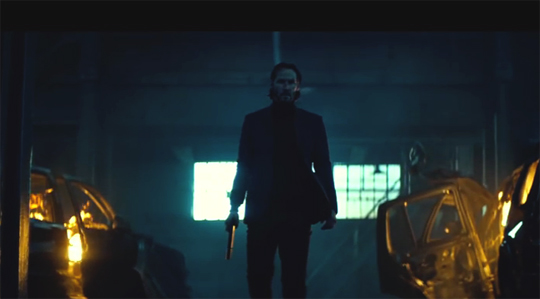
Cool cars. Cool guns. Cool fight scenes and fighting styles, and Keanu Reeves kicking butt. If you thought that sounded like a recipe for fun times at the movies when the trailer for John Wick came out, then you were right. For 1 hour and 36 minutes, former hit man John Wick piles up an astronomical body count because the son of a mob boss killed the last gift given to him by his wife — his dog.
Before I entered the movie theater, an older man exiting the previous showing walked by me and said “Stupidest movie ever. There was no characterization.” The man missed the entire point of the movie, which came when Russian mobster Viggo Tarasov (Michael Nyqvist) finally captures Mr. Wick.
He says:
Viggo Tarasov: “And when you left and the way you got out — lying to yourself that the past held no sway over the future — but in the end the lot of us are rewarded for our misdeeds, which is why God took your wife and unleashed you upon me. This life follows you. It links to you, affecting everyone who comes close to you. We are cursed, you and I.
John Wick: On that, we agree.
The point of the movie was not to see John Wick become a better man because the audience already knows that he tried that. He got out of the “business,” got married, and lived a normal life until his wife died of cancer. But prior to that he led a morally bankrupt life. The price of sin is pain and ultimately death, and Mr. Wick knows it.
Audiences are not particularly supposed to like John Wick. They are, however, supposed to like that evil was blown up, shot, punched, kicked, stabbed, run over and destroyed every time it showed up on screen.
The weakest part of John Wick was its ending, because Hollywood went with an upbeat resolution instead of an ending the story demanded. One could make a plausible argument that the main character atoned for many of his sins by killing the monster he helped create — and therefore deserved another shot at life — but the script begged its writers to finish him off after his final confrontation with Viggo.
Overall, if you’re looking for a solid anti-hero film that didn’t get much publicity, then John Wick is a movie worth seeing. Keanu Reeves looks great, he delivers action sequences as if he were 30 instead of 50, and the whole movie exudes “cool.” As an added bonus, the movie suggests that this generation should shy away from its narcissistic, self-centered impulses and embrace the kind of moral codes that the “old guard” lived by; there must be a certain chivalry — even among liars — to keep systems from collapsing.
If you’ve seen John Wick, then let me know what you think in the comments section below. I thought it was well worth the price of admission and hope Mr. Reeves gets more work because of it.
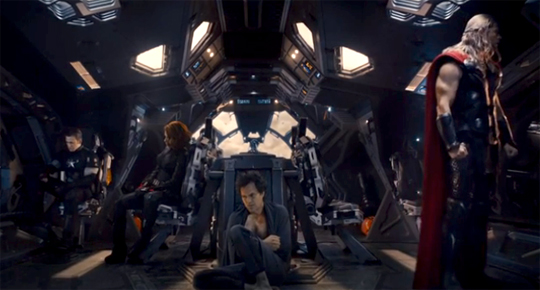
By now the entire world has seen the teaser trailer for Marvel’s Avengers: Age of Ultron. There really is only one word to describe it: awesome. The first movie made over $1.5 billion worldwide. It seems fair to say that $2 billion this time around is a distinct possibility. However, if director Joss Whedon delivers the goods — and all signs point to ‘yes’ — then it begs the question: How can he walk away from a climatic Avengers 3?
Over the past few weeks it’s been rumored that Marvel wants Joe and Anthony Russo to sign on for the 3rd and 4th Avengers movies, but it feels as though everything is building to Avengers 3. Only Marvel knows if that is the case, but I can’t help but feel as though walking away before completing an Avengers trilogy would be a bizarre move on Mr. Whedon’s part.
Directing a movie on as big of a scale as The Avengers must be physically and mentally exhausting. The time away from family and the pressure it puts on the director must be unbearable. However, if Mr. Whedon has set the stage for the superhero movie of all superhero movies to be Avengers 3, then passing on the job would be like the quarterback who leads his team down the field at the end of the big game, only to walk off the field on the opponent’s 20-yard line.
Regardless, for those who were too dazzled by the visuals of the teaser trailer to pay attention to the narration, it appears as though Whedon is going Empire Strikes Back-dark with this installment.
Ultron: “I’m going to show you something beautiful — everyone … screaming for mercy. You want to protect the world, but you don’t want it to change. You’re all puppets tangled in strings. String. But now I’m free. There are no strings on me.”
Then there is this exchange between Tony Stark and Natasha Romanoff:
Tony Stark: “It’s the end. The end of the path I started us on.”
Natasha Romanoff: “Nothing last forever.”
Meanwhile, an eerie rendition of “I’ve Got No Strings” from Disney’s Pinocchio plays in the background. (The merger between Marvel and Disney continues to pay off in interesting ways.)
It’s hard to see how Marvel can continue to keep this momentum going. The Black Widow is right: “Nothing lasts forever.” Eventually, Marvel will create a movie that implodes under its own weight. Eventually, all waves crash against the shore. Regardless, when that happens it will be hard not acknowledge that it was one wild ride.
My wife is reading Neil Gaiman’s “Smoke and Mirrors: Short Fictions and Illusions.” As she was doing so this past weekend she read the following out loud, knowing that it would make me smile:
“People talk about books that write themselves, and it’s a lie. Books don’t write themselves. It takes thought and research and backache and notes and more time and more work than you’d believe.”
In some sense, this is a good thing. Writing that is worth reading often seems effortless, but it can be a double-edged sword. When a consumer reads something that looks “easy” to create, they then expect the writer to churn out content as if it were rumbling down an automotive assembly line. It doesn’t work that way.
Readers of this blog know that I’ve been chipping away at my own book for perhaps eight months whenever time permits. If one were to liken writing a book to building a house, then I would say that I successfully laid the foundation and then realized that I wasn’t a very good plumber. Do I build a house with crappy plumbing and hope to sell it to people who aren’t too concerned about water pressure, or do I take the time to learn how to lay pipes?
For my own book, there is a character who is a former Army Special Forces team member. I found myself saying during the writing process, “Okay, I have infantry friends who have been deployed overseas, but wouldn’t it be better to actually talk to some guys who are Special Forces operators?” I’m now in the process of taking care of that task. That sort of thing takes time, which is something that friends and family and coworkers are usually in the dark about.
Likewise, all of my characters are men of faith (to different degrees). Months ago I found myself saying, “Wow, this is really hard because I’m not nearly as well-versed in my own faith as I thought I was!” What followed was three months of devouring the best and brightest work put forth by religious men that I could get my hands on. Again, that takes time (especially with a full-time job and a blog to keep fresh), but how do you explain that to friends who ask, “How is the book coming along?”
The answer: you don’t.
Unless you’re talking with fellow writers about the creative process, then I would suggest not discussing your book with friends and family and instead concentrating on writing in isolation. If you are a blogger, then I would also suggest refraining from talking about your book unless you plan to have open and honest discussions about the writing process.
Personally, I feel as though I would be done with my own project by now if I could tear myself away from this blog for more than a few days at a time, but my readers are like the mob — every time I think I’m out, you guys pull me back in!
If you’re a writing a book of any kind, then feel free to let me know what you do to stay focused. Or, if you have a question you think I might be able to help you with, then ask away. I’d be happy to give it my best shot in the comments section below.
I see the unseen, unchanging
Invisible you
Shining eternal.
Such celestial gifts impart a heavy price —
I’m perpetually reminded that one day
I will steal my last kiss while you sleep,
I will fold your nightgown one last time,
And I will whisper one final ‘I love you’
Before the veil is lifted.
I will carry you to bed
And I will wash your feet
When the seasons have humbled your bones,
But no amount of time
Can prepare me for your passing.
I’m not a selfish spirit — God knows
I’m aware of what is rightfully His.
Regardless, I cannot help but pray
That when you shed your earthly self
He’ll call me soon thereafter.
 The new teaser trailer for “Star Wars: The Force Awakens” is out, and it looks pretty darn amazing. It’s got a little something old, a little something new, and George Lucas has been replaced by J.J. Abrams. Score. However, the history nerd in me has his interest piqued because of the squadron of X-Wing fighters seemingly headed into battle about 100 feet above a large body of water. Did Mr. Abrams draw inspiration from Israel’s Six-Day War — Operation Focus in particular? If so, then I’m more excited to see the film.
 Let me know what you thought of the trailer below, and make sure to include your thoughts on the new lightsaber as well. I think the crossguard looks cool, but I’m not sure if it would work in battle. Since I’m not a Sith Lord, I’ll withhold judgment until December, 2015.






 Douglas Ernst Blog