Elie Wiesel’s ‘Night’: Holocaust memoir a must-read along with Frankl’s ‘Man’s Search For Meaning’

Elie Wiesel Night

Holocaust survivor Elie Wiesel said upon receiving the Nobel Peace Prize in 1986 that the world must never forget what happened because “if we forget, we are all guilty, we are accomplices.” His memoir, Night, is a must-read for anyone who understands — as he did — that “we must take sides. Neutrality helps the oppressor, never the victim. Silence encourages the tormentor, never the tormented.”

Perhaps one of the most important take-aways from the book is just how averse humans are to acknowledging evil — real evil — when it is in their midst.

Mr. Wiesel’s account of how his hometown in Transylvania reacted to the Nazi threat is surreal. It is hard to imagine just how far men while go to deny the truth when the truth may require a call to arms.

The author wrote:

“The Germans were already in our town, the Fascists were already in power, the verdict was already out — and the Jews of Sighet were smiling.

‘The yellow star? So what? It’s not lethal…’

(Poor Father! Of what then did you die?) …

Little by little life returned to ‘normal.’ The barbed wire that encircled us like a wall did not fill us with fear. In fact, we felt this was not a bad thing; were were entirely among ourselves. A small Jewish republic … A Jewish Council was appointed, as well as a Jewish police force, a welfare agency, a labor committee, a health agency — a whole government apparatus.

People thought this was a good thing.” (Elie Wiesel. Night. Hill and Wang. 10-12.)

The one man in town who tried to warn everyone was treated like a madman, which ironically took him to the edge of sanity. It was not long afterward that Mr. Wiesel would be shipped off to Auschwitz and then Buchenwald.

The horrors that Mr. Wiesel endured are too numerous to list in a single blog post, but it is imperative to note why Nazi torture was a special kind of evil: It took root in the souls of its victims, who then turned on one another.

“In the wagon where the bread had landed, a battle had ensued. Men were hurling themselves against each other, trampling, tearing at and mauling each other. Beasts of prey unleashed, animal hate in their eyes. An extraordinary vitality possessed them, sharpening their teeth and nails.

A crowd of workmen and curious passersby had formed all along the train. They had undoubtedly never seen a train with this kind of cargo. Soon, pieces of bread were falling into the wagons from all sides. And the spectators observed these emaciated creatures ready to kill for a crust of bread.” (101.)

Night is a powerful book that understandably simmers with rage and anger, hate and sorrow. It is a book that everyone should read, but it should not be completed without also making time for Viktor E. Frankl’s Man’s Search for Meaning.

Mr. Wiesel’s memoir shows his self-described “rebellion” against God, while Mr. Frankl chronicles how spiritual growth is possible — even in an Auschwitz death camp.

“When a man finds that it is his destiny to suffer, he will have to accept his suffering as his task. He will have to acknowledge the fact that even in suffering he is unique and alone in the universe. No one can relieve him of his suffering or suffer in his place. His unique opportunity lies in the way in which he bears his burden.

Long ago we had passed the stage of asking what was the meaning of life, a naive query which understands life as the attaining of some aim through the active creation of something of value. For us, the meaning of life embraced the wider cycles of life and death, of suffering and of dying. …

We had realized [suffering’s] hidden opportunities for achievement, the opportunities which caused the poet Rilke to write, ‘Wie viel ist aufzuleiden!’ (How much suffering there is to get through!) Rilke spoke of ‘getting through’ suffering as others would talk of ‘getting through work.’ …

There was no need to be ashamed of tears, for tears bore witness that a man had the greatest of courage, the courage to suffer. Only very few realized that.”  (Victor Frankl. Man’s Search for Meaning. Beacon Press, 1959, 1962, 1984, 1992, 2006. 77, 78.)

In short, both books are essential reading for the man or woman who loves freedom, abhors tyranny, and understands the importance of history. The memoirs can be purchased for $10 or less, which is an unbeatable bargain given the wisdom each contains.
Dan Slott plays ‘Captain White Privilege’ after Zendaya-MJ casting reported

The announcement on Aug. 18 that Zendaya will play Mary Jane in next summer’s Spider-Man: Homecoming spread like wildfire across the internet. It wasn’t long before the usual suspects were attacking anyone who questioned the decision with charges of racism. Dan Slott, the man who once said that Peter Parker’s love for Mary Jane is “anti-Marvel,” joined in the fray to play “Captain White Privilege” (yes, he went there) in his twitter feed.

Since Marvel’s scribe for The Amazing Spider-Man has a habit of sliming long-time Marvel fans with attacks on their integrity, it seemed as if it were time to make a YouTube video on issue. Since Mr. Slott never is a magnet for controversy, I fully expect future installments to follow in the months and years ahead.

Check out the video and let me know what you think in the comments section below.

‘Civil War II: Amazing Spider-Man #3’: Peter Parker turned into hypocritical jerk to keep story going

Robot Master

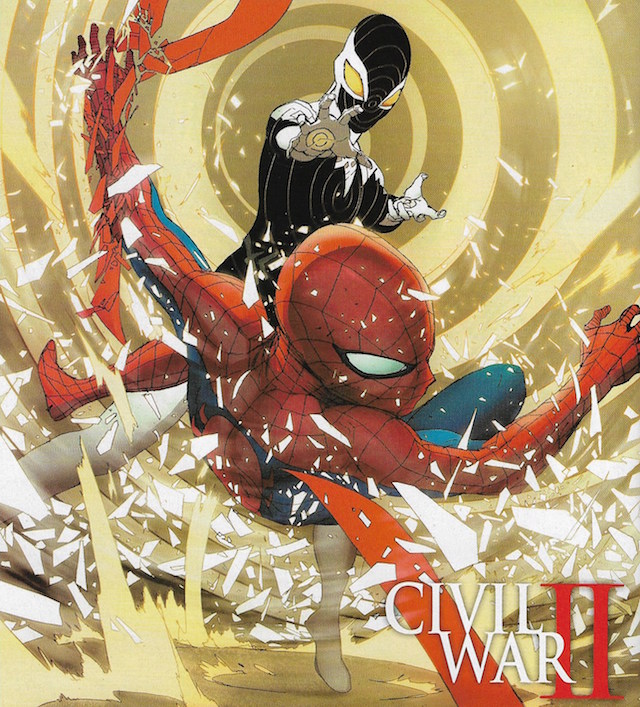
Marvel “events” have a weird habit of warping a character’s personality in order to arrive at an author’s desired outcome — superhero integrity be damned. Civil War II: Amazing Spider-Man #3 officially falls victim to this recurring annoyance. Writer Christos Gage takes Peter Parker’s penchant for getting on his high horse and (in keeping with the theme of the story), jacks up the amplitude to a bizarre level. By turning the character into a hypocritical jerk, the prognostications of the Inhuman known as Ulysses once again come true.

Here is what you need to know about Civil War II: Amazing Spider-Man # 3:

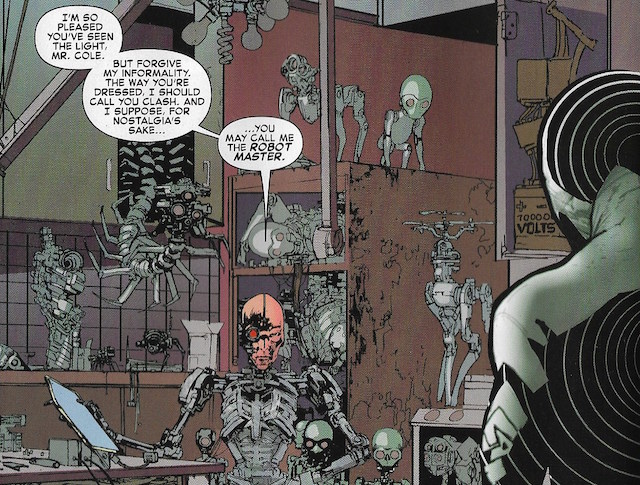
  • Clayton Cole, aka Clash, meets with Robot Master. The villain, whose real name is Mendel Stromm, discusses his plans to steal money from Parker Industries but is ambushed by Clash.
  • Peter Parker laments having fired Clayton. He sulks at table as Harry Osborn Lyman condescendingly pats him on the back and says, “Clayton’s a grown man too. He made his own choices, and he’s responsible for them. Now it’s on him. (Note: How sad is it that a former Green Goblin now must lecture Peter on what it means to take responsibility for one’s actions?)
  • Robot Master, having anticipated a double-cross by Clash, notes that his mechanical minions have been upgraded and are ready for a fight. A battle ensues on the streets of New York City.
  • Spider-Man shows up to save the day. After Robot Master’s technology forms into a giant robot (and Spidey jokes, “Always giant robots…”), the two eventually agree to divvy up the tasks. Spider-Man agrees to “trust” Clash and leave him with the giant robot while he chases down Stromm.
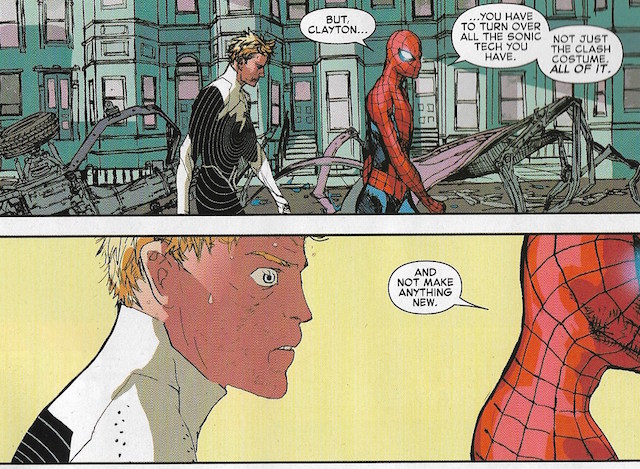
  • Both men defeat their respective opponents. Spider-Man then decides to lecture Clash on what a rotten person he is the moment the dust settles. The hero says that “Peter Parker” is going to let Clayton have his job back — provided he turn over all of his sonic technology.
  • Clayton gets an “angry Beavis” look in his eyes from the old Beavis and Butt-Head cartoons, and then attacks Spider-Man —just like Ulysses predicted.

This issue had so much potential. It is hard not to look at Robot Master’s lab, which appears to be something out of Tim Burton’s wildest dreams, and not anticipate a good read. Mr. Gage generally does an adequate job — and Spider-Man fans finally gets a decent fight scene — but it appears as though the constraints of Civil War constantly undermine the book.

ASM Civil War Clayton Cole

Consider this:

  • On one hand we have Peter Parker, a sulking mess who doesn’t understand basic responsibility. Harry recounts how Peter behaved like a stalking ex-boyfriend by sending Clayton “message after message” via “voice, text, email” to try and apologize … for firing a guy who probably deserved to be fired. At Parker Industries, it’s almost impossible to get terminated. (Does anyone know what happened to Lian Tang, the Parker Industries girlfriend who tried to kill him? I wouldn’t be surprised if she still has a job…)
  • On the other hand we have Clayton Cole, a guy who outwardly appears to be a nutcase (bulging eyes, screaming fits of rage, crying on the job, sweating, etc.), in addition to the issues raging beneath the surface. The audience is often encouraged by Mr. Cage to have sympathy for the man, but it is always negated by his actions.
  •  The question becomes: What the heck is the point of all of this?

As has been said before, Christos Gage handles issues of redemption and responsibility much better than the series’ regular writer, Dan Slott. The interactions between characters are more natural, which in turn give the action scenes added weight (i.e., Gage’s stories do not feel like a kid who mashes his action figures together and then expects you to care). It’s just a shame that Civil War makes it difficult to judge whether editorial mandates are the cause of The Amazing Über-Hypocrite, or if that is an mistake that rests solely on Gage’s shoulders.

Fact: Spider-Man is a vigilante. Vigilantes do not get to stand upon a giant moral pedestal and lecture other vigilantes about the collateral damage brought about by their actions.

Peter Parker of all people should know that Clayton Cole — a fellow man of science — sees his knack for sonic technology as his “great power,” which also comes with “great responsibility.”

Peter Parker of all people should also know that Clayton Cole would feel added pressure and guilt, given that he erred with his powers early on in life. Therefore, a well-written Spider-Man in this issue would not have behaved like a massive tool in the immediate aftermath of a street battle.

Clayton Cole ASM

Beavis and Butt-Head

In short, Civil War II:: Amazing Spider-Man #3 is worth checking out if you purchased the first two issues, but you can probably sit out the finale if you still haven’t coughed up any hard-earned cash.

Civil War II ASM4 preview

Editor’s Note: Just to keep the sound motif going, what is with the Amazing Spider-Man #15 “echo”? Clayton asks Peter Parker to trust him in battle, which is what Mary Jane did during her battle with Regent. Oddly enough, Peter had legitimate reasons to not trust either of them…

Related:

‘Civil War II: Amazing Spider-Man #1’: Gage offers reprieve from Slott fare

‘Civil War II: Amazing Spider-Man #2’: Gage explores ‘self-fulfilling prophecy,’ recidivism, and redemption

Amazing Spider-Man #15: Dan Slott’s Regent took down a god, then falls to … Mary Jane

Daredevil #10: ‘Dark Art’ starts strong, but Soule drops ball on basic Catholicism

Daredevil NYC

Charles Soule’s Daredevil #10 is out, which means that Matt Murdock fans once again get their fix of solid storytelling. “Dart Art: Part 1” is nearly pitch perfect except for the writer’s big whiff on basic Catholicism. It’s a minor complaint, but still very important considering the fact that Daredevil Season 2 on Netflix covered the same territory without any problems.

Before we address the religious issue, here is what you need to know for DD#2:

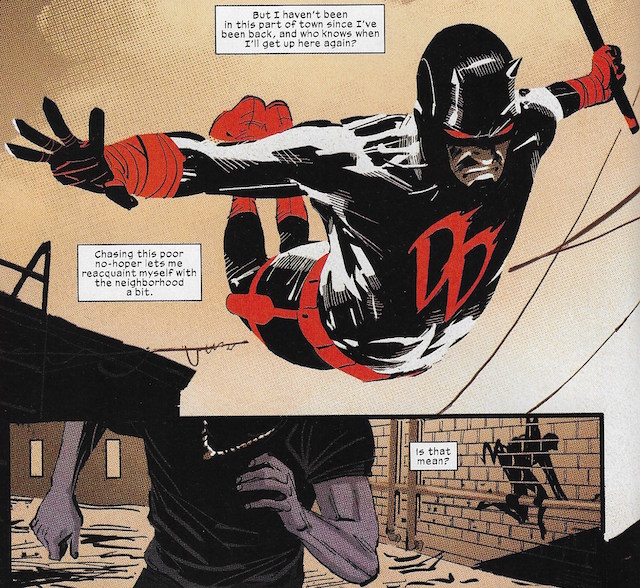
  • Daredevil tracks a common street thug across the NYC’s Upper East Side to familiarize himself with any changes in the terrain since his last visit.
  • Blindspot’s arm has healed after being broken by Elektra one month earlier. He’s ready to get back into the superhero game and continue his training.
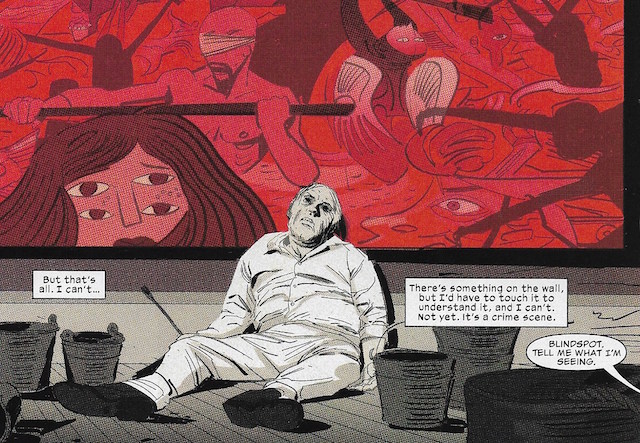
  • Blindspot receives an strange invitation that references a “battle,” but when he arrives at the location on the card he only finds a dead man —and a mural painted in blood.
  • Daredevil receives an emergency call to help out, which puts him in an awkward position. Matt Murdock, who know works as a prosecutor for the state, is swamped with cases and needs to call in favors he doesn’t really possess as the low man on the totem pole.
  • Blindspot worries that if he goes to the police about his invitation it will put him at risk for deportation since he is an illegal immigrant.
  • Daredevil takes the invite and says “if we ever need to surrender it, I’ll pass it along, say it was sent to me. Okay?” Blindspot agrees and thanks him.
  • Daredevil touches the painting and concludes that it was made with “at least one hundred and thirteen” different kinds of blood. When Blindspot says, “I thought you said I couldn’t touch anything” because they are at a crime scene, Daredevil replies, “It is. Mine.”

Again, as was said earlier, Charles Soule is on his game. Aside from a seemingly rushed issue with Daredevil #1 Annual, the man has been consistently good for months. Daredevil fans are experiencing an inspired run that, years from now, will be well-regarded by a new generation of readers.

Blindspot

DD Crime scene

This issue’s one problem, as Christian readers may have picked up on by the first panel, is Daredevil’s decision to refer to a common thug as a “no hoper.”

The one thing any Catholic man understands — as demonstrated in the Netflix series — is that no one is without hope. Everyone is capable of redemption. That theme was hammered home over and over and over again in scenes that pitted Daredevil against Frank Castle, aka The Punisher.

All Christians know that there is always hope for redemption through Jesus Christ.

Luke 23:39-43 says:

39 One of the criminals who were hanged there was hurling abuse at Him, saying, “Are You not the Christ? Save Yourself and us!” 40 But the other answered, and rebuking him said, “Do you not even fear God, since you are under the same sentence of condemnation? 41 And we indeed are suffering justly, for we are receiving what we deserve for our deeds; but this man has done nothing wrong.” 42 And he was saying, “Jesus, remember me when You come in Your kingdom!” 43 And He said to him, “Truly I say to you, today you shall be with Me in Paradise.”

Charles Soule, a trained attorney, makes sure that Matt Murdock is never ignorant of something a first-year law student would know, but yet in this case a Catholic superhero says something that children making their First Communion would recognize as incorrect.

It isn’t a large gripe, but it is somewhat bothersome that Marvel cares enough about Kamala Khan to literally have it written by a practicing Muslim to make sure there are no hiccups, while Daredevil’s Catholicism is downplayed, ignored, and generally just treated (these days) with a “go ahead and fake it” mentality.

Marvel’s decision to give Mr. Murdock a generic Catholicism in 2016 is a shame because there are great tales to be told by any writer who is familiar with Hubert Van Zeller’s Suffering: The Cross of Christ and Its Meaning For You; G.K. Chesterton’s The Everlasting Man; Dom L. Scupoli Apulia’s The Spiritual Combat and a Treatise on Peace of Soul; and many, many others.

I will continue to read Daredevil, but I will also continue to be disappointed that there hasn’t been a writer in ages who is willing to mine the character’s faith to unearth amazing tales hidden just beneath the surface.

‘Proof of Heaven’: Neurosurgeon turns NDE into fascinating read for skeptics, believers

Proof of Heaven

Skeptics have fascinated me for many years because they will often hear a supernatural story from a trusted source — a long-time friend who no history of mental illness or a reason to lie — and still find ways to dismiss it. Dr. Eben Alexander, a neurosurgeon who also worked at Harvard Medical School in Boston, was one of those skeptics until he contracted a case of E. coli meningitis, which attacked his brain and left him in a coma for seven days.

What makes Proof of Heaven: A Neurosurgeon’s Journey into the Afterlife such a compelling read is that its author a.) was a secular man, b.) is a doctor who specializes in the brain, and c.) knows that his illness attacked the very parts of the brain that give skeptics an “out” in terms of believing that neath death experiences (NDEs) offer proof of the spirit world.

Dr. Alexander’s NDE is important because he isn’t just some random guy who drowned and was resuscitated; it is important because he knows about “endogenous glutamate blockade with excitotoxicity,” the limbic system, the lateral amygdala, N,N-dimethyltryptamine (DMT) “dumps,” cortical function, etc.

In short, he is not a man who can be “out-scienced” because he has dedicated his life to medicine.

Random blog posts by a lucid dreamer who was visited by a floating purple orb can be easily dismissed — but a Near Death Experience by a neurosurgeon with over 25 years experience, who uses science to back his claims, is much more difficult to deny.

Dr. Alexander says at one point:

Depending on whom you talk to, consciousness is either the greatest mystery facing scientific enquiry, or a total non-problem. What’s surprising is just how many more scientists think it’s the latter. For many — maybe most — scientists, consciousness isn’t really worth worry about because it is just a by-product of physical processes. Many scientists go further, saying that not only is consciousness a secondary phenomenon, but that in addition, it’s not even real.

Many leaders in the neuroscience of consciousness and the philosophy of the mind, however, would beg to differ. Over the last few decades, they have come to recognize that ‘hard problem of consciousness.’

Like many other scientific skeptics, I refused to even review the data relevant to the questions concerning these [supernatural] phenomena. I prejudged the data, and those providing it, because my limited perspective failed to provide the foggiest notion of how such things might actually happen. Those who assert that there is no evidence for phenomena indicative of extended consciousness, in spite of overwhelming evidence to the contrary, are willfully ignorant. They believe they know the truth without needing to look at the facts.”

For those still stuck in the trap of scientific skepticism, I recommend the book Irreducible Mind: Toward a Psychology for the 21st Century, published in 2007. The evidence for out-of-body consciousness is well presented in this rigorous scientific analysis. Irreducible Mind is a landmark opus from a highly reputable group, the Division of Perceptual Studies, based at the University of Virginia.” — Eben Alexander, Proof of Heaven, (Simon and Schuster, 2012), 151-153.

I do not want to spoil any details of the doctor’s experience in the spirit realm, so I will refrain from mentioning them here. I will say, however, that Proof of Heaven is a quick and worthwhile read for anyone interested in the subject matter. The paperback edition is $16 for a new copy, but it is money well spent.

Amazing Spider-Man #16: Dan Slott sets the stage for ‘Dead No More’

ASM 16 SpiderMan lift

Marvel has big plans for The Amazing Spider-Man in the months ahead, and it appears as though the executive decision was made to make its 16th issue — Before Dead No More — a must-read. Writer Dan Slott packs the issue with important plot points and, in general, does a decent job organizing it all on the page.

As has been established many times before, Mr. Slott is a good stage-setter. Whether he can follow it through over the course of “Dead No More,” the obligatory After Dead No More, and Dead No More — No More remains to be seen.

Here is what you need to know for ASM #16:

  • Jay Jameson is surrounded in the hospital by friends and family with a mysterious illness when Dr. Clarkson from New U Technologies offers him a chance to take part in a “cutting edge” procedure. Peter Parker asks the doctor for details after Jonah flies of the handle.
  • An explosion takes place in Edmond, Oklahoma, at a Parker Industries chemical plant. Peter diverts his private jet, which was heading to San Francisco, back to Oklahoma.
  • Spider-Man (now with thermal imaging in his eye pieces) arrives on a spider-cycle and saves five of six people trapped inside in one fell swoop. He then rescues the sixth, Jerry Salteres, but the man is hospitalized after breathing in toxic fumes.
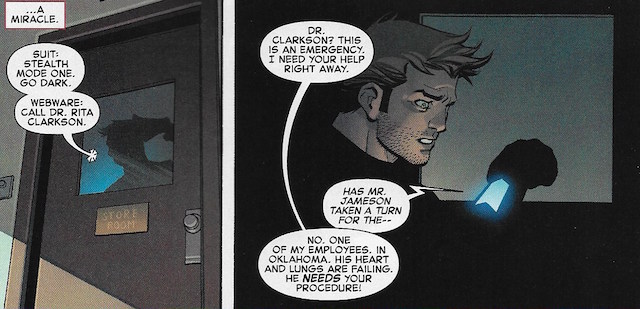
  • Peter Parker tells his suit to go into “Stealth Mode One” (Any guesses on how many stealth modes it’s capable of entering?), and contacts Dr. Clarkson. He requests New U come to Oklahoma and perform a life-saving procedure on Mr. Salteres.
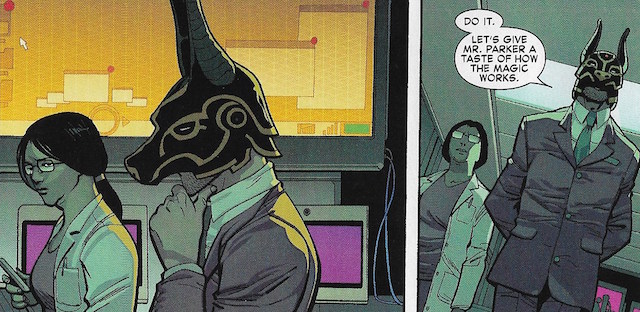
  •  Miles Warren, aka The Jackal, privately says the explosion at Parker Industries wasn’t part of his plans but tells the doctor to give Peter “a taste of how the magic works.”
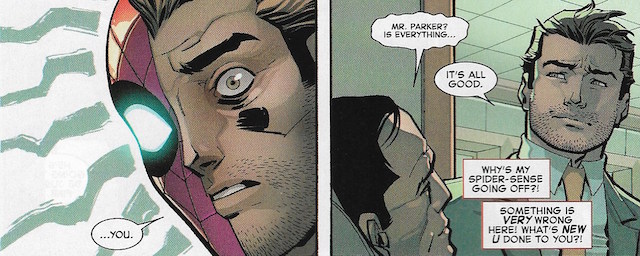
  • Peter’s spider-sense goes off after Mr. Salteres’ life is saved the New U operation.
  • Living Brain, aka Doctor Octopus, catches wind of how New U’s ability to grow healthy organs from a patient’s DNA and calls the technology “very promising.”
  • Electro agrees to Warren’s procedure after “Francine” is brought back from the dead.
  • Jonah secretly meets with New U and asks about its technology. His deceased wife Marla then walks through a doorway.

In short, ASM #16 is stuffed like a Thanksgiving turkey, which is not necessarily a bad thing.

ASM16 stealth

Before Dead No More is probably the best issue of ASM in many months because its function only requires Dan Slott to whet the reader’s appetite. Any one of the plot threads are likely to intrigue potential customers, which is great for Marvel, but Mr. Slott’s track record in terms of delivering a fully fleshed-out story is much more problematic.

Miles Warren

Take, for instance, the way Mr. Slott portrays Peter Parker. Years ago the hero was weirdly obsessed with the idea that “no one dies.” That mantra led him to behave in strange and irrational ways when he had to balance immediate threats to his front with global crises.

In this issue, Peter again seems monomaniacally focused on death — so much so that he embraces an experimental procedure that he knows will come with a heavy “price.” Dr. Clarkson even told him “some find the cost can be…too high.”

Does Peter Parker even ask Dr. Clarkson what that non-monetary “price” is before approving the operation on his employee? Answer: No. He just screams, “We have to move NOW!”

ASM16 Spider Sense

Long-time readers can debate whether or not Peter would dive right in to a dangerous and nascent technology over an accident at one of his power plants, but this blogger thinks his behavior is unstable and rash — the kind of thing Doctor Octopus would do as the Superior Spider-Man.

The good news is that ASM#16 is worth its $3.99 cover price. The bad news is that there are warning signs that Dan Slott is already setting up Peter Parker for another round of character assassination.

Agree? Disagree? Let me know what you think in the comments section below. I’d love to hear what you have to say.

Editor’s Note: Anime Hunter mentioned to me earlier today that editor Nick Lowe took part in a “secret meeting” on Spider-Man, as referenced in the Letters to the Editor section of the book. That might be another tidbit worth discussing. 

Suicide Squad reviews skewed by political correctness

Suicide Squad is out, and the reviews are not kind. It is fair to say that David Ayer’s script has problems, but the level of vitriol aimed at the movie is ridiculous. Just as political correctness inflated the positive reviews awarded to Ghostbusters, the same mentality allows critics to unjustly savage of movie like Suicide Squad.

Check out my latest YouTube video below for the full story and let me know what you think in the comments section below.

Amazing Spider-Man 1.6: Molina’s story mercifully ends — like Julio’s life

AG Julio

It’s a tough time to be a fan of The Amazing Spider-Man. Readers regularly must to deal with things like Dan Slott turing the wall-crawler into a living spider-meteor, or telling audiences that Peter Parker’s love for Mary Jane is “anti-Marvel.”  There seems to be no end in sight. The past year has added insult to injury with the addition of Jose Molina’s “Amazing Grace” storyline, which has finally ended with “Part Six: Lead Me Home.”

For those who have not paid attention since the beginning, here is a quick recap:

  • Peter Parker, The Amazing Atheist (on Molina’s watch) becomes obsessed with Julio Manuel Rodriguez. The mystery man died of cancer, returned from the dead, and seemingly performs miracles with his new lease on life.
  • Spider-Man and the Santerians (Julio’s friends) plan to track him down and reveal the truth.
  • Iron Man tells the group that Rodriguez is drawing power from a portal to the spirit world that is located in Harlem.
  • A “showdown” in the city is announced.

ASM 1.6 concludes with the group realizing that a demon has taken up shop in Julio’s body and will draw power from  it until the two are separated. Iron Man informs the group that a gate to the spirit world is opening that must be closed before all hell literally breaks loose.

Uncle Ben’s spirit returns once more to give his atheist nephew some advice about life, death and the nature of God — but the hero wants none of it.

“Unsubscribe,” Peter says before swinging into the fight.

Amazing Grace SpiderMan

AG1.6


One of the Santerians eventually break’s Julio’s neck, which causes the portal to close and the demons to disappear. Spider-Man is livid and scolds the team after Julio’s (second) funeral: “Julio was not to be harmed! There’s always another way!”

The fact of the matter is that there is not always another way. As the kids point out to the veteran superhero, “We had 30 seconds before that monster got loose in our world.”

Would it have been nice to have a priest on hand to perform an exorcist? Sure. Would it have been a good idea to call Dr. Strange for some help along the way? Of course. But that didn’t happen, and the Santerians did the best they could in a bad situation.

Peter mocks the group for believing Julio is in a better place, and they shoot back: “After everything you’ve seen…why can’t you?

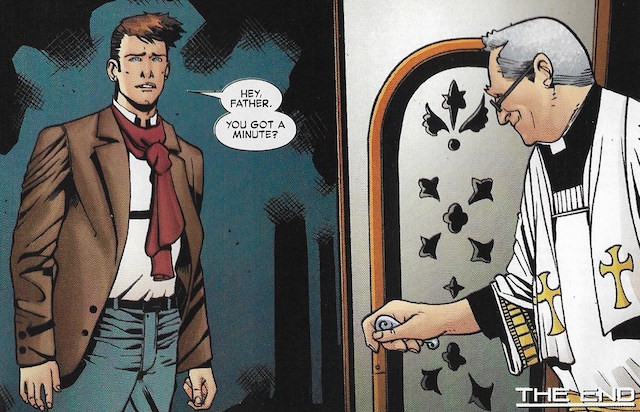
The story ends with Peter walking into a church and asking a priest to talk.

PeterParker Priest

The most disappointing thing about “Amazing Grace” is that it had a lot of potential and guys like me should have loved it.

  • Jose Molina is the first writer to seriously address spiritual issues in ASM in years.
  • “Spirit Uncle Ben,” or whatever you want to call him, actually makes some interesting points.
  • Peter Parker goes to a priest — for advice. (Marvel won’t even allow Matt Murdock into a church these days unless its on Netflix.)
  • The Santerians understand a grim reality that law enforcement personnel and soldiers all over the world are all too familiar with: Sometimes a life needs to be taken to save life.

The problem for Mr. Molina, however, is that Peter Parker should have never been portrayed as a militant atheist to begin with. He would have never blamed God for Uncle Ben’s death because he blames himself. Spider-Man was born out of the guilt that Peter felt over Ben’s murder.

I cannot cheer this particular scene, which respectfully broaches issues of faith, because the writer needed to warp Peter Parker’s origin to make it happen.

I hope Mr. Molina learns from this experience and goes on to write some solid comic books down the line, but someone needs a verbal beatdown for putting him on ASM before he was ready. The book was a disaster from start to finish.

Related:

Molina’s Amazing Spider-Man 1.5: Car crash scene a perfect metaphor for story

Molina’s Spider-Atheist: God ‘a lie’ because Uncle Ben died

Molina’s Amazing Spider-Atheist makes mockery of Peter Parker’s history

Molina’s Spider-Man: ‘Amazing Grace’ a sloppy mess

Suicide Squad: David Ayer’s film a labor of love — but still a mess

Deadshot

There are two things to know before walking into the theater to see David Ayer’s Suicide Squad:

  1. The movie has more love and care put into its first 30 minutes than Ghostbusters had in its entirety, yet critics rewarded Paul Feig with 73 percent positive reviews on Rotten Tomatoes compared to 27 percent for Ayer.
  2. Suicide Squad is a frustrating mess — particularly its last 30 minutes.

For those who have been living under a rock for the past year, the story goes as follows:

  • Amanda Waller (Viola Davis) is tasked by the U.S. government to put together a team of really nasty people — some who are “meta-humans” — who are willing to confront comparably twisted threats.
  • Deadshot (Will Smith), Harley Quinn (Margot Robbie), Jai Courtney (Boomerang), Diablo (Jay Hernandez), Adewale Akinnuoye-Agbaje (Killer Croc) and Slipknot (Adam Beach) are “recruited” (i.e., captured) for the job. Katana (Karen Fukuhara) and Col. Rick Flagg (Joel Kinnaman) take part in their big mission to keep them honest.
  • Waller’s key asset, Enchantress (Cara Delevingne), goes off the reservation, and before long a Ghostbusters-esque scene clears out an entire city.
  • The Joker (Jared Leto) is on a mission to rescue Quinn from Waller’s clutches.

This sounds like a solid movie, right? It is — at times — and the soundtrack is amazing. The problem for Suicide Squad, however, is that at some point it becomes obvious that the train is going to derail.

Harley Quinn

Perhaps the best example of how much Suicide Squad unravels over two hours comes with the supposed death of a key character. This person, for all intents and purposes, is seen during the climatic battle in very, very, very bad shape. After the crew saves the world, however, this person magically appears without a scratch — not one hair out of place — while wearing a spotless set of clothes.

“How are you not dead?” Deadshot asks.

The audience receives no answer.

Note to David Ayer: Just because you acknowledge a giant plot hole, it doesn’t make the hole go away.

Joker

Oddly enough, the one thing that probably could have made Suicide Squad a better movie would have been to leave the Joker out of it and save him for a showdown with Ben Affleck’s Batman. Jared Leto did not have the screen time needed to shine and his mission to save Harley had no impact on the plot.

Mr. Ayer should have used the Joker’s creative real estate to tighten up his script because the finished product is another mixed bag for Warner Bros. at a time when it needs an undeniable classic.

I suggest seeing Suicide Squad, but you do not want to pay full price. If you see it on an early Saturday or Sunday morning, then you won’t feel as though you wasted money.

Editor’s Note: No one working for Warner Bros. should be yelling “F**k Marvel,” and they really shouldn’t be copping an attitude until their superhero track record improves. It becomes difficult to show any sympathy for Mr. Ayer when this is the way he behaves on the big stage.

David Ayer F Marvel