DeGrasse Tyson pushes Matrix-like theory of reality, still mocks Christians

Neil DeGrasse Tyson

Your friendly neighborhood blogger is always perusing the internet for science-related news. Given that fact, it did not go unnoticed that two stories pushing the idea that reality is all an illusion gained widespread media attention over the past month.

The first piece came when Neil DeGrasse Tyson said it was “very likely” humans are living in a simulation. The second story involved Princeton University scientists who think free will may just be a trick the brain plays to rewrite history. None of this would be very fascinating if it weren’t for the fact that Morepheus DeGrasse Tyson and his atheist followers take pot shots at Christians on a regular basis.

Extreme Tech reported April 22:

“At the most recent Isaac Asimov Memorial Debate, recently held at New York’s Hayden Planetarium, scientists gathered to address the question for the year: Is the universe a computer simulation? It’s an older question that you might imagine, and if we interpret it a bit more broadly then it’s really one of the oldest questions imaginable: How do we know that reality is reality? And, if our universe were a big, elaborate lie, could we ever devise some test to prove that fact? At the debate, host and celebrity astronomer Neil deGrasse Tyson argued that the probability is that we [‘very likely’] live in a computer simulation.”

The U.K. Independent reported Sunday:

Free will might be an illusion created by our brains, scientists might have proved.

Humans are convinced that they make conscious choices as they live their lives. But instead it may be that the brain just convinces itself that it made a free choice from the available options after the decision is made.

The idea was tested out by tricking subjects into believing that they had made a choice before the consequences of that choice could actually be seen. In the test, people were made to believe that they had taken a decision using free will – even though that was impossible. …

In one of the studies undertaken by Adam Bear and Paul Bloom, of Princeton University, the test subjects were shown five white circles on a computer monitor. They were told to choose one of the circles before one of them lit up red.

The participants were then asked to describe whether they’d picked the correct circle, another one, or if they hadn’t had time to actually pick one.

Statistically, people should have picked the right circle about one out of every five times. But they reported getting it right much more than 20 per cent of the time, going over 30 per cent if the circle turned red very quickly.

The scientists suggest that the findings show that the test subjects’ minds were swapping around the order of events, so that it appeared that they had chosen the right circle – even if they hadn’t actually had time to do so.

Is it more likely scientists “proved” free will is an illusion, or that they reestablished people are capable of lying?

Is it more likely scientists “proved” free will is an illusion, or that they reestablished the human brain is a beautiful box of paradoxes?

The human brain is incredibly sturdy, yet fragile. It is awe-inspiring in its complexity, yet ultimately a sponge-like mass of neurons, blood vessels, and tissue. It can turn science fiction into reality, yet it often falls for “tricks” played by researchers in white lab coats. The list goes on and on.
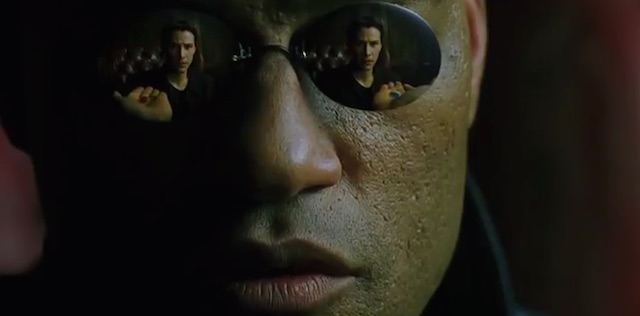
Matrix

Imagine what the world would look like if billions of people simultaneously listened to Morepheus DeGrasse Tyson and researchers at the University of Free Will Is Just an Illusion. Tyson likes to lump “crazy” Christianity in with Scientology, but my guess is that he would soon yearn for a world solely populated by “cracker”-eating Catholics if 7 billion people concluded a.) they were living in a glorified video game, and b.) they did not need to take responsibility for their actions.

Regardless, men of faith should smile. DeGrasse Tyson’s acknowledgment that humans “very likely” have a Creator will prompt some of his supporters down a spiritual path in the years ahead.


Mark Waid says Captain America more ‘difficult’ to write now than WWII era … as ISIS takes sex slaves

Captain America Simon Kirby

Your friendly neighborhood blogger recently picked up Marvel’s “Captain America Anniversary Magazine” in his local comic book shop. The (free) special edition is indeed quite special. Unfortunately, one of the ways it is special is its ability to show how spotty the writing has been over the course of 75 years.

A kind of moral clarity existed at Marvel years ago that allowed for Steve Rogers to literally punch out Adolf Hilter on the cover whereas, these days, the Islamic terrorist groups are ignored in favor of attacks on the tea party.

ISIS terrorists
An ISIS terrorist executes an innocent man in Iraq. Meanwhile, over in America, Marvel editors wonder if it’s appropriate to do another story where Captain America takes on the tea party. Sad.

Writer Mark Waid inadvertently demonstrated why, 75 years from now, people will look back at this era and shake their heads in shame that Marvel was deathly silent on the issue of Islamic terrorism.

Marvel: A popular — and effective — approach writers take to the character is to look at what it means to be Captain America, the living symbol of a nation. You’ve certainly used this approach, and used it well. What makes him such a good character for that kind of examination?

Waid: First and foremost, it’s the thing that makes him unique among superheroes. You’re always going to be making a mistake if you just tell a generic superhero story with Cap because then it comes across as, “Well, this could have been a Spider-Man story or a Hulk story.” You look for the point of view that makes Cap unique and the reason for what he does. In his case, he’s out there being literally a symbol not only for a country, but also for an ideology. And what makes him a complex and interesting character for me is that it has become a much more difficult ideology to define than it would have have been when he first undertook his mission.

Wrong. The principles espoused in the Declaration of Independence are universal. Those principles are codified into law by the U.S. Constitution and transcend petty politics, which is why anyone who writes Captain America should not have a hard time doing so — unless said writer is a partisan guy who finds it “difficult” to rise above his personal biases.

ISIS

Question: Why on did Joe Simon and Jack Kirby have a moral compass that allowed them to call out the Nazi regime in print, but Mark Waid and modern Marvel writers cannot find it within themselves to do an issue on ISIS sex-slaves?

Answer:  Because they are so politically correct that they would rather attack opponents of illegal immigration than the Islamic terrorists who rape young women over and over and over.

ISIS sex slave survivor

The modern Marvel reader can find Captain America taking on tea party members, but they cannot find an issue where their hero stops Syrian members of ISIS from lighting caged innocents and Christians on fire.

Islamic State Jordanian pilot

The idea that it is harder to write Captain America as a symbol for the country in 2016 than it was in March 1941 is a myth. There are plenty of stories to tell that would capture the nation’s highest ideals as enshrined in the Declaration of Independence, the U.S. Constitution, and the Federalist Papers. If a writer is incapable of doing that then it isn’t because the world is more complex — it is because he willingly chooses not to expose pure, unadulterated evil.

Editor’s Note: For a glimpse into the mind of Mark Waid — and why he might have a difficult time writing Captain America — one needs to simply glance at his Twitter feed. 

Mark Waid

Mark Waid Twitter

Happy Marriage 101: Don’t raise your voice, yell at your spouse

I was eating lunch with my wife a few days ago when she said that in hindsight she is thankful for a rule I established early on in our relationship. I told her many years ago that I would never raise my voice with her, but that I would expect the same treatment in return. I said I was willing to end the relationship if she could not abide by the rule.

This seems like a common sense condition, but it does not take long to realize that many people do not follow it — even in public. In fact, some people claim that yelling adds “passion” to a relationship. I would argue that screaming at a spouse and calling the ordeal an aphrodisiac is a form of denial; it is dysfunction masquerading as love.

When a person raises his or her voice in an argument, it is a sign of desperation. It indicates a loss of control. The couple immediately enters an emotional realm that is conducive to mental and physical violence, which is why it is exponentially embarrassing if the man is the one who raised his voice first.

Yelling at someone does not add legitimacy to an argument, but for some reason many individuals think increased decibel-levels magically perform such a function.

Raising your voice does denote anger, but a healthier way of conveying that feeling is to simply say, “I am angry.” If you say what you mean and mean what you say with your spouse on a regular basis, then that statement alone will be treated with the seriousness it deserves.

As was already mentioned, a man should never yell at his significant other. The vast majority of men are physically stronger than the women in their life, so ending a disagreement by introducing the specter of violence — even if the man has never physically harmed his wife — is  cowardly, wrong, and ipso facto detrimental to the long-term health of the relationship.

“Anybody can become angry,” Aristotle wrote. “That is easy. But to be angry with the right person and to the right degree and at the right time and for the the right purpose, and in the right way — that is not … easy.”

Anger is a natural feeling, and in general there is nothing wrong with feeling anger. The key is to channel that anger in healthy ways. If you struggle with this task, then I suggest checking out the book “Overcoming Sinful Anger,” by Rev. T.G. Morrow. It is a short book, but one filled with advice that will leave you happier and healthier if you take his words to heart.

RELATED: Ten tips for a stable relationship

Christopher Marquez, war hero, attacked in D.C. — Obama silent

Chris-Marquez

George Orwell’s Animal Farm is famous for the quote “Some animals are more equal than others.” Someone should write an update called American Farm that includes the line “Some hate crimes are more equal than others” after the Washington, D.C., attack of war hero Christopher Marquez.

Most media outlets have not covered the Feb. 12 attack of Marquez, who served eight years on active duty between 2003 and 2011. In short, the Bronze Star recipient sat down to eat in a McDonald’s in the nation’s capital and was accosted by a group of teens demanding to know if he thought “black lives matter.”

Like most sane people, he tried to ignore them and just eat his burger. He was promptly ambushed and robbed upon exiting the restaurant.

“I believe this was a hate crime and I was targeted because of my skin color,” Marquez told the Daily Caller Feb. 15. “Too many of these types of attacks have been happening against white people by members of the black community and the majority of the mainstream media refuses to report on it.”

Marquez-Marine-attack-suspects
Suspects arrested in connection with Christopher Marquez’s assault and robbery will not be charged with a hate crime, despite harassing him with racial questions prior to their attack. (Photo: D.C. Metropolitan Police Department)

There are two very interesting facts about Marquez’s case:

  1. Cops finally arrested and charge two individuals in connection with the incident, but they will not be charged with a hate crime — even though they were explicitly harassing him about race and calling him “racist” before the attack.
  2. President Obama, who always seems eager to weigh in on race-related crimes, somehow can’t find his voice when it comes to Black Lives Matter supporters who beat a Marine veteran unconscious and stole $400, a VA medical card, and three credit cards from his back pocket just miles from the White House. What did his assailants spend the stolen cash on, you ask? Answer: liquor, a Five Guys burgers, and products from Walmart.

Regular readers of this blog may remember the case of Allen Haywood, who was attacked by a similar group of kids on the DC Metro Green Line in 2011. They may also remember my own tale on the Green Line from September 17, 2011.

I wrote then:

As I came home late from work on the D.C. Metro Green line, an inebriated older man approached me. I stood towards the back of the Metro minding my own business. The stranger crept up beside me, but just enough to my rear to obscure his actions. There was almost no one else on the train. I angled slightly towards him and he whispered in my ear,  “Why don’t you sit down? Don’t you like black people?” I ignored him. He raised his voice: “Why don’t you sit down? Don’t you like black people?” Again, I ignored him. Since the third time around is a charm I finally answered, “I’ve been sitting all day.”

He didn’t believe me.

The man continued to ask me the question, and when I ignored him some more (all the while paying close attention to his position and body language) he turned his question into a statement. Then, he squared up, stated that I didn’t like black people and pushed his palm into my shoulder, which I immediately swiped down with a force that surprised him. He approached again, reaching out his hand to push my shoulder and I swiped it hard enough to make him stutter-step backwards.

On his third attempt to escalate the situation he came at me from the side and bumped me. I responded by shoving him to the other side of the Metro car with enough force so that, should I have chosen to pounce, the backward momentum with which he was stumbling would have put him at a distinct disadvantage.

At this time the Metro stopped, the man gave me a few hard glares and left the train car.

This is an ongoing problem in Washington, D.C., whether the mainstream media wants to admit it or not.

I used to take the Green Line home from work on a regular basis, and groups of kids would act like psychopaths — almost daring someone to speak up. They would also look for women who possessed zero situational awareness and then steal their cell phones right before the Metro doors closed at any given stop.

In my case I was just singled out by a drunk man who, like the teenagers, has convinced himself that any white person who doesn’t greet him with giant smiles after a long day of work is somehow racist and worthy of a physical confrontation.

Incidents like this regularly get swept under the rug, yet the media cannot get enough of the 2012 shooting death of Trayvon Martin in Sanford, Florida; the 2014 shooting death of Michael Brown in Ferguson, Missouri; or the April 2015 death of Freddie Gray in Baltimore, Maryland.

Meanwhile, a Marine veteran who literally helped inspire the iconic war memorial “No Man Left Behind” at Camp Pendleton, California, is ambushed — on American soil — and there is deafening silence.

No-Man-Left-Behind

For those who do not remember, Marquez was in Fallujah’s “Hell House” in 2004 when he helped aide Marine Sgt. Maj. Brad Kasal with lance corporal Dane Shaffer. The image of the three men, which went viral, was sculpted into the memorial by Vietnam veteran John Phelps in November 2015.

No-Man-Left-Behind-Memorial

The moral of the story here is that no group naturally has a monopoly on hate, but for whatever reason American media outlets are obsessed with filling certain subsets of the population with it.

Christopher Marquez, who now attends American University, will be fine in the long-run. Your friendly neighborhood blogger, who also attended American University, has fared rather well since 2011.

My guess is that the drunken man on the Green Line and the McDonald’s attackers — all filled with racial animosity towards guys like us — will have a slew of needlessly rough days ahead. Perhaps they should have enlisted in the Army like me or the Marines like Mr. Marquez.

At a minimum, minorities in Washington, D.C., would be wise to stop listening to race activists, whose careers are dependent upon keeping as many people as possible in a perpetual state of anger and confusion.

Scupoli’s ‘Spiritual Combat’: Advice from 1589 for modern men seeking virtue

Spiritual Combat

It has always been my belief that the vast majority of men, if not all men, have seriously wondered at some point how they would fare on the field of battle. War, for all of its wretchedness, offers men a clear picture of their inner virtue — or lack thereof. These “What if?” games are unnecessary, however, as Dom L. Scupoli Apulia’s The Spiritual Combat and a Treatise on Peace of Soul demonstrates.

The Italian author pointed out in 1589 what many men in 2016 fail to realize — bombs are already dropping all around us. Spiritual warfare rages in all directions. A man not only can be a war hero, but he must — his very soul depends upon it.

What men often fail to realize is that they are stuck in a no-man’s land reminiscent of World War I. This is a bad place to be. Man’s rational faculty is called from both sides in the only war that matters: “God moving it by His grace, and the flesh by its appetites.”

Being “neutral” in this war is not an option, and since tomorrow is never guaranteed it is best to pick a side now.

Fully mastering patience, humility, obedience and numerous other virtues is a difficult task. Scupoli details a few of the stumbling blocks we experience:

There are some who are so overwhelmed by their sins that they never even consider the possibility of breaking their chains. Others want to free themselves from this slavery, but they do nothing to accomplish this. Some think they are secure, and for that very reason are very far from being so. Others, after attaining a high degree of virtue, fall all the more heavily.

When the devil has enmeshed the soul in sin, he uses every means at his disposal to distract its attention from anything that would enable it to recognize the terrible condition into which it has fallen.

The devil is not content to stifle every inspiration from Heaven, and to suggest evil thoughts in their place. He endeavors to plunge it into new faults, either of the same or a more vicious nature by supplying dangerous opportunities to sin.

Thus the soul, deprived of Heavenly guidance, heaps sin upon sin, and hardens itself in its evil ways. Floundering in the mire, it rushes from darkness to darkness, from one pit to another, always moving father from the path of salvation and multiplying sin upon sin, unless strengthened by an extraordinary grace from Heaven.” (Scuplio, Dom. The Spiritual Combat and a Treatise on Peace of Soul. Tan Classics, 2010. 89-93)

In many ways the soul is the beacon which directs a man towards virtue. If a man is not careful, a sinful calcification can take place around the soul. It soon becomes difficult, if not impossible, to hear or see the beacon and before long the captain of the ship “rushes from darkness to darkness.”

If you seek to become a virtuous man or woman, then The Spiritual Combat and a Treatise on Peace of Soul is a must-read. If you are a Christian who has ever wondered, “Why do bad things happen to good people? Why does God foist trials and tribulations upon me?” then Scupoli’s work is for you. I would rank it with Francis De Sales’ Introduction to the Devout Life and Saint Augustine’s Confessions as an essential addition to your library.

Editor’s Note: I will send a copy of “The Spiritual Combat and a Treatise on Peace of Soul” to the first regular reader who asks.

‘The Imitation of Christ’: Antidote for Media-addicted America

Politicians and pundits use every election cycle to talk about the need for “new” ideas. Increasingly secular yet tech-savvy societies are always looking for the next “new” idea, and yet they wonder why the same old problems persist. The more I read, the more I think that many “old” ideas should be dusted off and embraced.

Take Thomas à Kempis’ “The Imitation of Christ,” written in 1418, for example. Just like our good friend Saint Augustine, it’s been a while since he walked the earth. Regardless, Kempis’ devotional book is one that would be beneficial to Christians and non-Christians alike. Even if one were to weirdly strip out all references to Christ, much of the wisdom regarding the right way to live would still remain.

Atheists say that Christ was not the Son of God, but if you asked them if the man — from a purely historical point of view — lived a life worth imitating, then the vast majority of them would probably say yes.

Facebook, Twitter, Tumblr, Snapchap. CBS, NBC, ABC, CNN, MSNBC and FOX. Xbox, Playstation, Nintendo. Warner Bros, Sony, Disney, Universal and Netflix. NFL, MLB, NBA, NHL and UFC. Amazon, Ebay, Microsoft, Apple and more, more, more always vie for our attention — and we give it to them.

Addiction to the temporal is a horrible thing, but it is hard to recognize because it sneaks up on a man. It slowly slithers around the psyche. Its initially brings warmth and joy, but in the end it’s all a ruse. When it has completely enveloped the whole of a man’s being it constricts like a python and suffocates his soul while he sleeps.

In the addicted man’s waking state he is, on many levels, unaware that the most important part of him is in peril.

He is sad. He is lost. He does not know why he is never complete, and so he turns to the very thing that fills him with venom while he dreams.

Enter Thomas à Kempis, who breaks down the blueprint for a happy life into four parts: 1. Useful Admonitions for a Spiritual Life. 2. Admonitions Concerning Interior Things. 3. Internal Consolation. 4. The Blessed Sacrament.

Ask yourself if there is a reason why politicians never mention “The Imitation of Christ” as one of their favorite books.

“Who is so wise as to be able fully to know all things? Therefore, trust not too much to thine own thoughts, but be willing also to hear the sentiments of others. Although thine opinion be good, yet if for God’s sake thou leave it to follow that of another, it will be more profitable to thee.

For I have often heard, that it is more safe to hear and to take counsel than to give it.

It may also happen that each one’s thought may be good, but to refuse to yield to others when reason or a just cause requires it is a sign of pride and willfulness,” (Book 1, Chapter 9).

Interesting, isn’t it?

“Don’t listen to those ‘old’ ideas, kind voter. Listen to me, [Insert Politician’s Name Here], because I’m never wrong and my ‘new’ ideas will fix all your problems.”

Kempis continues:

“How happy and prudent is he who strives to be such now in this life as he desires to be found at his death.

For it will give a man a great confidence of dying happily if he has a perfect contempt of the world, a fervent desire of advancing in virtue, a love for discipline, the spirit of penance, a ready obedience, self-denial, and patience in bearing all adversities for the love of Christ,” (Book 1, Chapter 23).

It takes just two sentences for the author to give readers seeds that will bear a harvest of joy for all the years of their lives. As a Catholic, I would implore readers not to take Christ out of the sentence, but I will concede that doing so does not negate the rest of the advice embedded in the text.

America faces many challenges in the years ahead. If you are interested in giving yourself mental and spiritual tools for the task, then I highly suggest reading “The Imitation of Christ.”

Editor’s Note: I will send a copy of the book to the first regular reader who asks.

Schools: ‘A Charlie Brown Christmas’ bad, shahada good

Charlie Brown Christmas

For a glimpse into the politically-correct minds of school administrators in the U.S., one simply needs to consider two stories concurrently unfolding in the news cycle.

In one instance a Kentucky public school district cuts any reference to Christianity during a theatrical version of A Charlie Brown Christmas. In the other, a Virginia school district defends a calligraphy lesson prompting students to write: “There is no god but Allah. Muhammad is the messenger of Allah.”

America 2015: Linus Van Pelt is too dangerous for the minds of elementary school children, but the shahada — the Muslim statement of faith — can be an official assignment given to high school students.

calligraphy VA school

Fox News reported Wednesday:

A Virginia school district is defending a classroom assignment that required students to practice calligraphy by writing the Muslim statement of faith, “There is no god but Allah. Muhammad is the messenger of Allah.”

Female students at Riverheads High School in Augusta County, Virginia, were also invited to wear Muslim clothing — a story first reported by The Schilling Show. …

“Neither these lessons, nor any other lesson in the world geography course, are an attempt at indoctrination to Islam or any other religion, or a request for students to renounce their own faith or profess any belief,” the district said in a statement provided to Fox News.

Students were also asked to try wearing traditional Islamic attire as “a part of an interactive lesson about the Islamic concept of modest dress.”

The district asserts that the teacher — who knew exactly what she was having students write — was merely asking her class to explore Arabic’s “artistic complexity.”

Meanwhile, Johnson County Schools in Paintsville, Kentucky, are adamant that a rendition of A Charlie Brown Christmas is tantamount to endorsing religion.

WSAZ reported Superintendent Tom Salyer’s statement Wednesday:

Superintendent Tom Salyer said the district received a complaint last week about the play having religious references.

The district then announced it would remove any religious references from all of its Christmas plays. …

Salyer gave WSAZ this statement:

“As superintendent of Johnson County Schools, I recognize the significance of Christmas and the traditions and beliefs associated with this holiday. Over the past few days, there have been several rumors indicating that there would be no Christmas plays this year at our elementary schools. I want to clarify that all programs will go on as scheduled. In accordance with federal law, our programs will follow appropriate regulations. The U.S. Supreme Court and the 6th Circuit are official capacities and during school activities. However, our district is fully committed to promote the spirit of giving and concern for our fellow citizens that help define the Christmas holiday. With core values such as service, integrity, leadership, and commitment, our staff and students will continue to proudly represent our district as recently demonstrated by our many student successes.”

Got that? Schools can have Christmas plays — provided the holiday’s core inspiration, the birth of Christ, is never directly or indirectly addressed.

In the same month that an Islamic terror attack killed 14 and wounded 21 in San Bernardino, California, high school students are asked to practice writing ,“There is no god but Allah. Muhammad is the messenger of Allah,” but a classic Charlie Brown Christmas cartoon is somehow deemed a violation of federal law. Classic.

This is why home-schooling looks increasingly attractive to young parents with each passing year.

Dr. Wayne W. Dyer dies at 75; speaker truly lived ‘the wisdom of the Tao’

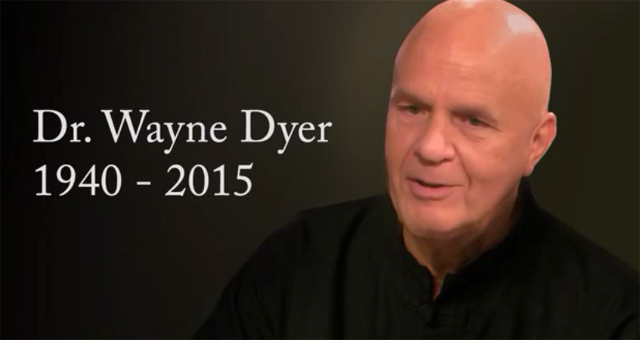
Dr Wayne W DyerDr. Wayne W. Dyer passed away over the weekend. He was 75 years old. The speaker and author was often referred to as a “self-help guru,” but in some sense that distinction does not do him justice. The term “self-help guru” can conjure up images of men who find ways of helping themselves — to other people’s money. Dr. Dyer was no con man. He was a student of the spiritual world who became a master. One does not need to agree with everything a man like Dr. Dyer says in order to admit that he was an excellent teacher.

In memory of Dr. Dyer, here now are a few excerpts from his book ‘Change Your Thoughts — Change Your Life: Living the Wisdom of the Tao’:

Living from the Void:

Consider the paradoxical term nonbeing as you ponder your own beingness. You’re comprised of bones, organs, and rivers of fluids that are encapsulated by a huge sheet of skin molded to hold you together. There’s definitely a distinctive quality of beingness that is “you” in this arrangement of bodily parts — yet if it were possible to disassemble you and lay all of your still-functioning physical components on a blanket, there would be no you. Although all of the parts would be there, their usefulness depends on nonbeingness, or in Lao-tzu’s words, ‘what is not.’

Imagine lining up the walls of the room you’re presently in, with all of the elements present: Without the space of the center, it’s no longer a room, even though everything else is the same. A clay pot is not a pot without the emptiness that the clay encapsulates. A house is not a house if there is no inner space for the exterior to enclose.

A composer once told me that the silence from which each note emerges is more important than the note itself. He said that it’s the empty space between the notes that literally allows the music to be music — if there is no void, there’s only continuous sound. …

Ask yourself what makes a tree, a tree. The bark? The branches? The roots? The leaves? All of these things are what is. And all of them do not constitute a tree. What’s needed to have a tree is what is not—an imperceptible, invisible life force that eludes your five senses. You can cut and carve and search the cells of a tree endlessly and never capture it. — (Dr. Wayne W. Dyer, Change Your Thoughts — Change Your Life. Hay House, Inc., 2007. 53-54)

Living by Emulating the Sea:

“Be humble. Never put yourself above others or see yourself as superior to anyone. The highest power is a yielding valley. Become a servant, not a dominator. When even the tiniest waterways are left alone, they uniquely carve out a path that leads them to the sea. And the great ocean never lords its greatness and power over the rivers and streams: It doesn’t rise above them and demand devotion, nor does it threaten them with punishment or extinction if they refuse to cooperate. The sea knows instinctively that the streams and rivers will naturally gravitate toward that which stays low.” — (Dr. Wayne W. Dyer, Change Your Thoughts — Change Your Life. Hay House, Inc., 2007. 313)

Although the loss of Dr. Dyer will be felt by many, it is comforting to know that those closest to him realize the end is also the beginning:

“Wayne has left his body, passing away through the night. He always said he couldn’t wait for this next adventure to begin and had no fear of dying. Our hearts are broken, but we smile to think of how much our scurvy elephant will enjoy the other side.”

Rest in peace, Dr. Dyer. You will be missed.

Alan Moore blasts ‘catastrophic’ superhero fixation of a culture on life support

A friend of mine sent me a fascinating Alan Moore interview from 2014. The comic industry icon told Pádraig Ó Méalóid at Slovobooks that the heightened popularity of Marvel and DC superheroes may be ‘culturally catastrophic’.

The Guardian reported January 21, 2014:

“To my mind, this embracing of what were unambiguously children’s characters at their mid-20th century inception seems to indicate a retreat from the admittedly overwhelming complexities of modern existence,” he wrote to Ó Méalóid. “It looks to me very much like a significant section of the public, having given up on attempting to understand the reality they are actually living in, have instead reasoned that they might at least be able to comprehend the sprawling, meaningless, but at-least-still-finite ‘universes’ presented by DC or Marvel Comics. I would also observe that it is, potentially, culturally catastrophic to have the ephemera of a previous century squatting possessively on the cultural stage and refusing to allow this surely unprecedented era to develop a culture of its own, relevant and sufficient to its times.”

Mr. Moore is close — he’s so close — but he doesn’t seem ready to acknowledge that the catastrophe has arrived. It is now. We are living through it. An introduction to our cultural implosion can be found in my Nov. 14, 2014 blog post titled: “Rossetta scientist cries over feminist outrage at his shirt: It’s been fun, Western Civilization.”  In short: societies that live in perpetual fear of the “micro-aggression” are societies that have seen better days.

For those who want to know just how obsessed our culture is with superheroes, I suggest watching Red Letter Media’s “Nerd Talk: Sequels, Spin-Offs, and Standalones,” which was posted July 22. It perfectly highlights just how much of an industry “nerdom” has become. Other symptoms of Western civilization’s disease might include the preponderance of men who spend inordinate amounts of time playing video games, collecting figurines, endlessly cycling through imgur, or trolling Tumblr — while simultaneously showing little to no interest in expanding their own intellectual horizons.

There is nothing wrong with having an interest in video games or superhero movies, but there is something culturally suicidal when large segments of the population delve deep into fantasy worlds before they have a sound grasp of reality.

In a strange way, technology acts like a double-edged sword: our standard of living is so high and our problems so few and far between that we invent dragons to slay (e.g., political pundits must be excoriated for not being “polite to the pronouns” of transgender individuals). The poorest Americans live better than the kings of old, and so they engage in sad and pathetic wars over whether or not The Dukes of Hazzard is too offensive for television.

As the character Cooper says in Christopher Nolan’s Interstellar: “We used to look up in the sky and wonder at our place in the stars. Now we just look down and worry about our place in the dirt.”

For all intents and purposes, America has become a nation filled with infantile men and women who fight over intellectual belly button lint. They feign outrage over puerile affairs while legitimate threats to the safety and security of future generations mount around them.  Bubble-butted celebrities bump serious news stories off the front page. Strange diversity quotas for Star Wars movies that don’t even have finished scripts are more talked about than state-sponsored hackers stealing the personal data of millions of federal employees. To put it more succinctly, we are lost.

If you get a chance, read Mr. Moore’s interview with Pádraig Ó Méalóid. It’s titled ‘Last Alan Moore Interview?’. If it is, then it’s definitely one worthy of the man’s exit from public life. Time and time again, he puts his finger on the pulse of all that ails us, but for whatever reason he doesn’t give his patients a frank diagnosis: Western civilization has a fever. Instead of going to the doctor, its men and women are going to movie theaters, man-caves to play video games, or San Diego Comic-Con.

Imagine if Donald Trump read Francis de Sales: Man deported 5 times admits to Kate Steinle murder

Francisco SanchezOnly days after Donald Trump essentially painted the vast majority of Mexican illegal immigrants as rapists and murderers, Kate Steinle, 32, was gunned down by one in broad daylight. The federal government had deported the man five times. San Francisco is a sanctuary city and refused to hand over the suspect when it had the chance.

Kate SteinleReporter Cornell Barnard was able to interview apprehended suspect Francisco Sanchez on Sunday.

A local ABC Affiliate reported:

[Francisco Sanchez] says he was wandering on Pier 14 after taking sleeping pills he found in a dumpster.

He claims he kicked the gun into the San Francisco Bay, lit up a cigarette, and walked off, not knowing he shot someone until he was arrested by police hours later. Sanchez reportedly first told police he was shooting at sea lions.

He appeared frail and nervous when he talked about returning to the U.S. after being deported back to his native Mexico five times.

Barnard: “Why did you keep coming back to the U.S., why did you come back to San Francisco?”
Sanchez: “Because I was looking for jobs in the restaurant or roofing, landscaping, or construction.”

Sanchez said he knew San Francisco was a sanctuary city where he would not be pursued by immigration officials.

Mr. Trump was one of only a few high-profile individuals to bring attention to this story when he tweeted it Friday night. Sadly, it doesn’t matter how much truth there is to a man’s message if his delivery convinces others that he is a bad person.

Trump TWTConsider what Francis de Sales said in “Treatise on the Love of God”:

“We dislike imitating those we hate even in their good qualities. The Lacedaemonians would not follow the good counsel of an evil man unless some good man stated it after him.

On the contrary, we cannot help conforming ourselves to those we love. It is in this sense, I think, that the great apostle says that ‘the law is not made for the just.’ In fact, the just man is not just unless he has holy love. If he has love, there is no need to urge him on with the rigor of the law, since love is a more cogent teacher and solicitor to persuade a heart possessing it to obey the will and intentions of its beloved. Love is a magistrate who exercises his authority without noise, without bailiffs or sergeants-at-arms, but merely by that mutual complacence whereby, just as we find pleasure in God, so also we reciprocally desire to please Him.” — Francis de Sales.

Yes, it is possible to learn a thing or two from men who lived in the late 1500s and early 1600s.

If you have an important message to deliver to a skeptical audience, then it is crucial that the vehicle for that message not come across as a bully, a jerk, a racist or an evil man.

I am not saying that Mr. Trump is any of those things, but the way he carries himself in front of a microphone makes it incredibly easy for his detractors to make such a case.

Large scale illegal immigration brings with it a whole host of (often deadly) problems. When you have “sanctuary cities,” criminals will gladly take politicians up on the offer. Innocent people pay the price for officials who do not take the rule of law seriously. That is why we need serious and articulate men and women to explain what is going on to the American people.

It is not good enough to simply be correct when speaking on public policy issues like illegal immigration; one must also be able to show empathy. Sadly, too many people who are right on the issue seem to have little to zero empathy for the millions who are trying to flee dysfunctional and oppressive hell holes.

People will often vote for a man with horrendous public policy ideas if he seems like he cares about his constituents. People will often not vote for the man with great public policy ideas if he seems cold, detached or weird. Wouldn’t it be nice if the Republican Party could run a candidate who actually had good ideas and he or she exuded the kind of empathy skills that could win over Independents and Democrats?

Perhaps if Donald Trump read the works of Saint Francis de Sales years ago, then he could have been that man.