France bans Down Syndrome ad from TV because smiling kids might ‘disturb’ women who had an abortion

world-down-syndrome-day

Years ago I was a substitute teacher just outside Chicago. There were days when I had the opportunity to join special education classes, which included kids with Down Syndrome. I am not lying when I say that those were some of the best kids I ever had the privilege to meet.

Given that experience, you can see one of the many reasons why a story out of France caught my eye just before Thanksgiving.  It turns out that a commercial by CoorDown titled “Dear Future Mom” is now officially banned from the airwaves. The reason? It might “disturb the conscience” of women who elected to have an abortion.

The Wall Street Journal published an op-ed on the story Wednesday:

“Abortion is legal in most of Europe, but its proponents are bent on suppressing efforts to change the minds of mothers considering it. Witness France’s ban on a television commercial showing happy children with Down Syndrome (DS).

Produced to commemorate World Down Syndrome Day, the commercial showed several cheerful children with DS addressing a mother considering abortion. “Dear future mom,” says one, “don’t be afraid.” “Your child will be able to do many things,” says another. “He’ll be able to hug you.” “He’ll be able to run toward you.” “He’ll be able to speak and tell you he loves you.”

France’s High Audiovisual Council removed the commercial from air earlier this year, and in November the Council of State, the country’s highest administrative court, upheld the ban, since the clip could ‘disturb the conscience’ of French women who had aborted DS fetuses.”

Ask yourself this question: If French courts are permitted to ban a television commercial that features smiling kids because it might “disturb the conscious” of some viewers, then what is off limits?

Answer: Nothing.

Whether you agree or disagree with abortion, then I hope you can see just how incredibly terrifying this court’s logic is from a free-speech and religious liberty perspective. People often behave like the liberties enjoyed by the western world will be around forever, but that is not the case.

“But Doug!” you said, “Why should we care about France? We sort of expect that kind of thing from the French and Europe as a whole, right?”

The truth, sadly, is that every nation has Thought Police — even the U.S.

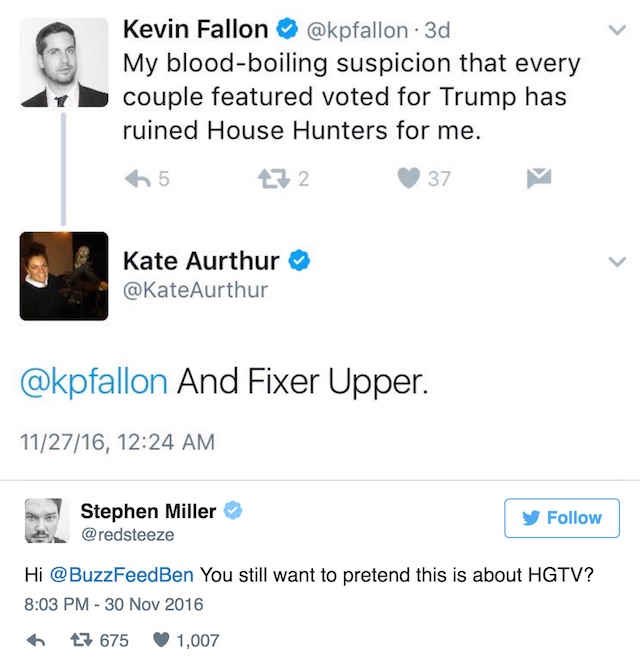
One merely needs to check out BuzzFeed’s hit piece on the hosts of HGTV’s hit series Fixer Upper. Writer Kate Aurthur founder herself a juicy target to destroy because a popular married couple is suspected of a Mind Crime. That’s why she wrote “Chip And Joanna Gaines’ Church Is Firmly Against Same-Sex Marriage.”

Shocker — Christian family belongs to a church that does not approve of homosexual relationships.

Perhaps Allahpundit over at Hotair put it best:

“The BuzzFeed piece is proof that we’re past the persuasion stage now in the culture wars, particularly as regards gay rights, and into the bludgeoning stage, where the left feels secure enough in its gains to try to strongarm the holdouts.”

Boom.

In France, smiling kids with Down Syndrome cannot appear on television. In America, Christian couples with hit television shows have giant websites trying to find ways to destroy their career.

In France, powerful legal councils keep you off the air if you  disturb the conscience of women who had an abortion. In America, liberal reporters will try to derail your television career if you “disturb the conscious” of secular Democrats.

And with that, I will leave you with a quote by John Philpot Curran:

The condition upon which God hath given liberty to man is eternal vigilance; which condition if he break, servitude is at once the consequence of his crime and the punishment of his guilt.” — John Philpot Curran.

If you do not think you have anything to learn from men who were born in the 1700s, then think again.
kate-aurthur-tweet

DeGrasse Tyson pushes Matrix-like theory of reality, still mocks Christians

Neil DeGrasse Tyson

Your friendly neighborhood blogger is always perusing the internet for science-related news. Given that fact, it did not go unnoticed that two stories pushing the idea that reality is all an illusion gained widespread media attention over the past month.

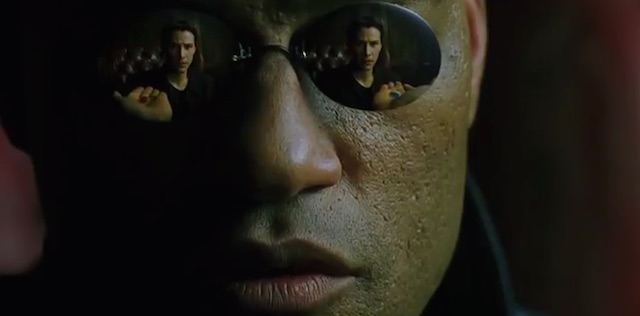
The first piece came when Neil DeGrasse Tyson said it was “very likely” humans are living in a simulation. The second story involved Princeton University scientists who think free will may just be a trick the brain plays to rewrite history. None of this would be very fascinating if it weren’t for the fact that Morepheus DeGrasse Tyson and his atheist followers take pot shots at Christians on a regular basis.

Extreme Tech reported April 22:

“At the most recent Isaac Asimov Memorial Debate, recently held at New York’s Hayden Planetarium, scientists gathered to address the question for the year: Is the universe a computer simulation? It’s an older question that you might imagine, and if we interpret it a bit more broadly then it’s really one of the oldest questions imaginable: How do we know that reality is reality? And, if our universe were a big, elaborate lie, could we ever devise some test to prove that fact? At the debate, host and celebrity astronomer Neil deGrasse Tyson argued that the probability is that we [‘very likely’] live in a computer simulation.”

The U.K. Independent reported Sunday:

Free will might be an illusion created by our brains, scientists might have proved.

Humans are convinced that they make conscious choices as they live their lives. But instead it may be that the brain just convinces itself that it made a free choice from the available options after the decision is made.

The idea was tested out by tricking subjects into believing that they had made a choice before the consequences of that choice could actually be seen. In the test, people were made to believe that they had taken a decision using free will – even though that was impossible. …

In one of the studies undertaken by Adam Bear and Paul Bloom, of Princeton University, the test subjects were shown five white circles on a computer monitor. They were told to choose one of the circles before one of them lit up red.

The participants were then asked to describe whether they’d picked the correct circle, another one, or if they hadn’t had time to actually pick one.

Statistically, people should have picked the right circle about one out of every five times. But they reported getting it right much more than 20 per cent of the time, going over 30 per cent if the circle turned red very quickly.

The scientists suggest that the findings show that the test subjects’ minds were swapping around the order of events, so that it appeared that they had chosen the right circle – even if they hadn’t actually had time to do so.

Is it more likely scientists “proved” free will is an illusion, or that they reestablished people are capable of lying?

Is it more likely scientists “proved” free will is an illusion, or that they reestablished the human brain is a beautiful box of paradoxes?

The human brain is incredibly sturdy, yet fragile. It is awe-inspiring in its complexity, yet ultimately a sponge-like mass of neurons, blood vessels, and tissue. It can turn science fiction into reality, yet it often falls for “tricks” played by researchers in white lab coats. The list goes on and on.

Matrix

Imagine what the world would look like if billions of people simultaneously listened to Morepheus DeGrasse Tyson and researchers at the University of Free Will Is Just an Illusion. Tyson likes to lump “crazy” Christianity in with Scientology, but my guess is that he would soon yearn for a world solely populated by “cracker”-eating Catholics if 7 billion people concluded a.) they were living in a glorified video game, and b.) they did not need to take responsibility for their actions.

Regardless, men of faith should smile. DeGrasse Tyson’s acknowledgment that humans “very likely” have a Creator will prompt some of his supporters down a spiritual path in the years ahead.

G.K. Chesterton’s ‘Everlasting Man’ — perfect Easter reading

Easter is here — that wonderful day when Christians rejoice and atheists shake their head and ask, “Why the heck are we still talking about that guy Jesus after 2,000 years?!” That is a fair question, which is why today seems like an ideal opportunity to revisit G.K. Chesterton’s “The Everlasting Man.”

“If Christ was simply a human character, he really was a highly complex and contradictory human character. For he combined exactly the two things that lie at the two extremes of human variation. He was exactly what the man with a delusion never is; he was wise; he was a good judge. What he said was always unexpected; but it was always unexpectedly magnanimous and often unexpectedly moderate.

Take a thing like the point of the parable of the tares and the wheat. It has the quality that united sanity and subtlety. It has not the simplicity of a madman. It has not even the simplicity of a fanatic. It might be uttered by a philosopher a hundred years old, at the end of a century of Utopias. Nothing could be less like this quality of seeing beyond and all round obvious things, than the condition of an egomaniac with the one sensitive spot in his brain. I really do not see how these two characters could be convincingly combined, except in the astonishing way in which the creed combines them.” — G.K. Chesterton.

Every year countless YouTube videos pop up by wannabe Joe Rogans, who blast the so-called “fairy tale” known as Christianity. They go apoplectic over said “fairy tale” and its longevity. Generation after generation after generation picks up the Bible, studies it, and then billions of people conclude that Christ was exactly who he claimed to be.

The reason for this, as Chesterton points out, is that Christ spoke with authority while simultaneously being “exactly what the man with a delusion never is; he was wise; he was a good judge.”

The Jesus of the New Testament seems to me to have in great many ways the note of something superhuman; that is of something human and more than human. But there is another quality running through all his teachings which seems to me neglected in most modern talk about them as teachings; and that is the persistent suggestion that he has not really come to teach.

If there is one incident in the record which affects me personally as grandly and gloriously human, it is the incident of giving wine for the wedding-feast. That is really human in the sense in which a whole crowd of prigs, having the appearance of human beings, can hardly be described as human.

It rises superior to all superior persons. It is as human as Herrick and as democratic as Dickens. But even in that story there is something else that has the note of things not fully explained; and in a way there very relevant. I mean the first hesitation, not on any ground touching the nature of the miracle, but on that of the propriety of working any miracles at all, at least at that stage; ‘my time is not yet come.’

What did that mean? At least it certainly meant a general plan or purpose in the mind, with which certain things did or did not fit in. And if we leave out that solitary strategic plan, we not only leave out the point of the story, but the story.

The imitation Joe Rogans often preface their derision of Christianity with lines like, “I went to Catholic school” — as if they weren’t like every other high-school kid who slept through classes, wrote notes to girlfriends, and generally just goofed around with buddies for four years. The same people who cannot understand basic economics in their 40s would have us believe they fully understood Christianity by age 16, but I digress.

The more one studies the Bible, the more obvious it becomes that Christ was unlike any man who walked the earth up until that time — and that He maintains that distinction to this very day. All the “flying spaghetti monster” jokes in the world cannot diminish the genius and goodness dispensed by Christ in ways, as Chesterton says, “more than human.”

Christ was born. His primary purpose in life was to die a horrible death — and then rise again. He did.

Chesterton states:

“I willingly and warmly agree that it is, in itself, a suggestion at which we might expect even the brain of the believer to reel, when he realized his own belief. But the brain of the believer does not reel; it is the brains of the unbelievers that reel. …

I care not if the skeptic says it is a tall story; I cannot see how so toppling a tower could stand so long without foundation. Still less can I see how it could become, as it has become, the home of man. 

Had it merely appeared and disappeared, it might possibly have been remembered or explained as the last leap of the rage of illusion, the ultimate myth of the ultimate mood, in which the mind struck the sky and broke. But the mind did not break. It is the one mind that remains unbroken in the break-up of the world.

If it were an error, it seems as if the error could hardly have lasted a day. If it were a mere ecstasy, it would seem that such an ecstasy could not endure for an hour. It has endured for nearly two thousand years; and the world within it has been more lucid, more level-headed, more reasonable in its hopes, more healthy in its instincts, more humorous and cheerful in the face of fate and death, than all the world outside.

Happy Easter, everyone. I am grateful for all of you who regularly give me precious time out of your day and I pray for your regularly.

Best,

Doug

Scupoli’s ‘Spiritual Combat’: Advice from 1589 for modern men seeking virtue

Spiritual Combat

It has always been my belief that the vast majority of men, if not all men, have seriously wondered at some point how they would fare on the field of battle. War, for all of its wretchedness, offers men a clear picture of their inner virtue — or lack thereof. These “What if?” games are unnecessary, however, as Dom L. Scupoli Apulia’s The Spiritual Combat and a Treatise on Peace of Soul demonstrates.

The Italian author pointed out in 1589 what many men in 2016 fail to realize — bombs are already dropping all around us. Spiritual warfare rages in all directions. A man not only can be a war hero, but he must — his very soul depends upon it.

What men often fail to realize is that they are stuck in a no-man’s land reminiscent of World War I. This is a bad place to be. Man’s rational faculty is called from both sides in the only war that matters: “God moving it by His grace, and the flesh by its appetites.”

Being “neutral” in this war is not an option, and since tomorrow is never guaranteed it is best to pick a side now.

Fully mastering patience, humility, obedience and numerous other virtues is a difficult task. Scupoli details a few of the stumbling blocks we experience:

There are some who are so overwhelmed by their sins that they never even consider the possibility of breaking their chains. Others want to free themselves from this slavery, but they do nothing to accomplish this. Some think they are secure, and for that very reason are very far from being so. Others, after attaining a high degree of virtue, fall all the more heavily.

When the devil has enmeshed the soul in sin, he uses every means at his disposal to distract its attention from anything that would enable it to recognize the terrible condition into which it has fallen.

The devil is not content to stifle every inspiration from Heaven, and to suggest evil thoughts in their place. He endeavors to plunge it into new faults, either of the same or a more vicious nature by supplying dangerous opportunities to sin.

Thus the soul, deprived of Heavenly guidance, heaps sin upon sin, and hardens itself in its evil ways. Floundering in the mire, it rushes from darkness to darkness, from one pit to another, always moving father from the path of salvation and multiplying sin upon sin, unless strengthened by an extraordinary grace from Heaven.” (Scuplio, Dom. The Spiritual Combat and a Treatise on Peace of Soul. Tan Classics, 2010. 89-93)

In many ways the soul is the beacon which directs a man towards virtue. If a man is not careful, a sinful calcification can take place around the soul. It soon becomes difficult, if not impossible, to hear or see the beacon and before long the captain of the ship “rushes from darkness to darkness.”

If you seek to become a virtuous man or woman, then The Spiritual Combat and a Treatise on Peace of Soul is a must-read. If you are a Christian who has ever wondered, “Why do bad things happen to good people? Why does God foist trials and tribulations upon me?” then Scupoli’s work is for you. I would rank it with Francis De Sales’ Introduction to the Devout Life and Saint Augustine’s Confessions as an essential addition to your library.

Editor’s Note: I will send a copy of “The Spiritual Combat and a Treatise on Peace of Soul” to the first regular reader who asks.

‘The Imitation of Christ’: Antidote for Media-addicted America

Politicians and pundits use every election cycle to talk about the need for “new” ideas. Increasingly secular yet tech-savvy societies are always looking for the next “new” idea, and yet they wonder why the same old problems persist. The more I read, the more I think that many “old” ideas should be dusted off and embraced.

Take Thomas à Kempis’ “The Imitation of Christ,” written in 1418, for example. Just like our good friend Saint Augustine, it’s been a while since he walked the earth. Regardless, Kempis’ devotional book is one that would be beneficial to Christians and non-Christians alike. Even if one were to weirdly strip out all references to Christ, much of the wisdom regarding the right way to live would still remain.

Atheists say that Christ was not the Son of God, but if you asked them if the man — from a purely historical point of view — lived a life worth imitating, then the vast majority of them would probably say yes.

Facebook, Twitter, Tumblr, Snapchap. CBS, NBC, ABC, CNN, MSNBC and FOX. Xbox, Playstation, Nintendo. Warner Bros, Sony, Disney, Universal and Netflix. NFL, MLB, NBA, NHL and UFC. Amazon, Ebay, Microsoft, Apple and more, more, more always vie for our attention — and we give it to them.

Addiction to the temporal is a horrible thing, but it is hard to recognize because it sneaks up on a man. It slowly slithers around the psyche. Its initially brings warmth and joy, but in the end it’s all a ruse. When it has completely enveloped the whole of a man’s being it constricts like a python and suffocates his soul while he sleeps.

In the addicted man’s waking state he is, on many levels, unaware that the most important part of him is in peril.

He is sad. He is lost. He does not know why he is never complete, and so he turns to the very thing that fills him with venom while he dreams.

Enter Thomas à Kempis, who breaks down the blueprint for a happy life into four parts: 1. Useful Admonitions for a Spiritual Life. 2. Admonitions Concerning Interior Things. 3. Internal Consolation. 4. The Blessed Sacrament.

Ask yourself if there is a reason why politicians never mention “The Imitation of Christ” as one of their favorite books.

“Who is so wise as to be able fully to know all things? Therefore, trust not too much to thine own thoughts, but be willing also to hear the sentiments of others. Although thine opinion be good, yet if for God’s sake thou leave it to follow that of another, it will be more profitable to thee.

For I have often heard, that it is more safe to hear and to take counsel than to give it.

It may also happen that each one’s thought may be good, but to refuse to yield to others when reason or a just cause requires it is a sign of pride and willfulness,” (Book 1, Chapter 9).

Interesting, isn’t it?

“Don’t listen to those ‘old’ ideas, kind voter. Listen to me, [Insert Politician’s Name Here], because I’m never wrong and my ‘new’ ideas will fix all your problems.”

Kempis continues:

“How happy and prudent is he who strives to be such now in this life as he desires to be found at his death.

For it will give a man a great confidence of dying happily if he has a perfect contempt of the world, a fervent desire of advancing in virtue, a love for discipline, the spirit of penance, a ready obedience, self-denial, and patience in bearing all adversities for the love of Christ,” (Book 1, Chapter 23).

It takes just two sentences for the author to give readers seeds that will bear a harvest of joy for all the years of their lives. As a Catholic, I would implore readers not to take Christ out of the sentence, but I will concede that doing so does not negate the rest of the advice embedded in the text.

America faces many challenges in the years ahead. If you are interested in giving yourself mental and spiritual tools for the task, then I highly suggest reading “The Imitation of Christ.”

Editor’s Note: I will send a copy of the book to the first regular reader who asks.

The power of prayer: A blueprint for realizing faith’s potential

It is incredibly tough to get those who do not believe in prayer to understand how it works. Even those who do believe in God often pray in strange ways and then get frustrated by the results. Since prayer recently helped me regain my work-related Twitter account after it was unjustly suspended, I will try to use that story to explain how it works.

First, a recap:

  • After I wrote a story on Iran for work, an apologist for the regime Tweeted “I will find you and kill you … death to America.”
  • Twitter said it “could not determine” if that violated its terms of service. When I publicly questioned that decision, my account was suspended. Countless appeals were ignored over the course of one month.
  • The company’s press account ignored my emails and the emails of my co-workers.
  • A Washington, D.C. spokesman for Twitter ignored an inquiry by my employer.
  • Public pressure from countless Twitter followers and a story by WND did nothing to forward the process along.
  • My attempts to get certain conservative media outlets and personalities to take up my cause fell on deaf ears.
  • Well-connected people said they were at a loss as to how to help me. They essentially said my cause was hopeless.

During this whole ordeal I had a conversation with a friend about well-known personalities who did nothing to help me. I told my friend that it didn’t bother me because if God ultimately wanted to use them to help me, then He would. I prayed for an entire month, and last night I prayed throughout most of the night when an idea came to me: I would email Twitter’s CEO. I would make the case that he needed to intervene on my behalf. Then the words came to mind. When work started I didn’t know his email, but I took a chance on what I thought it might be — and I was right. Within 30 minutes of emailing him, my suspension was lifted and I received an apology from Twitter. A friend of mine said that what I did was something straight out of Ferris Bueller’s Day Off. I must admit, I did feel like the “The Sausage King of Chicago: Abe Froman.”

I nearly broke down into tears, knowing that my prayers had been answered. For someone who writes news for a living, Twitter is indispensable. Six-years worth of contacts and personalized news lists were restored.

Twitter apologyThis is just one story of many that I can tell where prayer has worked miracles in my life. If you’re interested in understanding how I pray and prepare for prayer, then here is the general blueprint:

  • A man’s heart must first be open to the possibility that God exists and that He and His angels hear our prayers.
  • We all have a lot to be grateful for, no matter what situation we find ourselves in. Prayer should take place after acknowledging those blessings. I often try to think about all the things that I am grateful for — to the point where I almost become overwhelmed with emotion.
  • Pray for the ability to discern God’s will and strength carry it out. If you are doing God’s will, then success is guaranteed.
  • Realize that what you may perceive as setbacks or failures on God’s part are never such things. If a man with night-vision was guiding you through a dark path and you occasionally slipped, would it make sense to get angry at him? How foolish would you feel if the path was suddenly illuminated and you realized that without the man’s help you would have fallen into a giant crevasse? In my story with Twitter, what would have happened if I shook my fist in anger and gave up when at least 10 different so-called media allies turned down my requests for help? Answer: I would not have come to a point where I would successfully email an insanely-busy CEO with a net worth of roughly $450 million.
  • Believe that the crosses that you carry are the burdens you must bear. There are very good reasons why hardship exists. With each obstacle we overcome, there are lessons to be learned. You should find a way to be grateful — even for those things in your life that cause pain or, at a cursory level, seem unwanted. Pray for the ability to understand the lessons God is trying to teach you.
  • Work hard. Prepare. Know your God-given talents and then hone them to perfection. Take my situation with Twitter. Imagine that I prayed, “God, if it is your will, please assist me in regaining my Twitter account,” and then sat on my butt waiting for a miracle that seemed to be denied. Now imagine me asking God why he denied my prayer and His response: “I made you a talented writer, but instead of writing to Twitter’s CEO and trusting in me, you took that talent for granted and expected some sort of dazzling light show. That was kind of a weird move on your part, don’t you think?”

I can probably add to this list, but that is a good start. I’m confident that someone who takes this advice will see amazing results over time. It is a humbling experience to see just how prayers can be perfectly answered. Often I reflect on how seamlessly some of them have been answered and cannot help but well up. A passing glimpse at perfection — true perfection — is a thing of beauty, but at the same time it can be emotionally crippling. Perhaps others have had a different experience, but my own brief tastes of infinite knowledge and infinite love can only be dwelt in for mere moments. It is a paralyzing epiphany to realize that on many levels we are comically insignificant beings, yet infinitely loved by our Creator.

If you believe in God, then I hope my prayer blueprint can be of use to you. If you do not believe in God, then hopefully I have given you some worthwhile insight into a Catholic mind that’s been around since 1979. In either case, thanks for reading and know that there’s a good chance that on random nights I am praying for you, too.

Francis De Sales’ ‘Introduction to the Devout Life’: 1609’s must-read still amazing in 2015

Francis De Sales Intro Devout LifeIt is a rare occurrence to read a book and come to the conclusion that the writer’s initial inspiration was perfectly realized upon its completion. Saint Francis De Sales’ “Introduction to the Devout Life” may have been published in 1609, but its stunning insight into the human condition makes it a must-read in 2015. In another 400 years, it will still be leaving readers in awe.

While De Sales wrote for a Christian audience, the blueprint for a healthy civil society he presents is one that men and women of all faiths (or no faith) would be hard-pressed to criticize. The virtues he seeks to cultivate in his readers may be motivated by a desire to instill a love of God in  as many hearts as possible, but at the end of the day he is still talking about honesty, humility, patience, charity, fortitude, prudence, etc.

Even more impressive is how De Sales addresses the reader (“Philothea”) directly, yet with a delivery that feels like a kind and gentle father imparting time-tested wisdom to a child. De Sales (who must have consulted countless men and women from all walks of life) has such an exquisite grasp of humanity’s trials and tribulations that it is hard not to feel as though he already knows everything about you — yet still offers unconditional love.

De Sale somehow manages to write for the YouTube-Instagram-Facebook culture of 2015 while living in 1609:

“We apply the term vainglory to whatever we assign to ourselves, whether something that is not actually in us or something in us but not of us, or something in us and of us but not such that we can glory in it. Noble ancestry, patronage of great men, and popular honor are things that are not in us but either in our ancestors or in the esteem of other men. Some men become proud and overbearing because they ride a fine horse, wear a feather in their hat, or are dressed in a splendid suit of clothes. Is anyone blind to the folly of all this? If there is any glory in such things it belongs to the horse, the bird, and the tailor. It is a mean heart that borrows honor from a horse, a bird, a feather, or some passing fashion.

Others value and pride themselves because of a fine mustache, well-trimmed beard, carefully curled hair, soft hands, ability to dance, play cards well, or sing. Such light-minded men seek to increase their reputation by frivolous things. Others would like to be honored and respected by men because of a little learning, as if everyone should go to school to them and take them as their teachers. They are called pedants for this reason.

Other men have handsome bodies and therefore strut about and think that everybody dotes on them. All this is extremely vain, objectionable, and foolish and the glory based on such weak foundations is called vain, foolish, and frivolous.

We recognize genuine goodness as we do genuine balm. If balm sinks down and stays at the bottom when dropped into water, it is rated the best and most valuable. So also in order to know whether a man is truly wise, learned, generous, and noble, we must observe whether his abilities tend to humility, modesty, and obedience for in that case they will be truly good. If they float on the surface and seek to show themselves, they are so much less genuine in so far as they are more showy. Pearls conceived and nourished by wind or thunder claps are mere crusts, devoid of substance. So also men’s virtues and fine qualities conceived and nurtured by pride, show, and vanity have the mere appearance of good, without juice, marrow, solidity.” Francis De Sales, Introduction to the Devout Life (New York: Image, 2014), 121–122

The depth and breadth of De Sales’ understanding of humanity is a marvel to behold. If for no other reason, “Introduction to the Devout Life” shines a giant spotlight on just how far we’ve fallen as a culture. The book was written for the likes of carpenters, soldiers, sailors, and tailors — not academics — and yet the man on the street in 2015 would likely have a hard time digesting much of De Sales’ intellectual discourse.

If you have ever sat alone in your bed at night and tried to plumb the depths of your soul to root out what is rotten and realize what is wholly good, then I cannot recommend Francis De Sales’ “Introduction to the Devout Life” enough. If it is read with an open mind and seriously meditated upon, then I have no doubt that it will truly change your life for the better.

Atheists mock science-loving Catholics from afar because ego massages feel better than ego checks

HubbleThe “Atheists 10 Commandments” recently made news with the release of “Atheist Heart, Humanist Mind,” by John Figdor and Lex Bayer. Yours truly pointed out how ridiculous it is to have nine “commandments” that are all superseded by “There is no one right way to live.” As a result, a slew of atheists deemed me a “fundie.” Two of my quotes generated rounds of ego-massaging among the congregants of “Fundies say the Darndest Things.”

Sadly, the majority of people over FSTDT seem to mistake sarcasm and personal attacks for intellect:

“While there is no one right way to live, there are certainly many wrong ways, such as being an adult with imaginary friends.”

“The self-loathing of the religious zealot is the same self-loathing that drives the heroin addict to the needle and the alcoholic to the bottle. It blunts the pain, but does nothing to resolve the underlying issues that cause that pain, the feelngs [sic] of worthlessness and despair, as revealed here.”

“Yet another person who’s good only because he’s scared of God. People like that scare me.”

It’s easier to laugh and joke about “being an adult with imaginary friends” than it is to have a mature conversation on the body, mind and spirit. It is also easier to mock science-loving Catholics from afar than it is to venture from the safe confines of the digital hive.  The modern atheist seems to think that science strengthens the case against God, and avoiding discussions with guys like me allows them to continue such a delusion.

Author Eric Metaxas wrote for The Wall Street Journal Dec. 25:

Today there are more than 200 known parameters necessary for a planet to support life—every single one of which must be perfectly met, or the whole thing falls apart. Without a massive planet like Jupiter nearby, whose gravity will draw away asteroids, a thousand times as many would hit Earth’s surface. The odds against life in the universe are simply astonishing. …

There’s more. The fine-tuning necessary for life to exist on a planet is nothing compared with the fine-tuning required for the universe to exist at all. For example, astrophysicists now know that the values of the four fundamental forces—gravity, the electromagnetic force, and the “strong” and “weak” nuclear forces—were determined less than one millionth of a second after the big bang. Alter any one value and the universe could not exist. For instance, if the ratio between the nuclear strong force and the electromagnetic force had been off by the tiniest fraction of the tiniest fraction—by even one part in 100,000,000,000,000,000—then no stars could have ever formed at all. Feel free to gulp.

Multiply that single parameter by all the other necessary conditions, and the odds against the universe existing are so heart-stoppingly astronomical that the notion that it all “just happened” defies common sense. It would be like tossing a coin and having it come up heads 10 quintillion times in a row. Really?

Fred Hoyle, the astronomer who coined the term “big bang,” said that his atheism was “greatly shaken” at these developments. He later wrote that “a common-sense interpretation of the facts suggests that a super-intellect has monkeyed with the physics, as well as with chemistry and biology . . . . The numbers one calculates from the facts seem to me so overwhelming as to put this conclusion almost beyond question.”

Men of faith look at the mind-bending odds against the possibility of life — any kind of life — in the universe, we conclude that our existence is a miracle attributable to God, and the response by online atheists is to liken us to a “self-loathing … heroin addict.” Which group is acting like an adult and which group is acting like a petulant child who is lashing out at his father?

Men of faith readily admit they fear eternal separation from God, and online atheists make the strange leap in logic that we view Him as some sort of cosmic Communist police state overseer. Which group is acting like an adult and which group is acting like a recalcitrant child who is upset that he will one day be held accountable for his actions?

The online atheists’ inclination to view anyone who believes in God as a backwoods hick with a sixth-grade home-school education is bizarre — but I welcome it. Their decision to cloister themselves in little online echo chambers is to the man of faith’s advantage. Keep likening law-abiding, well-adjusted, and productive members of society to heroin addicts, my atheist friends — each outlandish caricature you create only makes open-minded individuals more likely to ignore your future overtures.

The Atheist 10 Commandments are here — even though ‘There is no one right way to live’

A humanist chaplain at Stanford University and his co-writer on “Atheist Heart, Humanist Mind” have crowd-sourced the 10 Commandments — for atheists. The result is a philosophically-convoluted mess.

CNN reported Dec. 20 that John Figdor and Lex Bayer gleaned the Atheist 10 Commandments from 2,800 submissions from 18 countries and 27 U.S. states.

The “commandments” are:

1. Be open-minded and be willing to alter your beliefs with new evidence.
2. Strive to understand what is most likely to be true, not to believe what you wish to be true.
3. The scientific method is the most reliable way of understanding the natural world.
4. Every person has the right to control of their body.
5. God is not necessary to be a good person or to live a full and meaningful life.
6. Be mindful of the consequences of all your actions and recognize that you must take responsibility for them.
7. Treat others as you would want them to treat you, and can reasonably expect them to want to be treated. Think about their perspective.
8. We have the responsibility to consider others, including future generations.
9. There is no one right way to live.
10. Leave the world a better place than you found it.

If “there is no one right way to live,” then why should anyone “be willing to alter” their beliefs? If there is “no one right way to live,” then why do we have “a responsibility to consider others”? If there is “no right way to live,” then why should a man consider the perspective of others? If there is “no right way to live,” then it can not be wrong if one man decides that his “right way to live” includes controlling the bodies of those around him.

This is the conundrum atheists face: if we are all just cosmic accidents and God does not exist, then no man has the moral authority to tell another man how to live. If we are all just sentient space dust with no soul, then there really are no objective truths — right and wrong are relative — and there is no valid argument against those whose sole existence is based on taking advantage of their fellow man.

Even the authors seem to realize this. They told CNN about the inspiration for writing their book:

“A lot of atheists’ books are about whether to believe in God or not,” he said. “We wanted to consider: OK, so you don’t believe in God, what’s next? And that’s actually a much harder question.”

“What’s next?” is a very hard question, indeed. Perhaps the reason why so many atheist books concentrate on “whether to believe in God or not” instead of “What’s next?” is because it leads to “There is no one right way to live.”

On another level, it is incredibly telling that with limited real estate, atheists would use one of their “ten commandments” to emphasize the importance of not believing in a non-existent god. Try as he might, the atheist can not escape God. Perhaps for their next book, Messrs. Figdor and Bayer could write “Atheist Heart, Humanist Mind: We Can’t Escape God No Matter How Hard We Try.”

Related: Atheists mock science-loving Catholics from afar because ego massages feel better than ego checks

Atheists attack easy targets to distract you from men like Hubert Van Zeller

A recent YouTube video that went viral shows a woman who claims Monster Energy Drinks are the work of the devil. Atheists and their allies in the media ran with it. An atheist friend of mine even passed it along with the message, “One of your people.”

I love my friend on many levels, but like most atheists these days he tends to reflexively go after the low-hanging fruit while ignoring the works of serious Christians.

The reason why many websites are keen to find the Christian equivalent of 9/11 Truthers or the next Westboro Baptist Church is because the mind that can be convinced early on that men and women of faith are all intellectually bankrupt kooks is the mind that is much more likely to avoid picking up books by C.S. Lewis, G.K. Chesterton, and Hubert Van Zeller.

To an atheist, men like Mr. Zeller are terrifying. Picking almost any random page out of Mr. Zeller’s “Suffering: The Cross of Christ and Its Meaning For You,” gives insight as to why Christians — particularly intelligent Christians — come across as frightening to unbelievers:

“A man is discouraged either because he looks back at the past and sees a sequence of misfortunes that has shaped for him a mold of failure, or because he looks into the the future and can see no security, happiness, or prospects of success. His experience of life has given him these findings, so he feels, understandably, that life is insupportable.

But if he knew more of Christ, he would know that he had misinterpreted his experience, and that life is not at all insupportable. He would neither shy away from the thought of the past, nor stand dismayed by the thought of the future. The immediate present would not daunt him either: he would know that it could be related, together with the failures that have been and the horrors that are in store, to the Passion.

That is not to say that deliverance from disillusion, discouragement, and despair can be effected by a mere trick of the mind — the knack of referring our desolations  automatically to God — but that, in the gradual and painful conversion of the soul from self-centeredness to God-centeredness, there will be a growing tendency toward confidence. No longer brought low by the sight of so much evil in ourselves, in others, and in the world, we rise by the slow deepening of detachment to the sight of a possible good in ourselves, in others, and in the world. The vision extends to a probable good, and then to a certain good. Together with this widening horizon, which reveals the positive where before only the negative was expected, goes the knowledge that the only good is God’s good, and that it exists on earth — as those who receive the Word made flesh exist on earth — not of the will of man, but of God,” (57-58).

A man who believes in God is confident. He sees pain and suffering as a path to overcoming pain and suffering. There is nothing that the world can throw at him — nothing — that will deter him from steadily marching towards his objective. He finds strength in weakness. He is calm. He sees God everywhere and in everything — grace can come from even the most unexpected of places.

Put another way:

“The man of faith has reserves; he surrenders to nothing but the will of God. His desire is united to the desire that was in the mind of Christ when He fell on the road to Calvary. His failure is Christ’s failure; the waste of his talents is the waste of Christ’s. There is no question here of desperation, panic, self-pity, rebellion; no talk of accident or bad luck,” (25).

Put yourself in the shoes of an atheist Huffington Post editor, whose deepest desire is to have 400 million Americans dependent on an ever-expansive federal government. If you wanted the civilian population to dutifully bow to 535 bureaucratic overlords in Washington, D.C., would you want them watching Christian conspiracy theorists who see the devil in caffeinated beverages, or reading the works of men who believe “When I am weak, then I am strong”?

If you want to see just how powerful you really are, then I highly suggest reading “Suffering, The Cross of Christ and Its Meaning For You.” If you want to put yourself on a moral pedestal while denying the existence of God, then stick to The Huffington Post.