Marcus Luttrell: The humbling tale of an American hero who calls himself a ‘coward’

Marcus Lutrell

Years ago I read ‘Lone Survivor: The Eyewitness Account of Operation Redwing and the Lost Heroes of Seal Team 10.’ It’s the story of a 2005 mission along the Afghanistan-Pakistan border that was compromised and ultimately the battle for Navy Seal Marcus Luttrell to stay alive long enough to tell the tale.

Years ago I said that if Hollywood was smart, the studios would make it into a movie. ‘Lone Survivor’ has been made into a movie, directed by Peter Berg and starring Mark Walhberg, but Hollywood made Mr. Berg do some serious heavy lifting to get it done. I guess we can say that Peter Berg is a smart guy… Regardless, it will be out in January, 2014.

For those who want to really get a taste of what these guys volunteer for, I suggest watching Anderson Cooper’s recent ’60 Minutes’ interview with Luttrell. Although I’m very familiar with the ‘Lone Survivor’ tale, I still had a hard time watching the full interview without tearing up. To know that there are men like Marcus Luttrell, who are willing to lay their lives on the line for the rest of us, is incredibly humbling. It’s nearly impossible to hear his tale without wondering how you would react in the same situation. More often than not, my mind tells me that I’d fall far short of the bravery and heroism he displayed.

What must it be like to be Marcus Luttrell? The vast majority of Americans call him a hero — and yet a part of him believes he is a coward. I can only pray that one day he accepts that his self-evaluation is harsh and unfair, and that he might find the peace that will come along with that realization.

Here is how Luttrell recounts the final moment’s of Lt. Mike Murphy’s life, who sacrificed himself so that the rest of his team might have a chance to live.

Luttrell: Mikey was up and pushed out onto this boulder out in the middle of the draw in this wide open — no cover, nothing — He was on our satellite phone.

Anderson Cooper: Luttrell saw his lieutenant make the call. A call Mike Murphy knew would likely cost him his life.

Luttrell: He took two rounds to the chest because it spun like a top and it dropped him. And I tried to make my way up to him. He was my best friend, and I already lost Danny and I knew that Ax was dying and I didn’t want to lose him. That’s all I wanted him to do, was to come down to me. That’s all I wanted him to do, was come down to me. I heard his gun go off and a lot of gunfire in his area. I was trying with everything I had to get to him. He started screaming my name. Hey was like, ‘Marcus man, you gotta help me! I need help, Marcus!’ It got so intense that I actually put my weapon down and covered my ears because I couldn’t stand to hear him die. All I wanted him to do was stop screaming my name. And they killed him. And I put my weapon down in a gunfight while my best friend was getting killed — so that pretty much makes me a coward.

Anderson Cooper: How can you say that? …

Luttrell: Because that is a cowardice act, if you put you weapon down in a gunfight. They say every man has his breaking point. I never thought I’d find mine. The only way to break a Navy Seal is you have to kill us. But I broke right there. I quit right there.

Marcus was later blown off the side of the mountain he was fighting on, but managed to crawl his way to a source of water — with a broken back. It was there that he met the man who would save his life.

Luttrell: When I got to that waterfall and got those two sips out of there I was actually looking around thinking, ‘you know, this is a pretty good place to lay down and die.’

Cooper: You were ready to die.

Luttrell: I wasn’t ready to die. I just knew I was dying.

Anderson Cooper: That’s when an Afghan man appeared. Luttrell later learned his name was Mohammed Gulab.

Luttrell: He came up over this rock ledge and started screaming at me. ‘American! American!’ and I swung around on him. I had my finger on the trigger with the safety off. He started walking at me. He was like “Okay, okay.” He lifted up his shirt to show me he didn’t have a weapon. He was like: “Okay. Okay. Okay.” I lowered my weapon and I pulled the grenade and pulled the pin and said, ‘I’ll kill all of us.’

Anderson Cooper: You were prepared to blow yourself up along with everyone else.

Marcus Luttrell: Yes. I wasn’t going to get taken.

Ander Cooper: Why do you think you didn’t kill him?

Luttrell: I can’t tell you. I don’t know why.

Anderson Cooper (narration): Luckily, for Luttrell, Mohammed Gulab, who lived in a nearby village, was not a member of the Taliban.

Luttrell: He gave me water. I was bleeding real bad. Three other guys plus him picked me up and carried me down to his village.

Without Mr. Gulab’s help, who protected Luttrell at great risk to his tribe, the soldier would have died. Like Luttrell, Mr. Gulab’s story is worthy of its own movie: An Afghan tribal leader stands up to death threats from the Taliban to protect a severely wounded American, shuttling him from house to house (and ultimately a cave) to keep him safe, just long enough for a rescue team to extract him from the area. After the American leaves, the threats to his Mr. Gulab’s family and friends are far from over.

If you have time, seriously consider watching the full ’60 Minutes’ interview.

Editor’s note: A friend mine who was a Ranger let me know this morning that his buddy — who was part of the extraction team sent to find Luttrell — has just published a book: ‘Lest We Forget: An Army Ranger Medic’s Story,’ by Leo Jenkins. If Mr. Jenkins is anything like my friend it’s bound to be a very frank and honest book.

Related: ‘Lone Survivor’: A part of Marcus Luttrell died so that we can see how to live

Related: American Sniper: Chris Kyle, Guardian Angel who doesn’t know it

Related: Lt. Cmdr. Rorke Denver’s ‘Damn Few’ is damn awesome
Boot Campaign: Texas group does our troops — and the nation — proud

Pushups for Charity
Years ago I read Marcus Luttrell’s book ‘Lone Survivor: The Eyewitness Account of Operation Redwing and the Lost Heroes of SEAL Team 10,’ and was blown away. It captured the complexities of war in ways I had rarely seen on the nightly news. Luttrell’s tale brought tears to my eyes and left a lasting impression in my mind. Apparently, it did the same for five women from Texas, who went out and started Boot Campaign, a non-profit dedicated to helping war fighters and their families when they return home.

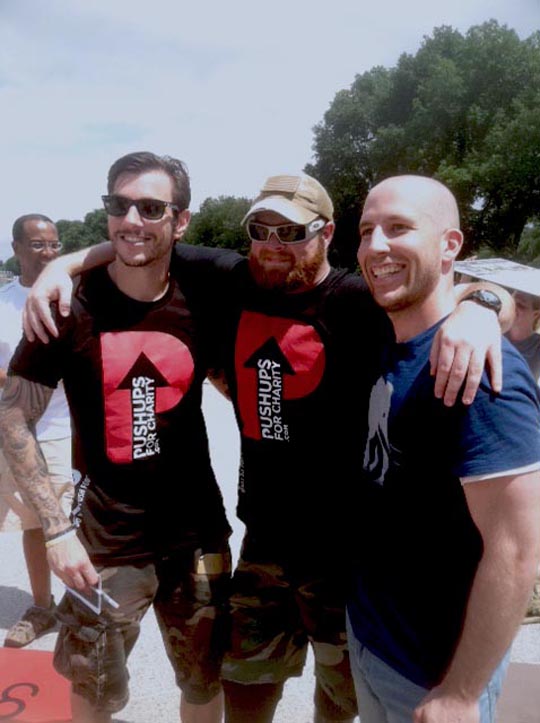
This past weekend in front of the Lincoln Memorial in Washington, D.C., I had the pleasure of taking part in the final event of the year for Pushups for Charity, which worked in conjunction with Boot Campaign to help raise funds for our returning war fighters and their families. Men, women and children of all ages and fitness levels came out to do as many pushups as possible within 90 seconds, with the goal of hitting 10,000 before the end of the day. There was a lot of people who needed a shower when all was said and done, but the goal was ultimately accomplished.

The thing that most struck me about Pushups for Charity was the sense of community the event instilled in participants from the get-go. All of the Team Leaders were upbeat men and women who made complete strangers feel as if they were longtime friends. It was hot and humid with no wind and no shade — but no one cared because everyone was having fun. Organizers, participants and the audience that cheered and clapped with each round all seemed to concentrate on a shared bond — love of the military. There was no amount of sunburn or sore muscles that could take away from the joy of moment.

After I got home on Sunday night, I was looking at a picture of myself with Team Leaders Mark Little and Chris Nesbitt and wondering why I seem most at ease (no pun intended) around soldiers. I laugh more. I smile more. I’m more “me” in those moments than in any other social situation.

I think a clue to the peace that company brings me can be found in the bio for CPT Mark Little (U.S. Army Ret.), which reads:

Mark enlisted in the Army in 2002. Mark spent 4 years as a Combat Engineer learning and performing the craft of a demolitions expert.

Mark was deployed to Iraq as a Platoon Leader for the 3rd Infantry Division. He spent 99 days in Iraq, conducted over 150 Combat Patrols, and received 3 direct IED blasts, resulting in 2 Purple Hearts and the loss of both of his legs.

Mark is the Captain of the USA Warriors Hockey Team, which provides recreational hockey therapy to wounded Service-members, he actively Crossfits, and is excited to help the Boot Campaign with their critical mission of supporting our Nation’s Heros as they return from combat.

Mark is a Hero Team Leader because every fiber of his being is dedicated to serving his fellow Military Service-Members and refuses to let injuries get in the way of completing any mission he undertakes.

Selfless Service. Check. Courage. Check. Perseverance. Check. The list of qualities that I respect, admire and seek to cultivate in myself are so often found in individuals like CPT Little that it is in their presence where I feel most comfortable.

Pushups Charity FB

There is something extremely awe-inspiring about men and women who can have both of their legs taken from them and, upon healing, get out of bed and essentially say to the world, “You took my legs and knocked me down? Okay. I’ll just build myself some new legs and stand right back up again. And on top of that, I’m going to be just as hard-core awesome as I ever was.”

That is the character of winners. These are the individuals we should look to for inspiration. Their stories are the ones that should not be forgotten.

The next time a political party comes knocking on your door, I suggest laughing them off and turning to an organization with a track record of actually keeping its promises. Boot Campaign is one, but there are many, many others. And if you can’t give money, you can always take 90 seconds out of your day during the next Pushups for Charity event to knock a few out. It won’t cost you a dime, and you’ll meet some incredible people in the process.

Best,

Doug

'The Rock' is batting 1000 for awesomeness. He's relaunching movies, he's got a great new show with 'The Hero,' and now it turns out he's connected with the Boot Campaign.
‘The Rock’ is batting 1000 for awesomeness. He’s relaunching movies, he’s got a great new show with ‘The Hero,’ and now it turns out he’s connected with the Boot Campaign.

A view from the infantry

Your truly along the Serbian/Macedonia border in the late 90's (sadly working under a United Nation's mandate).
Yours truly along the Serbian/Macedonia border in the late 90’s (sadly working under a United Nations mandate). Guess who got to haul the SINCGAR on patrol?

In 1997 I enlisted in the U.S. Army straight out of high school and spent three years as a mechanized infantryman.

After Basic Training in Fort Benning, Ga., I was sent to Schweinfurt, Germany, to join my unit, Charlie Co., 1/18th Infantry Battalion. I was part of First Infantry Division, known by most civilians as “The Big Red One.”

My time in service does not include the kind of deployments faced by the men and women who serve in a post 9/11 world, but I am confident that I can speak knowledgeably on the culture of combat units.

And I am confident Army Gen. Martin E. Dempsey’s announcement that the front lines will now be an option for women is, for all intents and purposes, a policy shift that will get good soldiers killed.

While most commentary since the shift was revealed Wednesday has focused on the physical rigors demanded in combat roles, little has been mentioned about the sexual element that first sergeants and company commanders will now be forced to deal with.

Read the rest over at The Washington Times

Editor’s note: I’m trying to knock out “Damn Few” by the former Head of Basic and Advanced SEAL Training so I can give you guys a worthy review. In the mean time, hopefully this piece I did for TWT will serve as an adequate addendum to yesterday’s post on women in combat units.

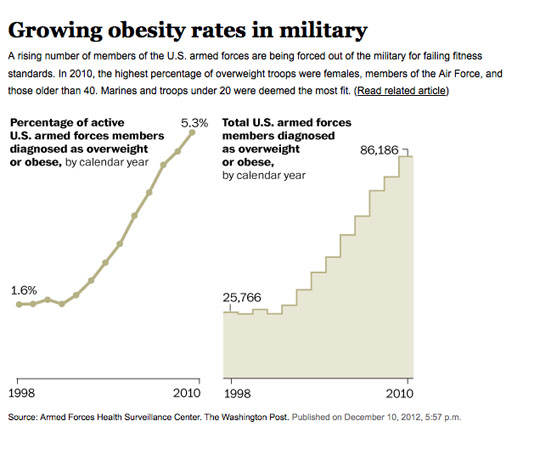
Military obesity isn’t the issue: Civilian fat bodies are

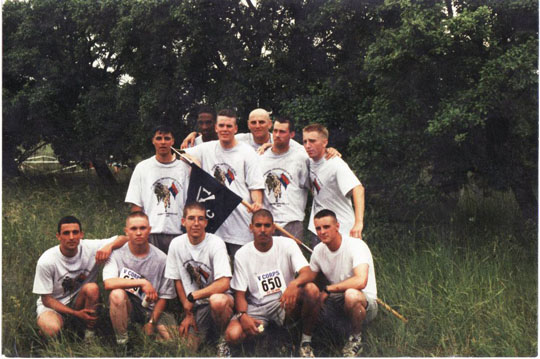
The Washington Post is running stories on the military's bulging bellies. I looked through my old Army photos and found one of my fellow infantrymen after a 10 mile run. Nope. No fat people there. I wonder why.
The Washington Post just ran a story on the military’s bulging bellies. I looked through my old Army photos from 1997 and found one of me with my fellow infantrymen after a 10 mile run. Nope. No fat people there. My Magic Eight Ball says the MOS might have had something to do with it.

Over the past few years there has been increasing coverage of the growing waistlines of our nation’s military. It’s generally a dumb story. The people charged with fixing the problem know exactly what’s going on:  Nobody does physical fitness like the infantry. Period. If you want less overweight soldiers, tell the POGS to look at their grunt-buddies for an example of how to stay in shape.

Let’s take a look at who, exactly, can’t seem to get their asses in gear, shall we?

Obesity Military

Surprise, surprise. Look who leads the pack or, more aptly, leads the rear of the formation on Company runs:  women, the Air Force, and fat old men who have their rank and don’t give a rip because they’ve hit twenty years of service and can retire at any time.

When I was part of Charlie Co., 1/18 Infantry in the 90’s we had a guy who treated his body like crap and he couldn’t stay in shape. The solution? They made me get up with him on the weekends and take him on four, five, and six-mile runs. We also ran after work. We did push-ups. We did sit-ups. Our Platoon Sergeant gave me free rein to drag him out of bed and onto the road for long runs until he got it in his thick head to get where he was supposed to be, meaning: in shape. When you make something a priority, things start to fall into place. Shocker. The military should make it a priority to emulate the kind of standards infantrymen hold themselves to.

With that said, the bigger story is the nation’s eating problem:

Obesity is now the leading cause of ineligibility for people who want to join the Army, according to military officials, who see expanding waistlines in the warrior corps as a national security concern. …

Retired Lt. Gen. Mark Hertling said he was floored by what he found in 2009 when he was assigned to overhaul the Army’s training system. Seventy-five percent of civilians who wanted to join the force were ineligible, he said. Obesity was the leading cause.

“Of the 25 percent that could join, what we found was 65 percent could not pass the [physical training] test on the first day,” he said in a recent speech. “Young people joining our service could not run, jump, tumble or roll — the kind of things you would expect soldiers to do if you’re in combat.”

I believe that our nation’s outward appearance is a reflection of our own cultural decay.

Sloth. Gluttony. Pride. Envy. A nation of video game obsessed, chip-eating narcissists live vicariously through the heroes in their first person shooter, only taking breaks to go to the bathroom and catch a few minutes of whatever brain dead reality show is popular on MTV. Huge swaths of the population sit around on their butts all day, and when they wake from their Netflix induced stupor long enough to catch a news report of someone who went out there and actually built something they become angry. (See: Occupy Wall Street.)

In the United States, we live in a society where anyone can be fat. Quite unlike any other time in history, the poorer you are in the United States the more likely it is that you will be fat. It’s a testament to our greatness, but one that doesn’t come without its own set of challenges. Where once artists and painters drew naked heavy women because weight was an indicator of wealth, today obesity is an indicator that you might very well be living on a tight budget.

Today, the rich have personal trainers to help hound off the weight, but the poor have internet access. All the nutritional information we could ever want is right there at our fingertips, and yet rich and poor alike don’t utilize it. There are YouTube videos, blogs, government funded websites and enough dietary knowledge to make anyone a subject matter expert in a relatively short amount of time, and yet we still pack on the pounds. Why? It’s because we aren’t serious. About anything. We spend our days working and our nights watching Jersey Shore. Or Buck Wild. Or Honey Boo Boo. Or Dancing with the Stars. Or American Idol.

And so, the nation’s newspapers should not worry about the body fat standards of the military so much as it should worry about the psyche of our civilian population. More nutrition labels aren’t the answer. More bans on sodium and fat are not the answer. Limits on carbohydrates aren’t the answer. Instead, I would argue that finding a way to change the culture in a way that tempers its obsession with instant gratification and celebrity would yield better results.

And if we fail? If there’s a zombie apocalypse we all know who will be the first ones to go — and it won’t be me.

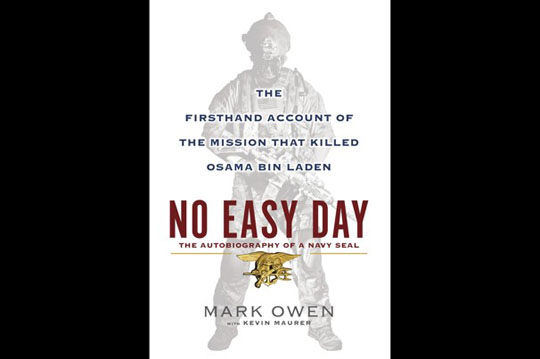
No Easy Day: The Firsthand Account … of a great book

Apparently, the Pentagon isn’t happy with the release of ‘No Easy Day’. Possible national security issues aside — readers will be.

What does a member of SEAL Team 6 do after he’s killed the most wanted terrorist alive — the mastermind behind the worst attack on American soil since Pearl Harbor? He does what anyone else would do: He goes to Taco Bell. By himself.

No Easy Day apparently has heads fuming at the Pentagon, and author Mark Owen might be persona non grata with his former teammates  (his real identity is known, but I’m still going to refrain from using it), but it’s a book that I’m glad he wrote. It’s a story that needed to be told, even if the timing of it could be called into question. And, while some of the information disclosed in the book is surprising, someone should remind the Navy SEALs that they were the ones who also worked with filmmakers on Act of Valor. Owen is most definitely one of the good guys.

There seems to be three factors that drove Owen to write the book. They are:

  1. To inspire other young men to become better than they knew they could ever be.
  2. To vent frustration over having to fight a war increasingly designed to protect the sensibilities of the politically correct civilian chattering class.
  3. To draw attention to politicians in Washington, D.C. who are much more of a threat to OPSEC than a retired SEAL.

As with other standout books by Navy SEALs, such as Marcus Luttrell’s Lone Survivor or Chris Kyle’s American Sniper, where the words make the book worth its hardcover price is in the personal story — not the details of any specific mission. You care about Owen not because he’s a Navy SEAL, but because he’s a good person. You want to keep reading his story — not because he’s a badass — but because he embodies the a kind of honor, commitment, selflessness and love of country that seems endangered in modern America.

The forward says it all:

‘No Easy Day’ is the story of “the guys,” the human toll we pay, and the sacrifices we make to do this dirty job. This book is about a brotherhood that existed long before I joined and will be around long after I am gone.

My hope is one day a young man in junior high school will read it and become a SEAL, or at least live a life bigger than him. If that happens, the book is a success.

It only takes Owen a quick 299 pages to complete his mission. It’s hard to believe that any young man could read No Easy Day without having his patriotic passions stirred.

Since Owen is a smart guy, he also provided plenty of lessons for public policy makers. Case in point:

It felt like we were fighting the war with one hand and filling out paperwork with the other. When we brought back detainees, there was an additional two or three hours of paperwork. The first question a detainee at the base was always, “Were you abused?” An affirmative answer meant an investigation and paperwork. And the enemy had figured out the rules. …

On more recent deployments, they started hiding their weapons, knowing we couldn’t shoot them if they weren’t armed. The fighters knew the rules of engagement and figured they’d just work their way through the system and be back to their village in a few days.

It was frustrating. We knew what we were sacrificing at home; we were willing to give that up to do the job on our terms. As more rules were applied, it became harder to justify taking the risks to our lives. The job was becoming more about an exit strategy than doing the right thing tactically.

The best trained, best equipped, most-disciplined fighting force in the world is asked to go to war — provided it’s a politically correct war. Al Qaeda members sleep soundly in their beds (or caves or on floorboards) because they know they can take advantage of the rules of engagement. “Shoot, move, and communicate” has become, “shoot, move, and do ‘sensitive site exploitation’.” SEALs need to spend endless amounts of time on each mission documenting everything for the kind of person who sees any U.S. military action as an Abu Ghraib waiting to happen. It’s sad and sick, it’s going to come back to haunt us,  and it gets soldiers killed.

Mark Owen’s personality reminds me of a lot of the guys I once served with. He’s an intelligent guy, but he’s humble. He strives for perfection. He never gives up because failure isn’t an option. He’s a professional, and he most-certainly goes about his job with the ‘failure to prepare is preparing for failure’ mentality. He loves his country and has done amazing things for freedom and liberty. He’s a real-life hero, but at the end of the day he’s perfectly content … with Taco Bell. In short, he’s everything I’d like my future son to be.

I highly suggest No Easy Day.

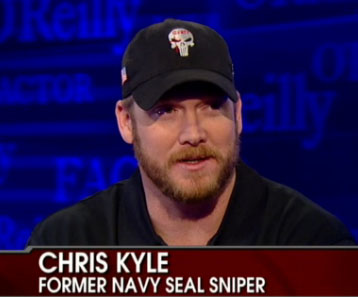
American Sniper: Chris Kyle, Guardian Angel who doesn’t know it.

American Sniper’s Chris Kyle keeps returning to the idea of a guardian angel watching over him without ever acknowledging the extent to which he is one.

I gave American Sniper an abridged review upon its release, but it’s a book that deserves an extended version. Chris Kyle may be “the most lethal sniper in U.S. history, ” but he’s much more than that. Throughout the book, Kyle wrestles with the many roles he must play (i.e., husband, father, soldier) and the responsibilities he must balance with God, Family, and Country. We ask our soldiers to be killing machines, but then expect their humanity to remain unscathed. We order them to extinguish pure evil, but then give them Rules of Engagement better suited for a cricket match. If for no other reason, civilians should read this book just for a glimpse into the psychological ringer we put our war fighters through without ever giving it a second thought.

One of the other topics that comes up repeatedly throughout American Sniper is the idea of a guardian angel. Chris postulates that there must have been one looking over him on multiple occasions (as does his friend Marcus Luttrell in the fabulous book Lone Survivor). What’s interesting about both of these soldiers is that on some level they downplay the fact that THEY are guardian angels. Chris’ obsession becomes saving every solider in harm’s way—and impossible task that begins to take a psychological toll on him as the war moves on. After his battle buddy is shot, he blames himself:

I’d put him in the spot where he got hit. It was my fault he’d been shot…A hundred kills? Two hundred? What did they mean if my brother was dead? Why hadn’t I put myself there? Why hadn’t I been standing there? I could have gotten the bastard–I could have saved my boy. I was in a dark hole. Deep Down. How long I stayed there, head buried, tears flowing, I have no idea.”

Chris often observes the unpredictable nature of war, but when it comes to an injury or a death of a fellow soldier he seems to (unfairly) place full responsibility on his own shoulders. What Chris fails to realize is that even a guardian angel can not be all places at all times. His insatiable thirst to find and kill every last enemy is commendable, but readers will know long before he addresses the issue that yes, even Navy SEALS are human, and such a mentality lends itself to the kind of physiological problems (e.g., high blood pressure) he would experience later in his career. Luckily for Chris, this story has a happy ending.

The final aspect of the book that needs to be covered concerns how wars are won—something that is not taught in college classrooms, which might be the reason for the bongo-drumming anti-war protests I experienced years ago at USC:

YOU KNOW HOW RAMADI WAS WON? We went in and killed all the bad people we could find. When we started, the decent (or potentially decent) Iraqis didn’t fear the United States; they did fear the terrorists. The U.S. told them, “We’ll make it better for you.”

The terrorists said, “We’ll cut your head off.”

Who would you fear? Who would you listen to?

We went to Ramadi, we told the terrorists, “We’ll cut your head off. We will do whatever we have to and eliminate you.” Not only did we get the terrorists’ attention—we got everyone’s attention. We showed we were the force to be reckoned with. That’s where the so-called Great Awakening came from. It wasn’t from kissing up to the Iraqis. It was from kicking butt.

The tribal leaders saw that we were bad-asses, and they’d better get their act together, work together and stop accommodating the insurgents. Force moved that battle. We killed the bad guys and brought the leaders to the peace table. That is how the world works.

Chris Kyle makes a compelling case, and it’s one that doesn’t get the attention it deserves among the civilian population, which is sad. Regardless, I’d like to narrow the scope of his argument: The United States “works” because guardian angels like Chris are willing to enter into a realms of pure evil and push back. They do so selflessly. They do so at the expense to family and loved ones.

In the late 90s I enlisted in a mechanized infantry unit. I wore a chain with the prayer to Saint Michael inscribed on it. Reading American Sniper made me realize that for a span of three years I lived and worked with guardian angels every day and I never adequately showed my appreciation to a great group of guys. Chris Kyle’s book will make you realize just how much we take the civilized world—and life—for granted. I highly recommend this book, for soldier and civilian alike.

Update: Please pray for the Kyle family. Chris was shot and murdered on February 2, 2013.

Related: No Easy Day: The Firsthand Account … of a great book